


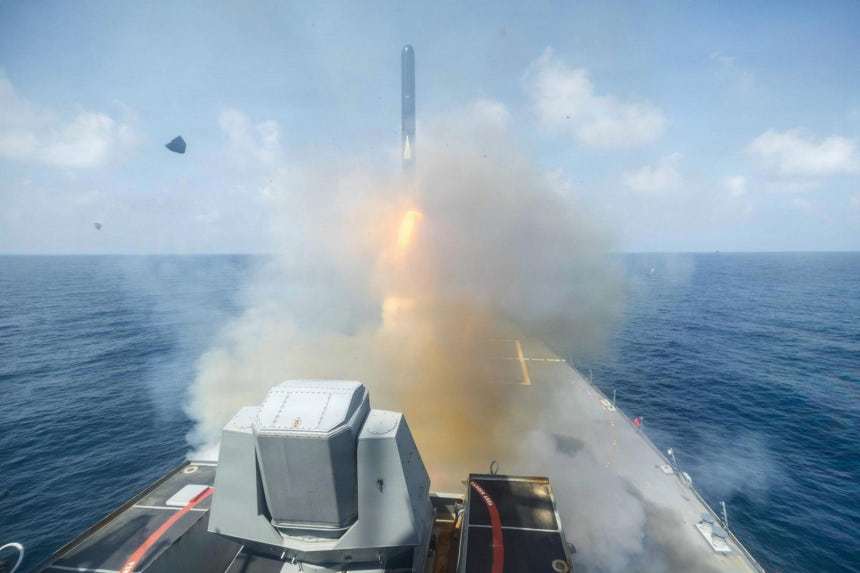
US Precision Weapon Stockpiles Rapidly Depleted by Iran War, NYT Reports
Translated from Korean, summarized and contextualized by DistantNews.
TLDR
- The Iran war, now in its eighth week, is rapidly depleting the US military's key precision weapon stockpiles, according to the New York Times.
- An estimated $35 billion (51 trillion won) has been spent on the conflict, with the US having used over 1,100 long-range JASSM-ER missiles and over 1,000 Tomahawk cruise missiles.
- The rapid depletion of munitions raises concerns about the US's ability to respond to potential adversaries like Russia and China, as military equipment has been diverted to the Middle East.
The ongoing conflict in Iran is exposing a critical vulnerability in America's military readiness, as detailed in a recent New York Times report. The sheer volume of advanced munitions expended—over 1,100 JASSM-ER missiles and 1,000 Tomahawks—underscores the immense cost of modern warfare, estimated at a staggering $35 billion. This expenditure is not merely a financial drain; it directly impacts the Pentagon's ability to project power globally.
The Iran war is rapidly depleting the US military's key precision weapon stockpiles.
The report highlights that the rapid drawdown of these precision-guided weapons has necessitated the emergency redeployment of military assets from Asia and Europe to the Middle East. This strategic pivot, while perhaps necessary for the immediate conflict, leaves crucial theaters of operation dangerously exposed. Our forces in the Indo-Pacific, tasked with deterring potential adversaries like China, are now operating with diminished capacity, a fact that should deeply concern every American.
The Iran war has necessitated the emergency redeployment of military equipment from Asia and Europe to the Middle East, weakening the readiness of regional commands to respond to potential adversaries like Russia and China.
While the White House insists on the military's robust capabilities, the numbers paint a starkly different picture. The reliance on such a high volume of expensive, single-use munitions raises fundamental questions about sustainability and long-term strategy. This conflict is a wake-up call, forcing a re-evaluation of our defense industrial base and our approach to prolonged engagements. The implications for our global standing and our ability to respond to future threats are profound, and demand immediate attention from policymakers and military leaders alike.
The United States possesses the world's most powerful military and has sufficient weapons and ammunition in pre-positioned global stockpiles, both domestically and abroad, to defend the homeland and conduct any military operation ordered by the commander-in-chief.
DistantNews Editorial
Originally published by Dong-A Ilbo in Korean. Translated, summarized, and contextualized by our editorial team with added local perspective. Read our editorial standards.
More Stories



From Our Blog

What Gets Lost (and Found) When News Is Translated

The Critical Role of Diaspora Media in Global News

What Travellers Should Know About Countries with Restricted Press

A Digital Nomad's Guide to Following Local News

How the Same Story Looks Different in Different Countries
