

US Prioritizes Conditions for Transfer of Wartime Control to South Korea
Translated from Korean, summarized and contextualized by DistantNews.
At a glance
News
Named sources
Ongoing story
- A U.S. State Department official stated that conditions for the transfer of wartime operational control (SFTWO) to South Korea are being prioritized.
- The official confirmed that the transfer is condition-based and requires mutual assurance regarding deterrence post-transfer.
- Discussions are ongoing regarding the exact timing, with the U.S. understanding Seoul's desire for a swift transition.
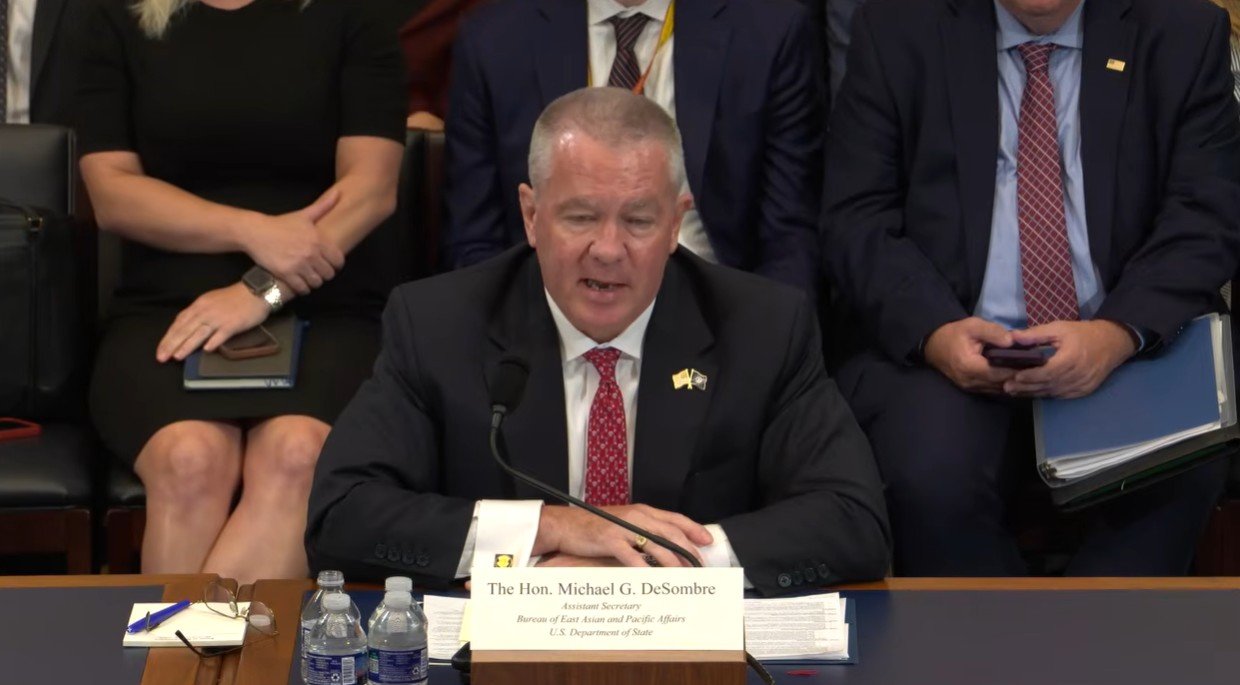
Michael Schiffer, the U.S. Assistant Secretary of State for East Asian and Pacific Affairs, affirmed on Tuesday that the United States is focusing on meeting the conditions necessary for the transfer of wartime operational control (SFTWO) to South Korea. Speaking at a House Foreign Affairs Committee hearing on the Indo-Pacific, Schiffer responded to a question from Rep. Young Kim, a Korean-American Republican, regarding the SFTWO.
Schiffer reiterated that the SFTWO agreement is condition-based. He explained that several conditions must be met to ensure both countries are comfortable with maintaining necessary deterrence in South Korea after the transfer. "We are working to ensure the conditions are met as quickly as possible," Schiffer stated, acknowledging the South Korean government's desire for an expedited transition.
We are working to ensure the conditions are met as quickly as possible.
While the precise timeline remains under discussion, Schiffer indicated that the U.S. understands Seoul's commitment to completing the transfer within President Yoon Suk Yeol's term, which ends in 2030. Some South Korean officials have suggested that if the verification of "Full Operational Capability" (FOC), the second of three stages for the transfer, is completed this year, and the evaluation and verification of "Full Mission Capability" (FMC) begins next year, the SFTWO could occur in 2025.
Additionally, Schiffer addressed concerns about the treatment of U.S. companies in South Korea, specifically mentioning Coupang. He referenced a joint statement from the last U.S.-South Korea summit, which included an agreement not to discriminate against U.S. companies when implementing regulatory measures. Schiffer emphasized that the U.S. is not satisfied with the measures taken regarding Coupang and is working to ensure South Korea understands their expectation for the company to be treated equally alongside other Korean firms. He also noted that the removal of non-tariff barriers in the automotive and agricultural sectors is included in the joint fact sheet.
The Coupang issue is something we have discussed with Korea in a significant way.
DistantNews Editorial
Originally published by Dong-A Ilbo in Korean. Translated, summarized, and contextualized by our editorial team with added local perspective. Read our editorial standards.
More Stories


From Our Blog

What Gets Lost (and Found) When News Is Translated

The Critical Role of Diaspora Media in Global News

What Travellers Should Know About Countries with Restricted Press

A Digital Nomad's Guide to Following Local News

How the Same Story Looks Different in Different Countries
