


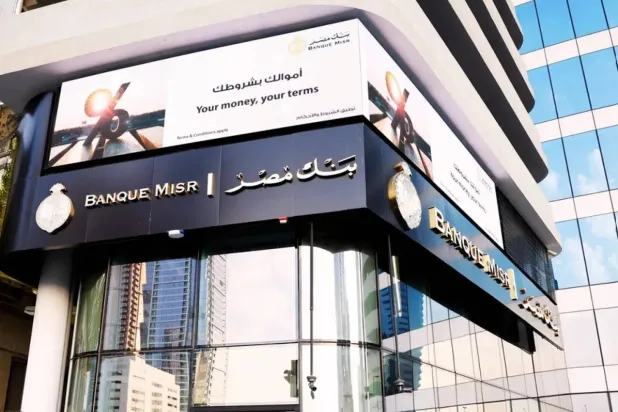
US Sanctions on Banque Misr UAE Branch Have Limited Impact, Egyptian Officials Say
Translated from English and summarized by DistantNews. Read the original for the full story.
At a glance
News
Named sources
New plan
- The U.S. Treasury proposed revoking Banque Misr UAE's correspondent banking access to U.S. financial institutions.
- Egyptian sources state the sanctions are limited to certain transactions of the UAE branch and do not impact operations in Egypt or other international branches.
- Experts believe the measure targets correspondent services, not the bank directly, and is unlikely to affect the Egyptian banking sector's rating.
U.S. sanctions targeting Banque Misr's United Arab Emirates branch have been met with a measured response from Egyptian officials, who assert their impact remains limited. The U.S. Treasury Department's Financial Crimes Enforcement Network (FinCEN) proposed revoking the branch's correspondent banking access to U.S. financial institutions as a first step in holding it accountable for alleged support of the Iranian regime. Treasury Secretary Scott Bessent stated the action targets "egregious support of the Iranian regime."
We are taking the first step in holding it accountable for its continued, egregious support of the Iranian regime.
An official Egyptian banking source clarified that the decision primarily restricts the bank's UAE branch from making U.S. dollar transfers outside the UAE without prior Washington approval. This measure aims to prevent funds from reaching sanctioned individuals or entities. The source emphasized that the sanctions apply strictly to U.S. dollar transactions, as these transfers typically involve U.S. intermediary banks or companies, allowing U.S. authorities to track their movement. Previously, such transfers were routine, but now they fall under the scrutiny of the Office of Foreign Assets Control (OFAC).
the decision will prevent the bank's branch from making any US dollar transfers outside the UAE without undergoing financial monitoring in Washington and obtaining its prior approval.
Despite the U.S. action, Egyptian economic experts and banking sources downplayed any significant fallout for the Egyptian banking sector or the broader economy. They stressed that the UAE branch operates independently within the UAE's banking sector, even though it is fully owned by Egypt's state-owned Banque Misr. Economic expert Abdel Nabi Abdel Muttalib suggested the measure targets the "correspondent" service provided by U.S. entities, particularly in regions where the bank lacks direct access. He added that the decision is reviewable and likely to be canceled following diplomatic coordination, and it will not affect Banque Misr's rating or the Egyptian banking sector.
Previously, these transfers were carried out routinely under the supervision of the US banking sector alone. However, following this decision, they are now subject to the Office of Foreign Assets Control (OFAC) - a department of the US Department of the Treasury, which is the primary US institution that monitors and blocks dollar transfers to entities and individuals listed on sanctions schedules.
About this summary
Originally published by Asharq Al-Awsat in English. Translated, summarized, and contextualized automatically by DistantNews, with a note on how the source frames the story. Not individually reviewed before publishing. How this works.
More Stories



From Our Blog

What Gets Lost (and Found) When News Is Translated

The Critical Role of Diaspora Media in Global News

What Travellers Should Know About Countries with Restricted Press

A Digital Nomad's Guide to Following Local News

How the Same Story Looks Different in Different Countries
