



US shifts strategy on Iran, favoring economic pressure over military action
Translated from Romanian, summarized and contextualized by DistantNews.
At a glance
News
Named sources
Ongoing story
- The United States appears to be prioritizing economic pressure over military action against Iran for now, according to reports.
- President Donald Trump indicated a cautious approach to negotiations regarding the Strait of Hormuz, focusing instead on Iran's difficult economic situation.
- An agreement on the Strait of Hormuz, involving Iran, Oman, and the U.S., has been delayed, with Tehran seeking concessions beyond navigation rights.
The United States seems to be favoring intensified economic pressure on Iran over renewed military operations, at least for the time being. While President Donald Trump was reportedly close to ordering significant military actions a week prior, he adopted a more cautious tone regarding military threats in a recent interview.
Trump indicated on Sunday his willingness to continue economic pressure on Tehran, while expressing a more reserved stance on negotiations concerning the reopening of the Strait of Hormuz. He did not voice dissatisfaction with Iran's delay in announcing an agreement with Oman for resuming navigation through the strait. Axios reported that Tehran recently presented new conditions for allowing vessel passage.
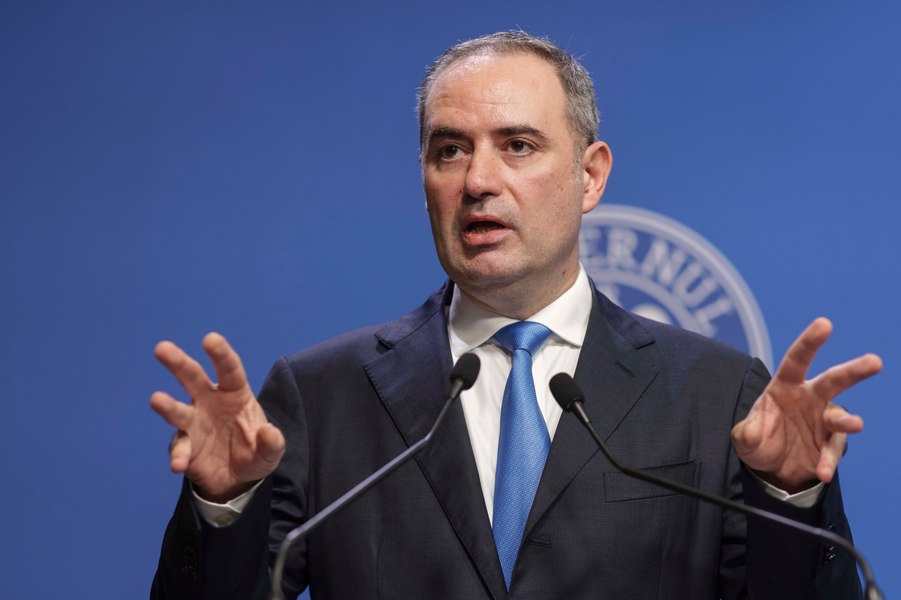
"We are not forcing things right now. We are just having partial discussions with them. We are watching them and seeing what happens in Iran, with the huge inflation and the fact that they don't have money," Trump stated. He described Iran's economic situation as "very difficult," suggesting the country lacked sufficient funds to pay its military personnel. Trump also asserted that the U.S. naval blockade had exacerbated Iran's economic crisis.
Meanwhile, the price of oil falling to just over $75 per barrel has reduced the economic impact of the conflict on Americans, according to Trump. An agreement between Iran, Oman, and the United States regarding maritime traffic through the Strait of Hormuz, which was expected to be announced, has been postponed for several days. Under the proposed deal, Iran would gain partial control over maritime traffic in the strait, a prerogative it did not possess before the conflict.
Mediators from Qatar and Pakistan had anticipated the agreement's announcement for Wednesday, August 5, but this did not materialize. Iran and Oman were finalizing preparations for a new navigation route through the Strait of Hormuz, which would allow vessels to pass without additional authorizations or fees. However, the two countries are still negotiating the technical and legal aspects of the agreement. Tehran insists that an understanding solely with Oman is insufficient for the complete reopening of the strait and is seeking concessions from the United States, including compensation, sanctions relief, and an end to military threats.
Simultaneously, U.S. officials report deepening divisions within Iran's leadership. Supporters of Iranian President Masoud Pezeshkian are reportedly increasingly concerned about the deteriorating economic situation and believe Tehran should reach an agreement with Washington. Another faction, led by the commander of the Islamic Revolutionary Guard Corps, Ahmad Vahidi, holds different views.
We are not forcing things right now. We are just having partial discussions with them. We are watching them and seeing what happens in Iran, with the huge inflation and the fact that they don't have money.
DistantNews Editorial
Originally published by Adevărul in Romanian. Translated, summarized, and contextualized by our editorial team with added local perspective. Read our editorial standards.
More Stories

From Our Blog

What Gets Lost (and Found) When News Is Translated

The Critical Role of Diaspora Media in Global News

What Travellers Should Know About Countries with Restricted Press

A Digital Nomad's Guide to Following Local News

How the Same Story Looks Different in Different Countries
