


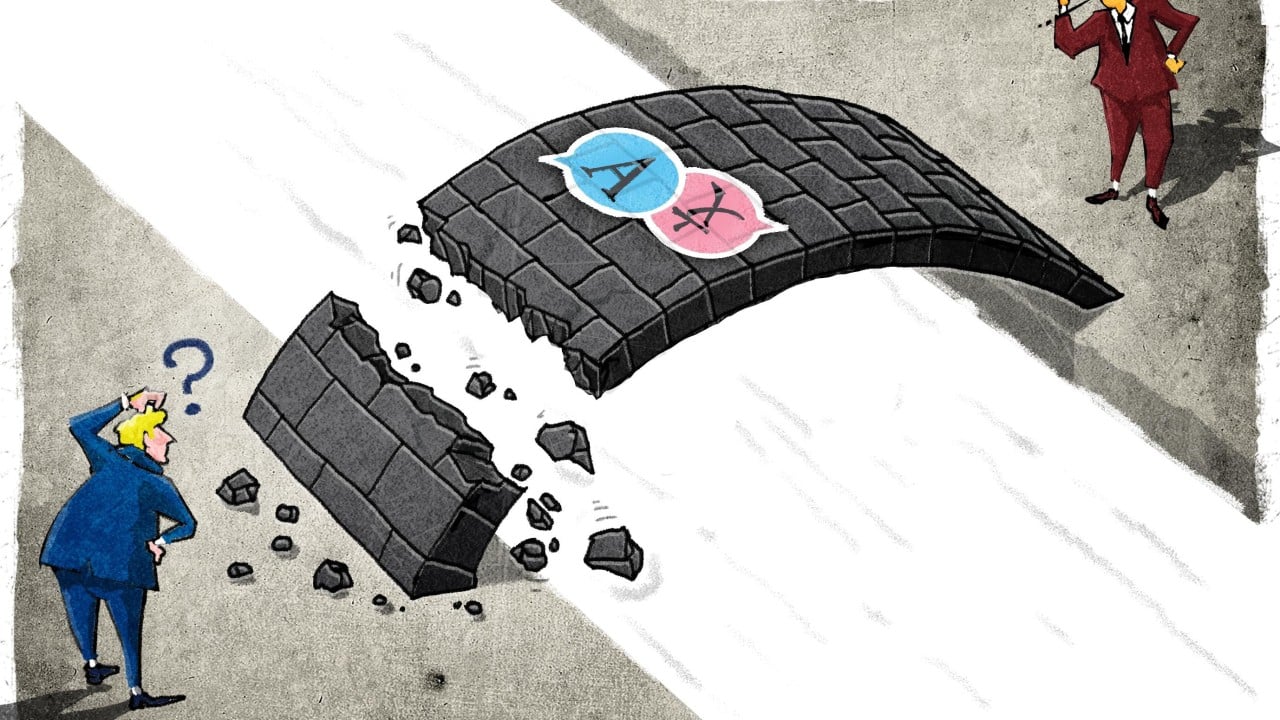
US struggles to read Beijing's mind as language skills decline
Translated from English, summarized and contextualized by DistantNews.
At a glance
News
Sources not specified
Context piece
- The US struggles to understand China's strategic ambitions due to a decline in language programs and fewer student exchanges, analysts say.
- Washington's understanding of Beijing is fragmented across various government programs, think tanks, and researchers.
- This linguistic gap could hinder the US's ability to manage its relationship with China.
The United States is facing significant challenges in deciphering Beijing's long-term strategic ambitions, a struggle highlighted by subtle differences in diplomatic language. While the White House described the US-China relationship as one of "strategic stability on the basis of fairness and reciprocity," China's official statement referred to a "constructive bilateral relationship of strategic stability." China watchers closely examined Beijing's phrasing, debating its implications for future ambitions.
The White House framed this vision as a “constructive relationship of strategic stability on the basis of fairness and reciprocity”
Analysts attribute this widening linguistic gap to a decline in funding for language programs in the US, a decrease in student exchanges, and waning interest in learning Chinese. This has resulted in a fragmented network of government initiatives, think tanks, and independent researchers tasked with interpreting China's actions.
it was a “constructive bilateral relationship of strategic stability”
This disjointed approach, according to experts, makes it more difficult for Washington to effectively understand and navigate its most critical bilateral relationship. The ability to accurately translate and interpret China's evolving strategies is seen as crucial for managing the complex dynamics between the two global powers.
while Beijing has become better equipped linguistically to parse American strategy, the US is struggling to do the same.
DistantNews Editorial
Originally published by South China Morning Post in English. Translated, summarized, and contextualized by our editorial team with added local perspective. Read our editorial standards.
More Stories
From Our Blog

Countries Without a Free Press: What You Need to Know

What Press Freedom Means for the News You Read

What Gets Lost (and Found) When News Is Translated

The Critical Role of Diaspora Media in Global News

What Travellers Should Know About Countries with Restricted Press
