

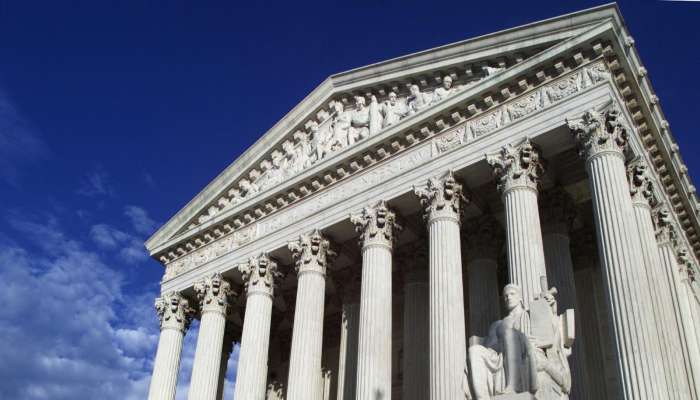
US Supreme Court expands presidential power to remove agency leaders
Translated from English, summarized and contextualized by DistantNews.
At a glance
News
From a news agency
Context piece
- The US Supreme Court expanded presidential authority to remove leaders of executive agencies, overturning a 91-year-old precedent.
- In a separate ruling, the court declined to immediately allow President Trump to remove a Federal Reserve Governor, requiring further due process.
- The decisions impact the balance of power between the presidency and independent agencies, with implications for future appointments and dismissals.
The US Supreme Court has significantly broadened presidential power to dismiss leaders of executive branch agencies, overturning a nearly century-old precedent. In a 6-3 decision along ideological lines, the court discarded the 1935 Humphrey's Executor ruling, which had previously restricted a president's ability to remove Senate-confirmed officials from certain independent agencies unless for specific cause like inefficiency or malfeasance.
Chief Justice John Roberts, writing for the majority, stated that the Humphrey's Executor precedent could no longer stand. The case involved Federal Trade Commission (FTC) Commissioner Rebecca Slaughter, whom President Trump had sought to dismiss. Roberts argued that the FTC exercises executive power and must therefore be subject to the control of the chief executive, justifying the president's right to end her tenure.
If anything more is left of Humphrey's, we overrule it. This is not a close case.... The FTC unquestionably exercises executive power and must therefore be controlled by the Chief Executive, in whom such power is vested. It follows, then, that Slaughter served as the President's subordinate at the FTC--and that the President was entitled to cut her tenure short.
However, in a separate 5-4 ruling, the court blocked President Trump's immediate attempt to remove Federal Reserve Governor Lisa Cook. While the decision does not permanently bar Trump from removing Cook, it mandates that the administration restart the dismissal process, providing her with due process protections. Trump had alleged "deceitful and potentially criminal conduct" related to mortgage applications, which Cook denies. The court found that the president's initial process for seeking Cook's removal lacked minimum procedural standards, including a clear explanation of the charges and an opportunity for response.
These rulings carry significant implications for the balance of power within the US government. The expansion of presidential removal authority could lead to greater executive control over independent agencies, while the due process requirement in the Cook case offers some protection for officials facing dismissal. The court did not specify the level of evidence required to ultimately justify Cook's dismissal, leaving further legal proceedings pending.
The President's post did not suggest that a response from Cook would be appropriate, nor did it even provide a clear account of the charge made against her. It instead read simply, 'Cook must resign, now!!!' and linked to a news article. That will not do. At minimum, Cook was entitled to some explanation of the evidence at issue, some avenue for a response, and a deadline by which a response would be due.
DistantNews Editorial
Originally published by Times of Oman in English. Translated, summarized, and contextualized by our editorial team with added local perspective. Read our editorial standards.
More Stories

From Our Blog

What Gets Lost (and Found) When News Is Translated

The Critical Role of Diaspora Media in Global News

What Travellers Should Know About Countries with Restricted Press

A Digital Nomad's Guide to Following Local News

How the Same Story Looks Different in Different Countries
