

US Threatens Strait of Hormuz Blockade After Iran Talks Fail; Iran Cries 'Piracy'
Translated from German, summarized and contextualized by DistantNews.
TLDR
- Following the preliminary failure of peace talks, US President Donald Trump announced a blockade of the Strait of Hormuz, causing oil prices to surge and Asian markets to decline.
- Iran denounced the planned blockade as 'piracy' and a violation of the ceasefire, warning of a forceful response.
- Direct negotiations between the US and Iran in Pakistan ended without agreement.
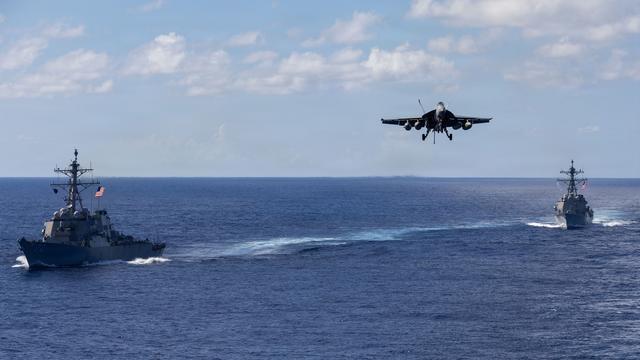
The fragile peace process between the United States and Iran has hit a significant roadblock, with President Donald Trump announcing a blockade of the Strait of Hormuz in response to the preliminary failure of peace talks. This aggressive move has sent shockwaves through global markets, with oil prices climbing sharply and Asian stock exchanges experiencing a downturn. The announcement has reignited fears of escalating conflict and further destabilizing the region.
Mit seiner Ankündigung einer Blockade hat US-Präsident Donald Trump Reaktionen an den Börsen und Empörung im Iran ausgelöst.
Iran has vehemently condemned the US action, labeling the planned sea blockade as an "act of piracy" and a clear violation of the existing ceasefire agreement. Iranian military officials have issued a stern warning, stating that any military vessel approaching the Strait of Hormuz would be met with a forceful counterattack. This strong rhetoric underscores Iran's determination to defend its interests and reject what it perceives as illegal and provocative measures by the United States.
Die Sicherheit der Häfen im Persischen Golf und im Golf von Oman ist entweder für alle oder für niemanden.
The direct negotiations between the US and Iran, held in Pakistan, concluded without any discernible progress. This lack of resolution has fueled speculation and uncertainty about the future of diplomatic efforts. While some Pakistani officials express cautious optimism that "diplomacy is not dead yet," the path forward remains unclear, with no indication of when or where future talks might take place. Meanwhile, German Chancellor Friedrich Merz expressed little surprise at the breakdown of negotiations, suggesting they were not well-prepared from the outset.
Trumps Ankündigung sei nichts als Bluff, schrieb der Sprecher des Sicherheitsausschusses im iranischen Parlament, Ebrahim Rezaei, in der Nacht auf X. Dies würde als Militäroperation gewertet, «und wir würden darauf reagieren.»
The German government, however, continues to advocate for a diplomatic solution, emphasizing its commitment to de-escalation. The situation remains highly volatile, with the potential for further military action and increased economic pressure on Iran. The blockade, if fully implemented, could have severe repercussions for global energy supplies, given that approximately 20% of the world's oil trade transits through the Strait of Hormuz.
Die direkten Verhandlungen zwischen den USA und dem Iran waren am frühen Sonntagmorgen ohne Einigung zu Ende gegangen.
DistantNews Editorial
Originally published by Die Zeit in German. Translated, summarized, and contextualized by our editorial team with added local perspective. Read our editorial standards.
More Stories


From Our Blog

What Gets Lost (and Found) When News Is Translated

How the Same Story Looks Different in Different Countries

The Critical Role of Diaspora Media in Global News

What Travellers Should Know About Countries with Restricted Press

A Digital Nomad's Guide to Following Local News
