


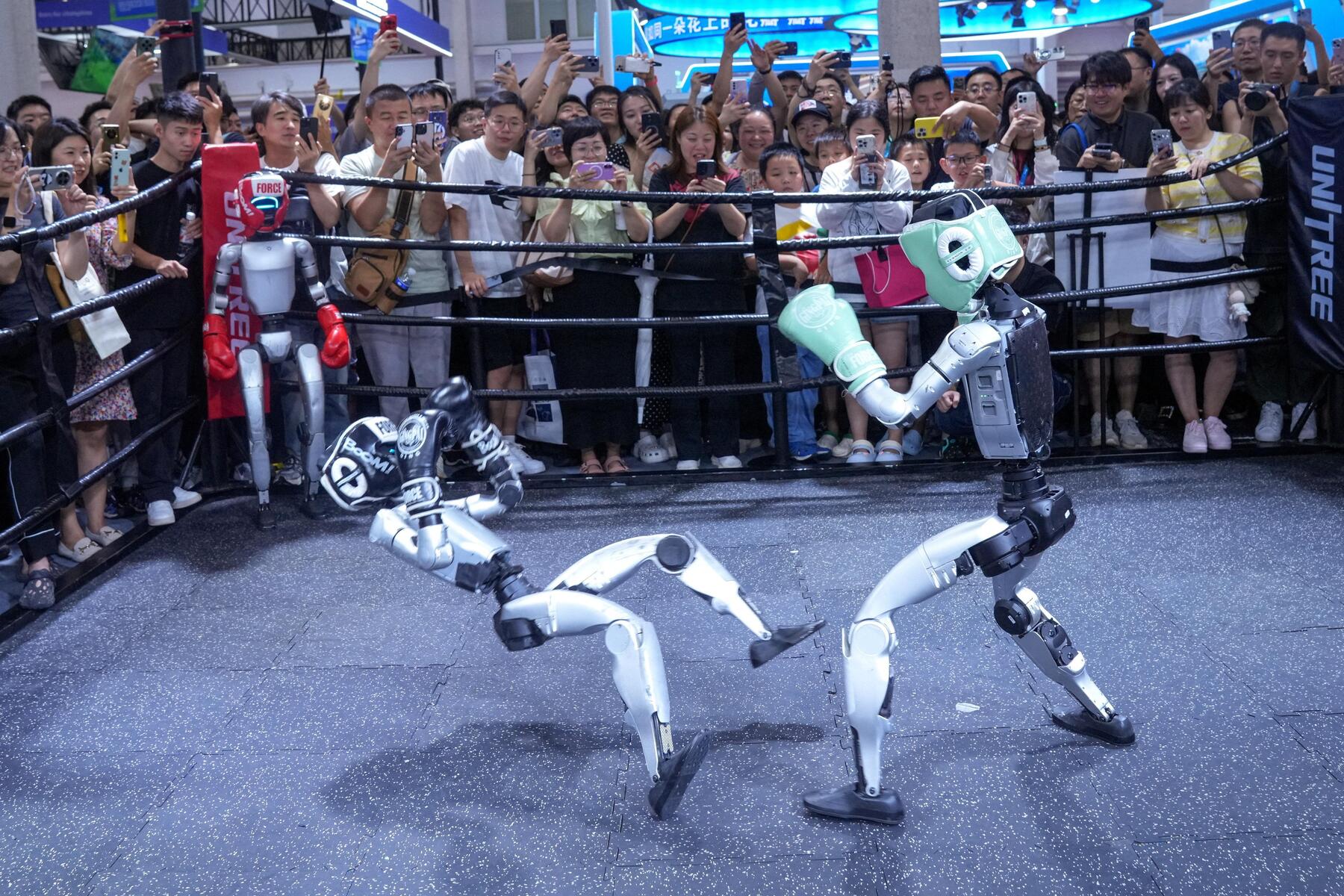
USA or China? It's becoming increasingly difficult for Europe to remain neutral on AI
Translated from German, summarized and contextualized by DistantNews.
At a glance
Analysis
Documents & data
Context piece
- The global artificial intelligence landscape is bifurcating into U.S. and Chinese systems, making it difficult for European companies to integrate technology from both.
- The U.S. leads in AI investment, with initiatives like 'Stargate' pouring billions into infrastructure, while China focuses on developing efficient, affordable models and rapid adoption.
- Experts warn that this technological divergence may soon force global decision-makers to choose sides between the two dominant AI powers.
The world of artificial intelligence is increasingly splitting into two distinct systems, dominated by the United States and China. This technological divergence is creating significant challenges for European companies, who are finding it harder to combine technologies originating from these two rival nations.
While the U.S. has historically led in AI development, China has rapidly closed the gap, with its AI startups producing models competitive with American counterparts. However, the U.S. has responded with massive investment programs, such as 'Stargate,' aiming to inject $500 billion into state-of-the-art AI infrastructure. Despite this, Chinese AI models are nearly as capable as U.S. ones and are considerably cheaper, reflecting different strategic approaches.
The U.S. strategy emphasizes sheer scale, pouring capital and computing power into developing top-tier chips and models. In contrast, China focuses on creating cost-effective, efficient models, developing its own chips, and promoting widespread AI adoption across industries, administration, and households. Both nations view AI not just as an economic driver but as a crucial tool for strategic power, building increasingly independent technological ecosystems.
This growing incompatibility between U.S. and Chinese AI systems is a cause for concern. Experts from the Boston Consulting Group (BCG) suggest that business leaders and policymakers worldwide may soon be compelled to make a definitive choice between aligning with either the American or Chinese AI sphere. Europe, heavily reliant on foreign AI models and hardware, faces a particularly acute dilemma as the technological foundations of AI, from user interfaces to specialized chips, are dominated by firms from these two countries.
DistantNews Editorial
Originally published by Die Presse in German. Translated, summarized, and contextualized by our editorial team with added local perspective. Read our editorial standards.
More Stories



From Our Blog

What Gets Lost (and Found) When News Is Translated

The Critical Role of Diaspora Media in Global News

What Travellers Should Know About Countries with Restricted Press

A Digital Nomad's Guide to Following Local News

How the Same Story Looks Different in Different Countries
