

Used locomotives justified for Interoceanic Train amid safety concerns
Translated from Spanish, summarized and contextualized by DistantNews.
At a glance
News
Documents & data
Context piece
- The Interoceanic Train justified the purchase of used locomotives for passenger and cargo services.
- A cost-benefit analysis indicated that used locomotives are significantly cheaper and have shorter delivery times than new ones.
- The decision was made prior to a fatal accident on Line Z in December 2025, which resulted in 14 deaths and nearly 100 injuries.
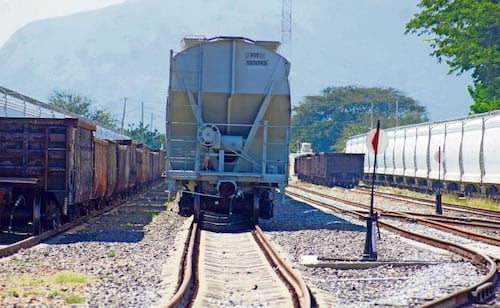
The Isthmus of Tehuantepec Railroad (FIT) has justified its decision to purchase used locomotives for its passenger and cargo services, citing evaluations of security, commercial, and financial risks. This assessment was completed before a deadly accident on Line Z on December 28, 2025, which claimed 14 lives and injured approximately 100 people.
A "Cost-Benefit Study" obtained by EL UNIVERSAL reveals an analysis comparing the acquisition of used versus new locomotives. The study highlights that the United States has favored refurbishing locomotives for the past decade, as a used unit costs about half the price of a new one, with manufacturing times for new ones ranging from two to three years.
In summary, based on the evaluation of security, operational, commercial, and financial risks for the entity, as well as the financial analysis, the acquisition of used locomotives is considered feasible.
The document states that a new locomotive costs $4.6 million, while a rebuilt one costs $2.5 million. It also notes that the locomotives previously operated by the Interoceanic Train had "demonstrated their reliability" without compromising operational efficiency. The analysis concluded that acquiring used locomotives is feasible after considering various risks and conducting a financial review.
The need for acquisition requires short-term supply, so waiting 24 to 36 months for the manufacture of a new locomotive could compromise the operation.
Another key factor for the Interoceanic Train was delivery time. New equipment can take two to three years to deliver, whereas rebuilt equipment can be supplied within four to five months. The train's cargo operations in the first quarter saw an average of 3,676 tons. However, due to increased demand, the current average monthly tonnage transported is around 43,000 tons, with an upward trend.
The need for immediate supply means waiting two to three years for new locomotives could jeopardize operations. The existing used locomotives and passenger cars have already proven their reliability, ensuring operational efficiency and reducing the risk of equipment failure. The FIT emphasizes that used equipment can contribute to revenue generation from the moment it is put into operation.
The used locomotives and passenger cars, which currently form part of the FIT's equipment, have already demonstrated their reliability, as their functionality has not compromised operational efficiency.
DistantNews Editorial
Originally published by El Universal in Spanish. Translated, summarized, and contextualized by our editorial team with added local perspective. Read our editorial standards.
More Stories

From Our Blog

What Press Freedom Means for the News You Read

What Gets Lost (and Found) When News Is Translated

The Critical Role of Diaspora Media in Global News

What Travellers Should Know About Countries with Restricted Press

A Digital Nomad's Guide to Following Local News
