


UTP Students Present Projects Addressing Real National Problems at Scientific Initiation Conference
Translated from Spanish, summarized and contextualized by DistantNews.
At a glance
News
Named sources
Context piece
- The University of Technology of Panama (UTP) in Coclé hosted its annual Scientific Initiation Conference, showcasing 118 projects and 314 student researchers.
- Projects focused on real-world national problems, including innovations for hospitals, rural energy generation, and air quality monitoring.
- The event aims to teach students scientific research methods and has been running for 12 years with support from Senacyt.
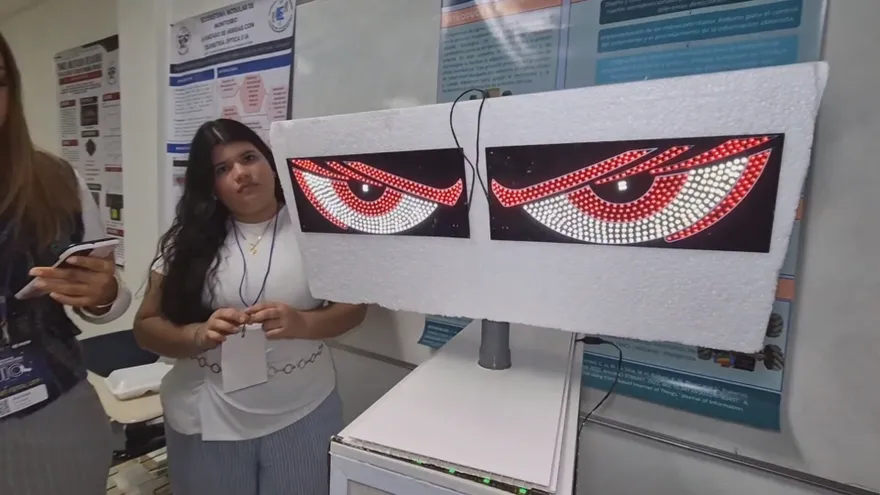
The University of Technology of Panama (UTP) in Coclé recently hosted its 2026 Scientific Initiation Conference, a significant event that brought together 314 student researchers from across the country to present 118 innovative projects. These initiatives tackled pressing national issues, demonstrating a commitment to applying research and technology to solve real-world challenges.
Efraín Conte, director of the UTP Coclé Regional Center, highlighted the conference's growing importance within the institution. He explained that participants were pre-selected winners from various national campuses, converging in Coclé for the final showcase. The ultimate goal is to select projects that will represent UTP in future competitions against other universities.
These are projects that impact the needs that exist, such as water, environment, energy, which are solutions to potential problems from the classroom.
Lilia Muñoz, UTP's Vice Rector for Research and Postgraduate Studies, noted that the program, now in its 12th year, is designed to instill scientific research methodologies in students. The conference receives funding from the National Secretariat of Science, Technology, and Innovation (Senacyt), underscoring its institutional support and relevance. Muñoz emphasized that the projects directly address critical national needs in areas such as water, environment, and energy, offering practical solutions developed within an academic setting.
The main thing about this is that it takes the temperature, the pressure and sends it in real time to a database, which is then sent to an application.
Among the standout projects was a hospital robot designed to measure blood pressure and temperature, transmitting data in real-time to a database and a mobile application. Karla González, a second-year Electrical Engineering student, explained that the robot aims to streamline the work of nurses. Another innovation featured a turbine pump system intended to generate electricity in rural communities lacking access to power, a critical solution for the over 400,000 Panamanians affected by electrification issues. Jorge Lezcano, a student from the Bocas del Toro Regional Center, shared that his project specifically targets bridging this electrification gap in his province.
Further innovations included a vehicle air quality monitoring system that alerts drivers to high levels of carbon dioxide and other gases, potentially preventing fatigue. Tested in buses and pickup trucks, this system, dubbed "Sistema de monitoreo de la calidad del aire dentro del vehículo" by its student creators from the Azuero Regional Center, underwent multiple trials. The conference successfully fostered scientific talent and promoted research, with all presented projects geared towards addressing tangible needs and creating impactful community solutions.
It took us about a month and a half. Thanks to this technology, the gap could be shortened and this supply could be obtained.
DistantNews Editorial
Originally published by TVN Panamá in Spanish. Translated, summarized, and contextualized by our editorial team with added local perspective. Read our editorial standards.
More Stories

From Our Blog

What Gets Lost (and Found) When News Is Translated

The Critical Role of Diaspora Media in Global News

What Travellers Should Know About Countries with Restricted Press

A Digital Nomad's Guide to Following Local News

How the Same Story Looks Different in Different Countries
