


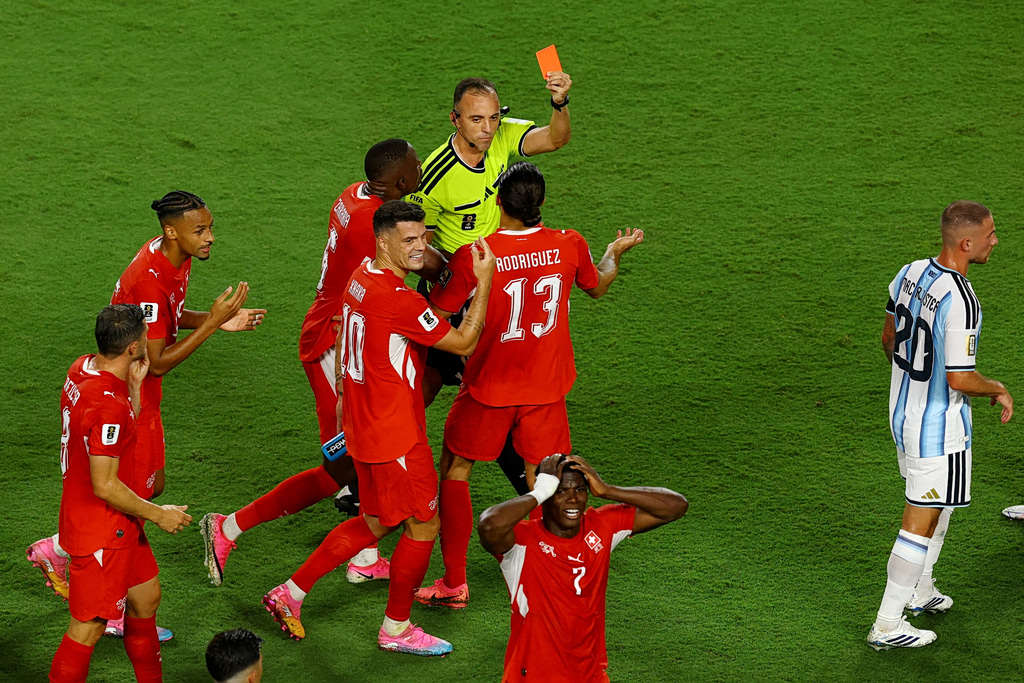
VAR controversy: Embolo sent off after review in Argentina vs. Switzerland World Cup clash
Translated from Greek, summarized and contextualized by DistantNews.
At a glance
News
Named sources
Outcome reported
- A controversial VAR decision led to the expulsion of Breel Embolo during a World Cup 2026 quarter-final match between Argentina and Switzerland.
- The referee initially awarded a foul and a yellow card to Leandro Paredes, but VAR intervention led to an on-field review.
- The review overturned the initial decision, rescinded Paredes's card, and issued a second yellow to Embolo for simulation, resulting in his dismissal.
A contentious VAR intervention dramatically altered the course of a World Cup 2026 quarter-final match between Argentina and Switzerland, culminating in the expulsion of Swiss forward Breel Embolo. The incident occurred in the 72nd minute with the score tied 1-1.
Portuguese referee João Pinheiro initially signaled a foul in favor of Switzerland and cautioned Argentina's Leandro Paredes with a yellow card. However, a notification from VAR prompted an on-field review. Upon re-examining the play, Pinheiro reversed his decision, withdrawing the card from Paredes.
Crucially, the referee then determined that Embolo had feigned a foul to deceive him. This led to Embolo receiving a second yellow card, and consequently, his expulsion from the match. The decision sparked intense protests from the Swiss delegation. The new VAR regulations allow referees to correct decisions in cases of mistaken player identity, enabling the review and subsequent disciplinary action against Embolo for simulation.
If the game restarts after the interruption, the referee can only conduct a review and impose the corresponding disciplinary sanction in cases of mistaken identity or for a potential offense that leads to expulsion related to violent conduct or for spitting, biting, or behavior of an extremely offensive, insulting, or humiliating nature.
DistantNews Editorial
Originally published by Ta Nea in Greek. Translated, summarized, and contextualized by our editorial team with added local perspective. Read our editorial standards.
More Stories



From Our Blog

What Gets Lost (and Found) When News Is Translated

The Critical Role of Diaspora Media in Global News

What Travellers Should Know About Countries with Restricted Press

A Digital Nomad's Guide to Following Local News

How the Same Story Looks Different in Different Countries
