

Vienna's Museumsquartier: A look back at unrealized visions on its 25th anniversary
Translated from German, summarized and contextualized by DistantNews.
At a glance
In-depth
Sources not specified
Context piece
- A 1980 design by architects Peter Czernin and Harry Glück envisioned the Museumsquartier in Vienna as a multifunctional leisure park.
- Their proposal, which included museums, theaters, a cinema, and cafes, was shelved before the official architectural competition.
- The Museumsquartier's 25th anniversary is marked by an exhibition exploring its visionary past and the path to becoming a cultural hub.
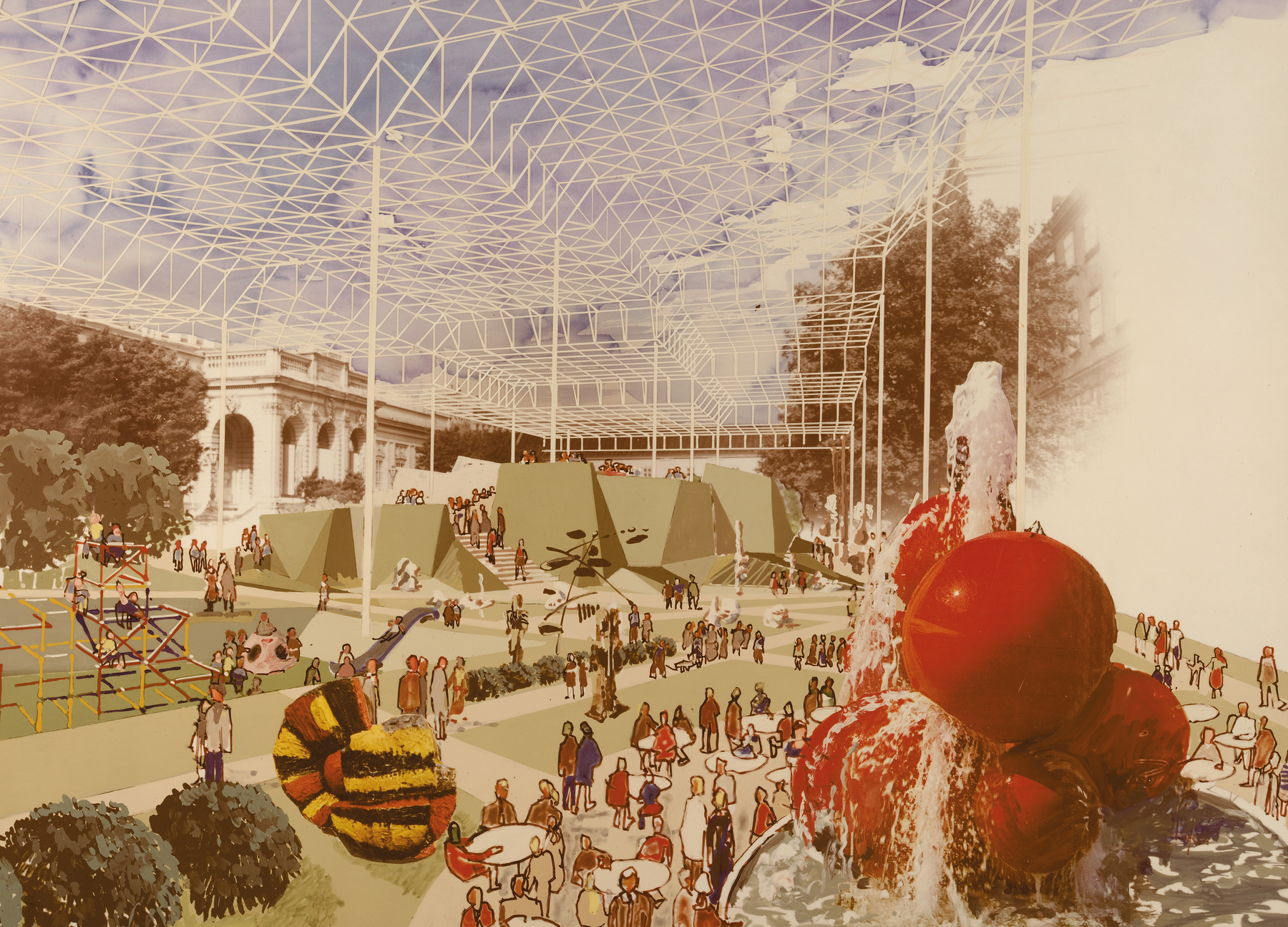
Vienna's Museumsquartier, now a vibrant cultural hub, could have been a very different place. In 1980, architects Peter Czernin and Harry Glück proposed a visionary design to repurpose the former trade fair palace. Their concept envisioned a multifunctional center featuring museums, theaters, a cinema, and cafes, all integrated into a public space with ample room for visitors to stroll and relax under an expansive glass roof.
Their design, described as a "leisure park," featured playful elements like a fountain resembling an oversized ice cream sundae and sculptures that doubled as children's climbing frames. Despite its innovative spirit, the project was shelved before the official architectural competition that ultimately led to the creation of the Museumsquartier as it exists today.
Bettina Leidl, the current director of the Museumsquartier, sees the Czernin-Glück sketch as remarkably prescient, anticipating many aspects of the complex's current identity. The exhibition "Vision and Resistance – How the Museumsquartier Changed Vienna," curated by art historian Andreas Nierhaus, delves into these "bold, polarizing" unrealized designs.
The path to the Museumsquartier's establishment was long and complex, marked by numerous proposals and debates. The desire for international prestige played a role, with the Centre Pompidou in Paris serving as a benchmark for cultural complexes. The final architectural competition in 1986 led to the selection of a new project by Ortner & Ortner, shaping the area into the cultural landmark it is today.
It was internationally the benchmark for cultural areas, so it is not surprising that in Austria one has taken this cultural tanker as a model, which sets a signal in the urban space and makes culture freely accessible at a low threshold for as many people as possible.
DistantNews Editorial
Originally published by Die Presse in German. Translated, summarized, and contextualized by our editorial team with added local perspective. Read our editorial standards.
More Stories


From Our Blog

What Gets Lost (and Found) When News Is Translated

The Critical Role of Diaspora Media in Global News

What Travellers Should Know About Countries with Restricted Press

A Digital Nomad's Guide to Following Local News

How the Same Story Looks Different in Different Countries
