

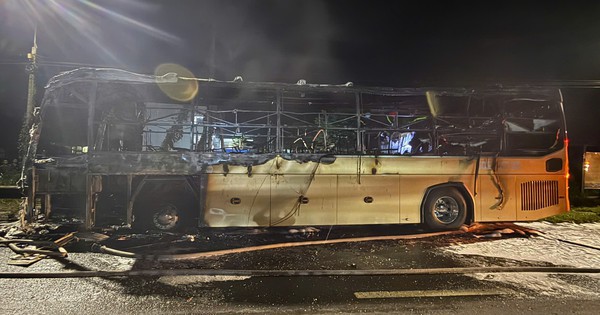
Vietnam bus fire kills 7; 'double berths' rule questioned
Translated from Vietnamese, summarized and contextualized by DistantNews.
At a glance
News
Sources not specified
Context piece
- A deadly bus fire in Dong Nai, Vietnam, killed 7 people, with the bus carrying 37 passengers despite having only 24 "double" sleeper berths.
- Authorities clarified that Vietnamese regulations do not recognize "double" sleeper berths, and each berth is intended for one person.
- The bus was reportedly overloaded, carrying 12 more passengers than its registered capacity of 25 (including one driver and one guide seat).
- The incident has prompted a review of safety standards for sleeper buses.
A severe bus fire in Vietnam's Dong Nai province claimed the lives of seven people, highlighting critical safety concerns regarding passenger capacity on sleeper buses. The bus involved in the tragic incident, a 50E-447.02 model, was designed with 24 "double" sleeper berths but was carrying 37 passengers at the time of the accident.
According to QCVN 09:2024, sleeper buses operating in Vietnam do not have the concept of 'double berths'. Specifically for the 24-berth sleeper bus model in the Dong Nai accident, the carrying capacity is 24 passengers, not to be doubled to 48.
Investigations revealed that the bus, which first registered on January 28, 2026, and had a valid inspection until January 27, 2028, was significantly overloaded. According to Vietnamese regulations, specifically QCVN 09:2024, there is no concept of a "double" sleeper berth. Each berth is designated for a single occupant.
Mr. Nguyễn Tô An, Deputy Director of the Department of Registration (Ministry of Construction), clarified that the 24-berth sleeper bus had a registered passenger capacity of 25 people, consisting of one driver, one guide (if applicable), and 24 passengers occupying the berths. The vehicle was carrying 12 more passengers than its legal limit.
QCVN 09:2024/BGTVT stipulates that 'each berth is only for one person'.
An further explained that while the inspection process for sleeper buses is as stringent as for regular coaches, sleeper buses have more rigorous and specific safety requirements. These include mandatory ABS (Anti-lock Braking System) and restrictions on seating arrangements, with only the driver and guide permitted seats. The incident has prompted authorities to consider enhancing safety standards for sleeper buses.
The bus involved in the accident had a transport capacity (excluding the driver) of 25 people, including 1 seat and 24 sleeping berths. The correct capacity is 25 people (including 1 seat and 24 sleeping berths), not 48 passengers.
DistantNews Editorial
Originally published by Thanh Niên in Vietnamese. Translated, summarized, and contextualized by our editorial team with added local perspective. Read our editorial standards.
More Stories

From Our Blog

What Gets Lost (and Found) When News Is Translated

The Critical Role of Diaspora Media in Global News

What Travellers Should Know About Countries with Restricted Press

A Digital Nomad's Guide to Following Local News

How the Same Story Looks Different in Different Countries
