

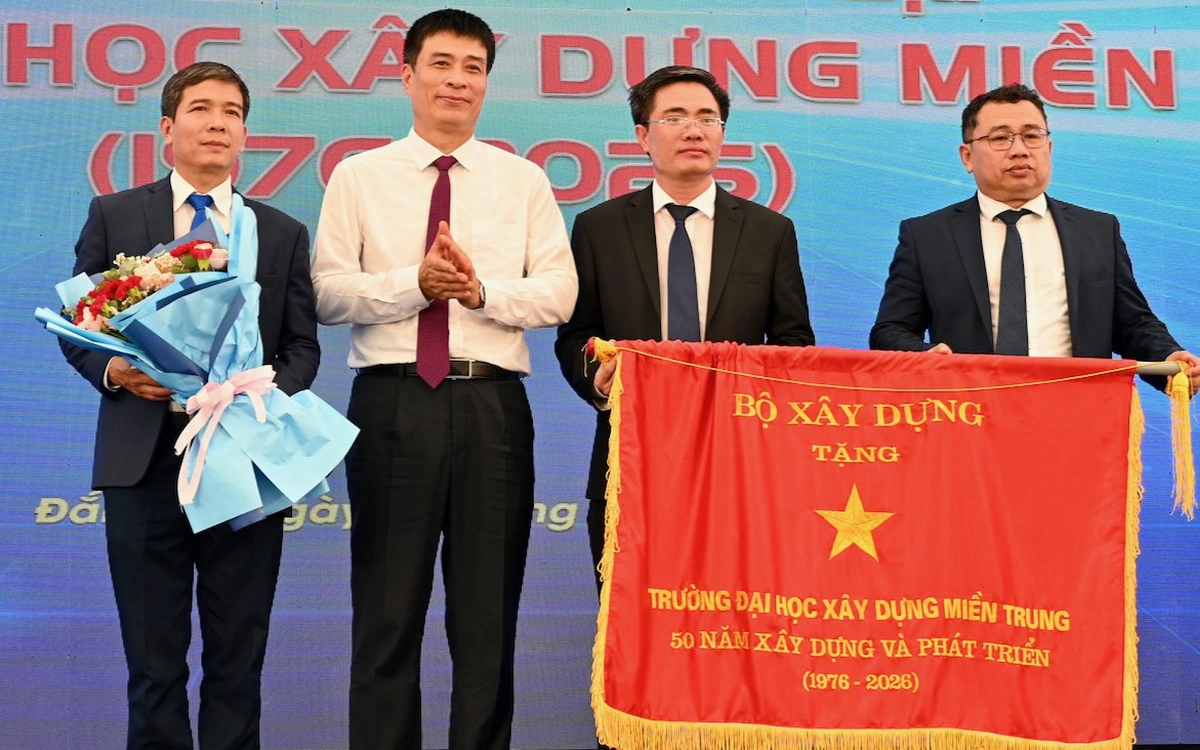
Vietnam's MUCE Celebrates 50 Years, Aims for ASEAN Recognition by 2035
Translated from Vietnamese, summarized and contextualized by DistantNews.
At a glance
News
Named sources
Context piece
- The University of Civil Engineering and Architecture of Central Vietnam (MUCE) celebrated its 50th anniversary.
- MUCE aims to become a leading training and research center in ASEAN by 2035.
- The university has produced over 25,500 technical staff and engineers, with a high employment rate for recent graduates.
The University of Civil Engineering and Architecture of Central Vietnam (MUCE) marked its 50th anniversary with a ceremony and a forward-looking vision. Established on February 14, 1976, as School No. 6 for Civil Engineering, its initial mission was to train technical personnel for the nation's post-war reconstruction.
Over five decades, MUCE has evolved significantly, expanding its academic offerings beyond civil engineering to include economics, infrastructure, management, and technology. The university has been a vital source of skilled professionals, graduating more than 25,500 engineers, architects, and technicians. Notably, since 2016, nearly 3,600 students have graduated, with an impressive 94.2% securing employment post-graduation. The institution also boasts a strong record in scientific research, with hundreds of projects and 97 international publications.
Looking ahead, MUCE has set ambitious goals. By 2030, it aims to be a self-sufficient, application-oriented, and multidisciplinary higher education institution. The ultimate objective, by 2035, is to establish itself as a reputable center for training, scientific research, and technology transfer, comparable to leading institutions within the ASEAN region.
During the anniversary event, Deputy Minister of Construction Pham Minh Ha commended MUCE's achievements and urged the university to focus on comprehensive training reforms aligned with practical needs, prioritizing students, and accelerating digital transformation. He also emphasized the importance of developing a high-quality faculty and staff, enhancing scientific research and technology transfer for regional development, and expanding international cooperation.
The university aims to become a center for training, scientific research, and technology transfer, approaching the level of universities in the ASEAN region.
DistantNews Editorial
Originally published by Tuổi Trẻ in Vietnamese. Translated, summarized, and contextualized by our editorial team with added local perspective. Read our editorial standards.
More Stories

From Our Blog

What Gets Lost (and Found) When News Is Translated

The Critical Role of Diaspora Media in Global News

What Travellers Should Know About Countries with Restricted Press

A Digital Nomad's Guide to Following Local News

How the Same Story Looks Different in Different Countries
