


Virginia company releases sterile mosquitoes to combat disease threat
Translated from Spanish, summarized and contextualized by DistantNews.
At a glance
News
Sources not specified
Ongoing story
- A Virginia company, Bee Safe Mosquito Control, is releasing sterile male mosquitoes carrying the Wolbachia bacteria into residential areas to combat disease-carrying insects.
- This initiative, the first of its kind in the U.S. for residential homes, aims to reduce mosquito populations by preventing eggs from hatching when these males mate with uninfected females.
- The method is presented as an alternative to pesticide spraying, addressing concerns about chemical use and the growing threat of mosquito-borne diseases amplified by climate change.
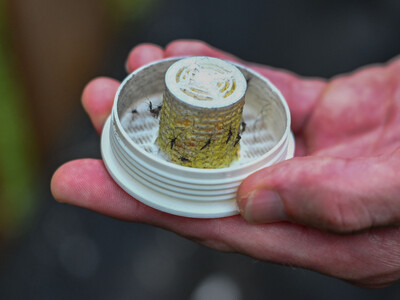
In suburban backyards near Washington, Todd Montgomery is releasing hundreds of male mosquitoes, not as a nuisance, but as a novel solution to pest control. These are male Aedes albopictus, or Asian tiger mosquitoes, carrying a gut bacterium called Wolbachia. When they mate with uninfected females, the resulting eggs do not hatch, effectively reducing the mosquito population.
This marks the first residential initiative of its kind in the United States, with plans to release 600,000 sterile mosquitoes across the region by the end of summer. Montgomery, founder of Bee Safe Mosquito Control, highlights the urgency driven by climate change, which is extending the season for disease-carrying insects. "With climate change, we are facing a ticking time bomb," he told AFP, noting the increase in warm, humid days that favor mosquito proliferation.
The "ZAP Males" treatment specifically targets the Asian tiger mosquito, a non-native species that is a vector for diseases like dengue. This is a growing concern, especially after the first locally acquired dengue case in northern Virginia was confirmed recently. Montgomery, a former electrical engineer, founded his company in 2023 with the goal of replacing traditional pesticide spraying in residential gardens.
Many clients, like 67-year-old breast cancer survivor Sandra Marquardt, are wary of pesticides, some of which are classified as potential carcinogens. Marquardt expressed relief, stating that the Wolbachia intervention "has been surprisingly effective" in managing mosquitoes in her garden, which she previously had to largely abandon during peak season.
The Wolbachia bacterium occurs naturally in many insects. Scientists have harnessed it to create a sterilization effect: when a male carrying the bacteria mates with a female that does not have it, or has a different strain, the eggs become inviable. Bee Safe Mosquito Control has enrolled 25 clients, each receiving 1,500 sterile mosquitoes weekly for 16 weeks, totaling 600,000 insects released. Internationally, Singapore leads with its public Project Wolbachia, releasing over 10 million mosquitoes weekly since 2016, with studies showing significant reductions in Aedes aegypti populations and dengue risk.
DistantNews Editorial
Originally published by Diario Libre in Spanish. Translated, summarized, and contextualized by our editorial team with added local perspective. Read our editorial standards.
More Stories



From Our Blog

What Gets Lost (and Found) When News Is Translated

The Critical Role of Diaspora Media in Global News

What Travellers Should Know About Countries with Restricted Press

A Digital Nomad's Guide to Following Local News

How the Same Story Looks Different in Different Countries
