


Volhynia Exhumations May Take Centuries Due to Procedures, Researcher Warns
Translated from Polish, summarized and contextualized by DistantNews.
At a glance
News
Named sources
Context piece
- Exhumations in Volhynia, Ukraine, are expected to take several hundred years due to complex legal and procedural issues, according to a researcher.
- Poland can currently conduct only two to three exhumations annually, with the current Wola Ostrowiecka site being the fifth in over 30 years.
- Dr. Leon Popek, a researcher of the Volhynia massacre, urges the creation of a "death pits database" with GPS coordinates and documentation to aid future searches.
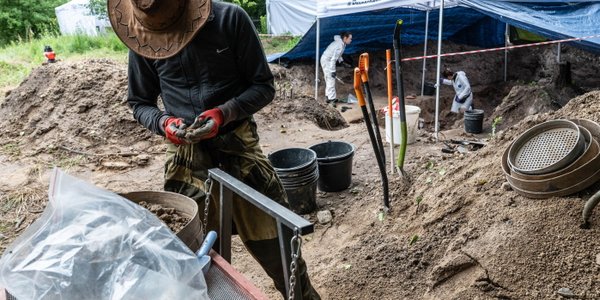
Exhumations of victims of the Volhynia massacre are likely to take several hundred years to complete, given the current pace and complex legal procedures, according to Dr. Leon Popek, a historian and researcher with the Institute of National Remembrance (IPN) in Lublin.
In the current situation, related to legislation and procedures, exhumations in Volhynia are a matter of the next few hundred years.
"In the current situation, related to legislation and procedures, exhumations in Volhynia are a matter of the next few hundred years," Popek told PAP. He noted that Poland is currently capable of conducting only two to three exhumations per year.
The current phase of exhumation work in Wola Ostrowiecka, Volhynia, is part of a long-standing effort. Since 1992, remains of 674 individuals have been found, exhumed, and properly buried in Ostrówki and Wola Ostrowiecka. Popek, involved since 1992, described the scale of the challenge as enormous.
We, despite good intentions and assurances (from the Ukrainian side), are unable to speed up these exhumations in a short time.
"We, despite good intentions and assurances (from the Ukrainian side), are unable to speed up these exhumations in a short time," Popek stated. He explained that even with all necessary approvals from Ukraine, the process involves obtaining consent for searches, time-consuming field investigations, securing discovered remains, and then submitting documentation to the Ukrainian Ministry of Culture for exhumation approval – a process that requires significant waiting.
This is very important, because at the moment the last generation of witnesses is leaving and we will lack those people who will say that 'it's somewhere here'.
Popek emphasized the urgency of the work, as the last generation of witnesses is passing away. "If no one gives us this information, we are lost, and in fact, some people will never be found," he said. He proposed creating a "death pits database" for Volhynia and Eastern Lesser Poland, complete with precise GPS coordinates and documentation, even if immediate exhumation is not possible. He estimates that creating such a database would take several years with multiple teams, but exhumations themselves would still take centuries for Volhynia alone, not including Eastern Lesser Poland.
If no one gives us this information, we are lost, and in fact, some people will never be found.
DistantNews Editorial
Originally published by Rzeczpospolita in Polish. Translated, summarized, and contextualized by our editorial team with added local perspective. Read our editorial standards.
More Stories


From Our Blog

What Gets Lost (and Found) When News Is Translated

The Critical Role of Diaspora Media in Global News

What Travellers Should Know About Countries with Restricted Press

A Digital Nomad's Guide to Following Local News

How the Same Story Looks Different in Different Countries
