

Warsaw's Grand Ring Road Closer to Decision as Four Variants Emerge
Translated from Polish, summarized and contextualized by DistantNews.
At a glance
News
Sources not specified
New plan
- Poland is planning a new ring road around Warsaw to ease traffic congestion and separate transit from urban travel.
- The project, known as the Warsaw Metropolitan Ring Road, will be 250-300 km long and is being developed in stages, with the western section most advanced.
- Four route options are under consideration, including one that utilizes the existing DK50 corridor, sparking debate among local communities about potential impacts.
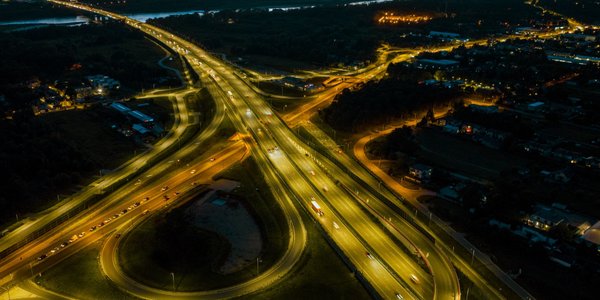
Warsaw's existing ring road, a patchwork of expressways and highways, is overwhelmed by daily traffic. With up to 200,000 vehicles per day on its busiest sections, the route struggles to handle city, suburban, and transit traffic simultaneously.
The problem is that the route runs through densely built-up parts of the agglomeration and simultaneously serves urban, suburban, and transit traffic.
The proposed Warsaw Metropolitan Ring Road (OAW) aims to alleviate this by creating a new, outer bypass. This 250-300 km ring is designed to divert traffic, particularly heavy trucks, away from the city center. The project is not a single undertaking but will be built in segments, with the western portion currently the most developed.
This western section will connect major routes like the S7, S10, and A2, creating a crucial link for traffic heading between cities such as Gdańsk, Poznań, Łódź, and Kraków. Depending on the final design, these roads will feature three or four lanes in each direction.
Its task will be to take over cars that do not need to enter the city – primarily trucks traveling through Mazovia between motorways and express roads.
Currently, Poland's General Directorate for National Roads and Motorways (GDDKiA) is evaluating four potential routes. Three involve entirely new alignments, while the fourth explores using the existing DK50 corridor, which already serves as a bypass. This latter option, along with a variant known as the Tarczyński variant, was added after initial public consultations in 2023 and further detailed in 2025. GDDKiA is assessing costs, traffic projections, technical feasibility, environmental impact, and land acquisition needs for each option.
Three assume building the road on a new alignment. The fourth involves using the corridor of the current DK50 as much as possible.
The proposed routes have ignited strong reactions in communities south and west of Warsaw. Residents and local governments have voiced opposition, with some petitioning against options that utilize the DK50, while others advocate for it to minimize new construction through residential areas. The challenge lies in balancing the needs of different communities, as widening DK50 could lead to increased traffic and noise near homes, while new routes could require significant land acquisition and demolition.
The route of the ring road is causing great emotions in the municipalities west and south of Warsaw.
DistantNews Editorial
Originally published by Rzeczpospolita in Polish. Translated, summarized, and contextualized by our editorial team with added local perspective. Read our editorial standards.
More Stories



From Our Blog

What Gets Lost (and Found) When News Is Translated

The Critical Role of Diaspora Media in Global News

What Travellers Should Know About Countries with Restricted Press

A Digital Nomad's Guide to Following Local News

How the Same Story Looks Different in Different Countries
