

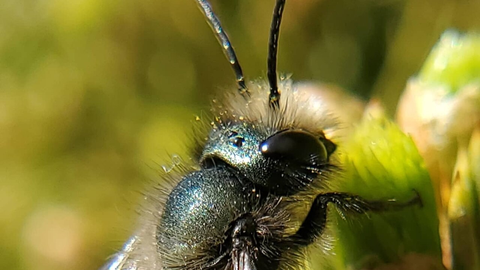
WATCH VIDEO ⟩ Bee Silk - What Is It and Can It Become a Plastic Substitute?
Translated from Estonian, summarized and contextualized by DistantNews.
At a glance
News
Sources not specified
Context piece
- Scientists are exploring bee silk as a potential replacement for plastic due to its lightweight, durable, and biodegradable properties.
- Researchers have created the first film from bee silk, experimenting with its combination with other unusual ingredients.
- Bee silk could become a significant material in medicine and high-tech industries if its properties are fully understood.
As the world grapples with plastic pollution, scientists are actively seeking sustainable alternatives. Among the promising materials drawing inspiration from nature is bee silk, which researchers believe could offer a lightweight, durable, and biodegradable substitute for conventional plastics.
While spider silk has garnered significant attention for its impressive qualities, bee silk presents a compelling alternative. This lesser-known material, produced by bees alongside honey and wax, holds potential as a "next star material" for medical and high-tech applications, provided its enigmatic properties can be fully deciphered.
Researchers at the University of Utah have achieved a breakthrough by creating the first film from bee silk. Their method is described as surprisingly gentle and non-invasive. The team is now exploring the potential of combining this bio-material with even more unconventional components, hinting at innovative applications.
The process of creating this new bio-material from the small cocoons is a subject of ongoing scientific inquiry. Understanding and harnessing the unique characteristics of bee silk could pave the way for significant advancements in material science and sustainable product development.
DistantNews Editorial
Originally published by Postimees in Estonian. Translated, summarized, and contextualized by our editorial team with added local perspective. Read our editorial standards.
More Stories
/nginx/o/2026/03/25/17528243t1hef76.jpg)
/nginx/o/2026/07/08/17770036t1hd9a1.jpg)
From Our Blog

What Gets Lost (and Found) When News Is Translated

The Critical Role of Diaspora Media in Global News

What Travellers Should Know About Countries with Restricted Press

A Digital Nomad's Guide to Following Local News

How the Same Story Looks Different in Different Countries
