

 Image: AP
Water Is a “Borderless Right” Turned Into a Commodity, Pope Leo XIV Says in Prayer for Millions Without Access
Translated from Spanish and summarized by DistantNews. Read the original for the full story.
At a glance
In-depth
Documents & data
Context piece
- Pope Leo XIV’s September prayer urges people to protect water as a universal, borderless right rather than treat it as a commodity.
- The prayer highlights people who lack clean water, including those who walk long distances to find it or become ill because of shortages.
- WHO and UNICEF data cited in the prayer campaign say 2.1 billion people lack safe drinking water, while low-income countries must accelerate progress to reach universal access by 2030.
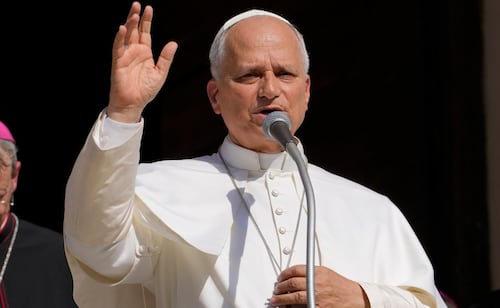
Pope Leo XIV has devoted his September prayer to water, calling it a "borderless right" that humanity has turned into a commodity while forgetting that it is a universal gift.
In the prayer, the pope asks forgiveness because water has been commercialized and expresses sorrow for people who lack clean water, walk for kilometers to find it or become sick because of its scarcity. He urges believers to protect the resource with gratitude, justice and responsibility.
borderless right
The prayer calls on people to become "pilgrims of what is essential": living more simply, denouncing waste and pollution, and defending everyone’s right to drink without fear or inequality. In a promotional video, Leo XIV asks people to imagine taking a drink of cold water after a hot day, hard work or a long walk, saying that the relief shows what a blessing clean water can be.
many brothers and sisters who do not have clean water, who walk kilometers to find it, who become sick because of its scarcity
The pope also says that one in four people worldwide still lacks safe drinking water. Data from the World Health Organization and UNICEF cited by the Global Network of Prayer with the Pope put the number at about 2.1 billion people. Another 106 million depend directly on untreated rivers, lakes or other surface water.
Global coverage of safely managed drinking water rose from 68% to 74% between 2015 and 2024, according to the same information. But low-income countries would need to move seven times faster than their current pace to achieve universal access by 2030.
pilgrims of what is essential, capable of living simply, denouncing waste and pollution, and defending every person’s right to drink without fear and without inequality
About this summary
Originally published by El Universal in Spanish. Translated, summarized, and contextualized automatically by DistantNews, with a note on how the source frames the story. Not individually reviewed before publishing. How this works.
More Stories

From Our Blog

What Press Freedom Means for the News You Read

What Gets Lost (and Found) When News Is Translated

The Critical Role of Diaspora Media in Global News

What Travellers Should Know About Countries with Restricted Press

A Digital Nomad's Guide to Following Local News
