


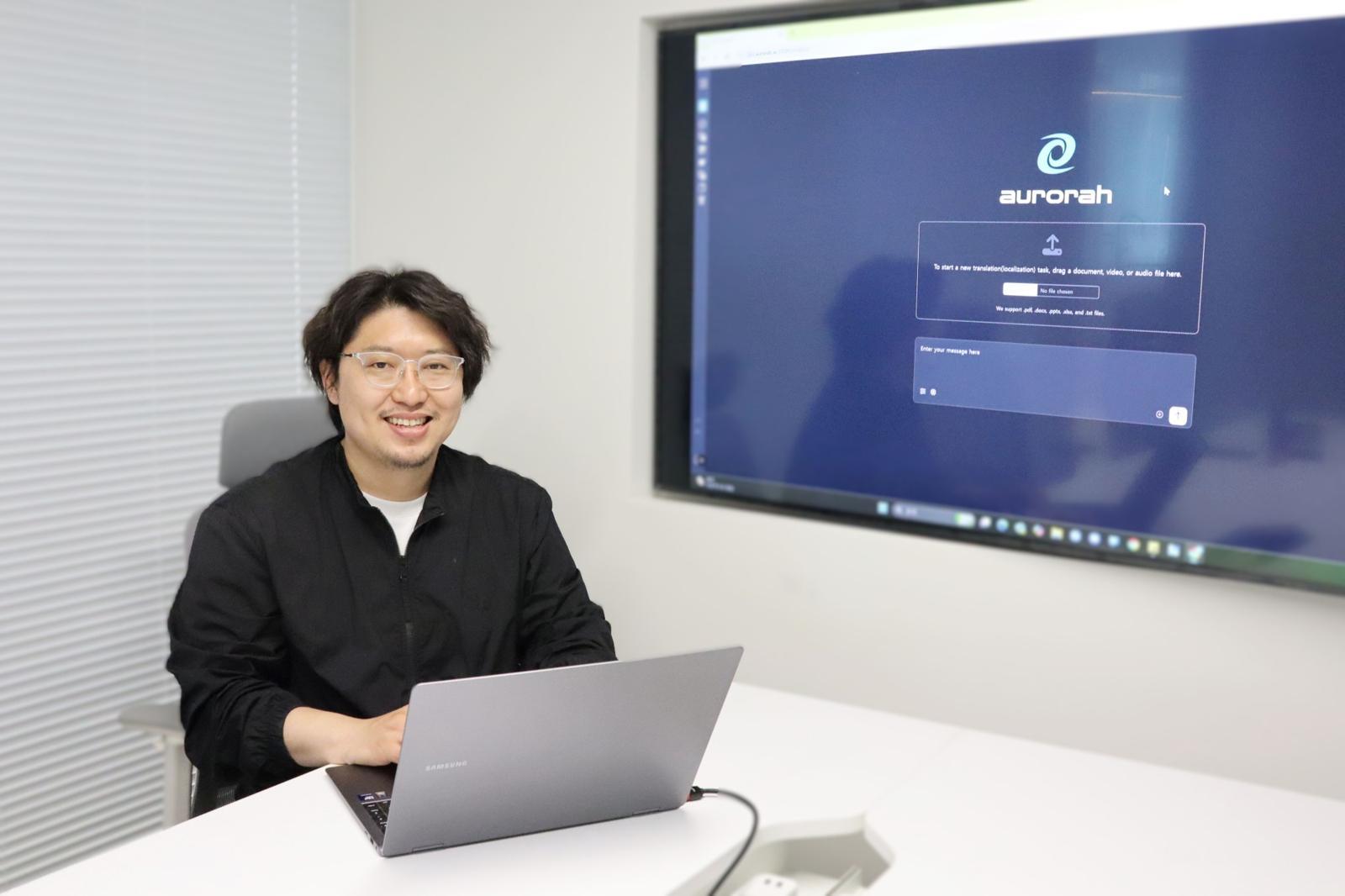
'We Can't Export Just by Translating': Hive Mind's 'Aurorah' Lowers Barriers for Web Novels Going Global [ICT Innovation Square Expansion Project]
Translated from Korean, summarized and contextualized by DistantNews.
At a glance
In-depth
Named sources
Context piece
- Hive Mind's AI platform 'Aurorah' aims to lower barriers for Korean web novels entering overseas markets.
- The platform offers a one-stop solution covering translation, editing, distribution, and settlement, addressing high translation costs and complex distribution processes.
- Hive Mind plans to become a global story IP hub by focusing on quality localization through AI and human review, starting with markets like Japan.
The global surge of K-content has seen the Korean web novel market explode, growing tenfold in the last decade. However, despite this growth, only a handful of web novels have successfully entered international markets. This disparity is largely due to the high cost of translation, which significantly outweighs production costs for text-based content, unlike visual media like films or dramas.
Hive Mind, a startup behind the global content publishing platform 'Aurorah,' is tackling this challenge using artificial intelligence. Aurorah is designed to facilitate the overseas publishing of Korean content, primarily web novels. Crucially, it provides comprehensive support throughout the entire publishing process, from translation and review to editing, distribution, and financial settlement. Hive Mind envisions Aurorah as a global story intellectual property (IP) hub, aiming to set the standard for K-content distribution worldwide.
Kim Dong-wook, CEO of Hive Mind, brings extensive experience as an accelerator who invested in content startups for nearly a decade before founding the company. Witnessing numerous publishers struggle with global expansion motivated his entrepreneurial venture. He highlighted the cost issue: "For webtoons, dramas, or movies, production costs are in the tens of billions of won, so the translation cost is relatively negligible. But for web novels, production costs are very low, while translation costs are around 70-80 won per character, leading to deficits of tens of millions of won per work."
For webtoons, dramas, or movies, production costs are in the tens of billions of won, so the translation cost is relatively negligible. But for web novels, production costs are very low, while translation costs are around 70-80 won per character, leading to deficits of tens of millions of won per work.
Beyond translation, Kim noted that publishers face even greater confusion in distribution and settlement. With around 40 domestic platforms, each having different settlement formats, navigating international markets introduces complexities like currency exchange rates and the need for local entities. To address this, Hive Mind developed Aurorah to integrate the five key publishing stages. "Translation is ultimately a tool to meet overseas readers and generate revenue," Kim explained. "Without content review, format conversion for different platforms, and distribution and settlement, it's ultimately useless."
Hive Mind's business model minimizes the burden on publishers. They do not incur separate costs for translation or localization. Instead, profits from IP revenue are shared equally. This structure not only opens up international markets without upfront investment but also aims to improve the opaque settlement practices common in the industry. To differentiate itself in an increasingly AI-driven translation landscape, Hive Mind emphasizes its specialized training data for K-content and a collaborative approach involving human reviewers. By leveraging data from web novel distributor Storin Lab's network of over 430 publishers, Hive Mind enhances translation quality while maintaining character consistency and narrative coherence. An AI generates the initial draft, followed by a final review by human translation experts, ensuring reliability.
Translation is ultimately a tool to meet overseas readers and generate revenue. Without content review, format conversion for different platforms, and distribution and settlement, it's ultimately useless.
DistantNews Editorial
Originally published by Dong-A Ilbo in Korean. Translated, summarized, and contextualized by our editorial team with added local perspective. Read our editorial standards.
More Stories

From Our Blog

What Gets Lost (and Found) When News Is Translated

The Critical Role of Diaspora Media in Global News

What Travellers Should Know About Countries with Restricted Press

A Digital Nomad's Guide to Following Local News

How the Same Story Looks Different in Different Countries
