

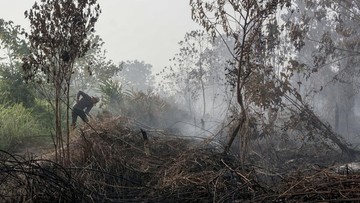

West Java Forest Fires Burn Nearly 200 Hectares This Year
Translated from Indonesian, summarized and contextualized by DistantNews.
At a glance
News
Sources not specified
Ongoing story
- West Java, Indonesia, has recorded nearly 200 hectares of forest and land fires across 19 regencies and cities this year.
- The fires, intensified since June, are widely distributed, with Sukabumi Regency having the largest burned area and Sumedang Regency the highest frequency of incidents.
- Authorities urge vigilance as the dry season peaks in August and September, with human activity cited as a dominant cause, including waste burning and land clearing.
Forest and land fires have scorched nearly 200 hectares across West Java, Indonesia, this year, affecting 153 villages in 19 regencies and cities. The fires, which began in February, have intensified since June, mirroring trends across the archipelago.
So, what requires attention is not just the total area burned, but also the fact that the fires are widely distributed across West Java.
Authorities are urging continued vigilance as the dry season peaks in September. "So, what requires attention is not just the total area burned, but also the fact that the fires are widely distributed across West Java," Teten Ali Mulku Engkun, Head of the West Java Regional Disaster Management Agency (BPBD), told Tempo. The Meteorology, Climatology, and Geophysics Agency (BMKG) predicts the dry season's peak will occur in August.
Sumedang Regency has reported the highest number of incidents, with 20 fires across 21 villages. However, Sukabumi Regency has the largest total burned area, with 12 incidents covering 49.20 hectares. Other affected areas include Majalengka, Bandung, Subang, Kuningan, and Purwakarta.
The BMKG [Meteorology, Climatology, and Geophysics Agency] predicts that most areas will experience the peak of the dry season in August.
Human activity is frequently the dominant factor behind these fires, according to Engkun. Common causes include waste burning, land clearing through fire, discarded cigarette butts, and other flammable vegetation. While no fires have spread to residential areas, the impact of drought is also widespread, affecting over 588,000 individuals across West Java.
However, human activity can be a dominant factor, specifically waste burning, land clearing via burning, cigarette butts, and other activities.
DistantNews Editorial
Originally published by Tempo in Indonesian. Translated, summarized, and contextualized by our editorial team with added local perspective. Read our editorial standards.
More Stories


From Our Blog

What Gets Lost (and Found) When News Is Translated

The Critical Role of Diaspora Media in Global News

What Travellers Should Know About Countries with Restricted Press

A Digital Nomad's Guide to Following Local News

How the Same Story Looks Different in Different Countries
