


West Nile Virus Cases Surge in Greece, Prompting Urgent Health Warnings
Translated from Greek, summarized and contextualized by DistantNews.
At a glance
News
Sources not specified
Context piece
- Greece is experiencing a rapid increase in West Nile virus cases, with over two-thirds of the 110 reported cases concentrated in Attica.
- This year's case numbers are higher than in previous years, raising concerns that it could become one of the most difficult seasons on record.
- The Hellenic Society of Infectious Diseases urges comprehensive mosquito control measures beyond just spraying, including environmental management and enhanced surveillance.
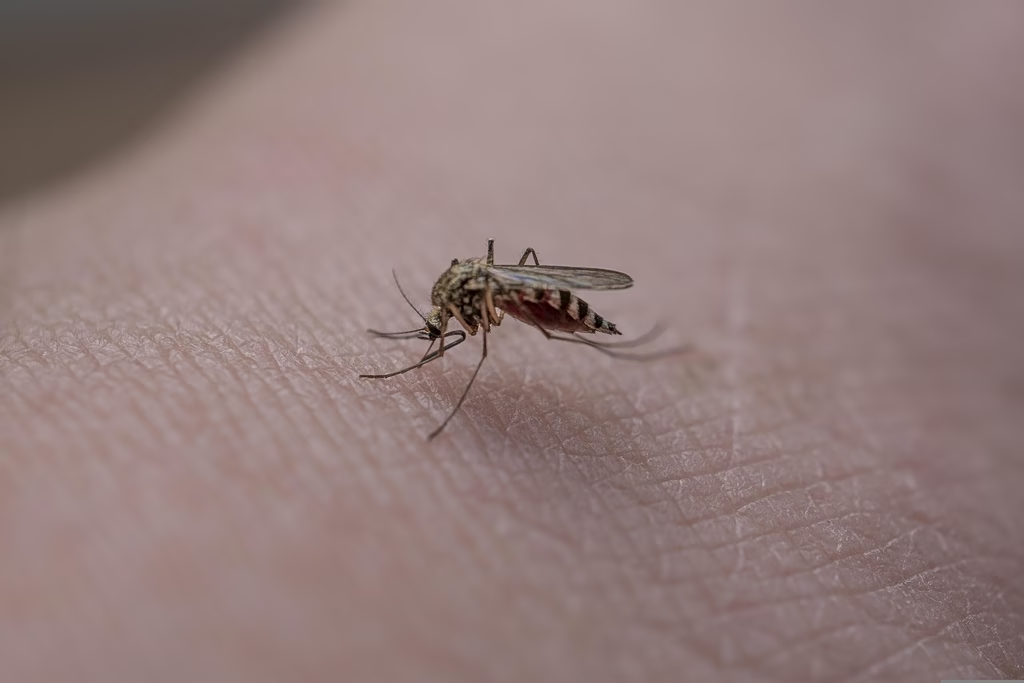
Greece is grappling with a significant surge in West Nile virus infections, with weekly case numbers climbing rapidly. As of last Wednesday, 110 cases had been reported nationwide, a figure already exceeding those recorded by the same period in several previous years. More than two-thirds of these infections are in the Attica region, prompting concern from health authorities.
Health officials warn that if the current trend continues, this season could rank among the most severe in recent years. The peak of the seasonal outbreak is typically expected from late August through mid-September, a period that has now arrived with heightened virus circulation. The Hellenic Society of Infectious Diseases has expressed strong concern, emphasizing that the virus's transmission can still be limited.
Greece already possesses the structures and expertise to address the problem. What is now required is speed, coordination, targeted interventions, and escalation.
The society advocates for a multifaceted approach to combating the virus, stating that reliance solely on spraying is insufficient. They call for integrated vector management, environmental controls, entomological surveillance, and continuous evaluation of interventions. Among their proposed 12 immediate measures are escalating actions in active transmission zones, intensifying larvicide and adult mosquito control in critical areas like storm drains and abandoned pools, and improving real-time risk mapping.
"Greece already possesses the structures and expertise to address the problem," the Hellenic Society of Infectious Diseases stated. "What is now required is speed, coordination, targeted interventions, and escalation." They urge against delaying increased intervention efforts until cases rise further, stressing the need for immediate and decisive action.
we should not wait for the further increase of cases to increase the intensity of interventions.
DistantNews Editorial
Originally published by Kathimerini in Greek. Translated, summarized, and contextualized by our editorial team with added local perspective. Read our editorial standards.
More Stories


From Our Blog

What Gets Lost (and Found) When News Is Translated

The Critical Role of Diaspora Media in Global News

What Travellers Should Know About Countries with Restricted Press

A Digital Nomad's Guide to Following Local News

How the Same Story Looks Different in Different Countries
