


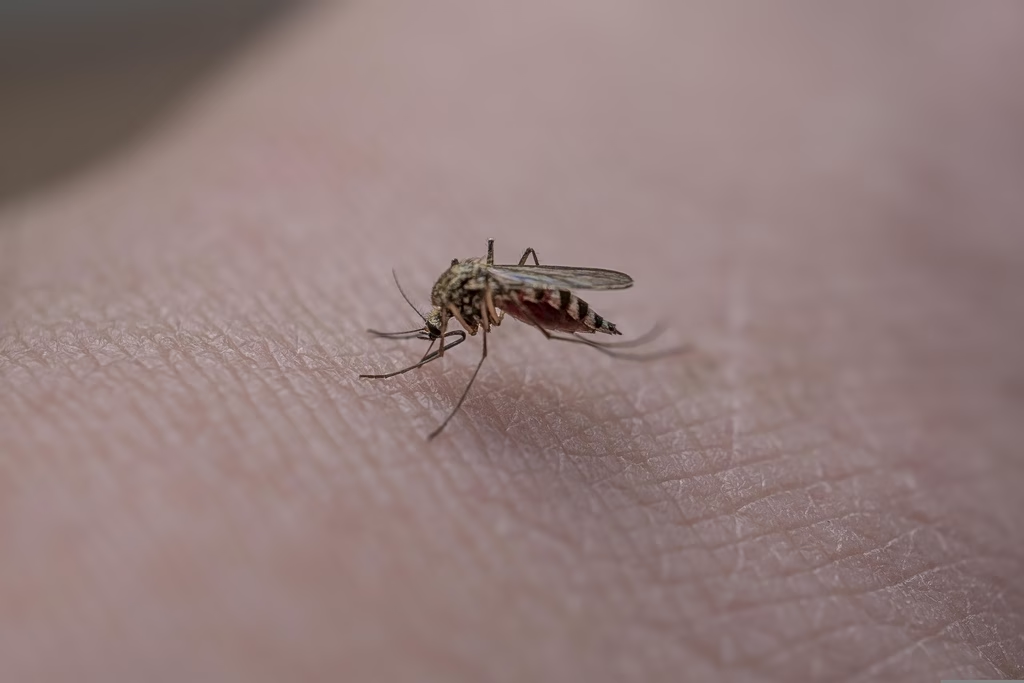
West Nile Virus: Greece's Infectious Diseases Society Urges Immediate Reassessment and New Measures
Translated from Greek, summarized and contextualized by DistantNews.
At a glance
News
Sources not specified
Context piece
- Greece's Hellenic Society of Infectious Diseases expressed strong concern over the rising West Nile virus cases, urging immediate reassessment and new measures.
- With 110 domestic cases and 9 deaths by August 12, the society highlighted that mosquito activity is ongoing and called for swift, coordinated interventions beyond just spraying.
- The society proposed 12 immediate measures, including treating areas with human cases as high-risk zones and intensifying mosquito control efforts in breeding grounds.
The Hellenic Society of Infectious Diseases has voiced significant alarm over the escalating number of West Nile virus cases in Greece, urging an "immediate reassessment" of the situation and the implementation of "new measures."
the current epidemiological picture demands immediate reassessment and, where necessary, escalation of existing actions.
As of August 12, the country had recorded 110 domestic cases and nine deaths. The society emphasized that the peak season for mosquito activity is still underway, stressing that there is still time to curb further transmission through "speed, better coordination, and targeted interventions."
The interventions must be carried out at the right place, at the right time, and with sufficient intensity, according to epidemiological and entomological data.
While acknowledging existing surveillance and mosquito control programs by the Ministry of Health, EODY, Regions, and Municipalities, the society stated that the current epidemiological picture "demands immediate reassessment and, where necessary, escalation of existing actions." Interventions must be precise in location, timing, and intensity, guided by epidemiological and entomological data.
The treatment of the West Nile virus cannot be based exclusively on spraying.
The society also stressed that combating the West Nile virus requires a comprehensive approach, not solely relying on spraying. This includes integrated vector management, combining larval control, targeted adult mosquito control where indicated, environmental management, entomological surveillance, and continuous evaluation of intervention effectiveness. They proposed 12 immediate measures, such as designating municipalities with human cases and surrounding areas as high-risk zones, and intensifying mosquito control in breeding sites like storm drains, streams, and abandoned pools.
It is not too late to intervene. The reduction of the population
DistantNews Editorial
Originally published by Ta Nea in Greek. Translated, summarized, and contextualized by our editorial team with added local perspective. Read our editorial standards.
More Stories


From Our Blog

What Gets Lost (and Found) When News Is Translated

The Critical Role of Diaspora Media in Global News

What Travellers Should Know About Countries with Restricted Press

A Digital Nomad's Guide to Following Local News

How the Same Story Looks Different in Different Countries
