

What Remains Unchanged Through the Ages
Translated from Korean, summarized and contextualized by DistantNews.
At a glance
Analysis
Sources not specified
Context piece
- The upcoming "Toy Story 5" uses the phrase "Our time is not over yet" to create anticipation, despite the changing media landscape.
- The rise of tablets and digital entertainment has led children to abandon traditional toys, creating a sense of obsolescence for characters like Woody and Buzz.
- The film explores themes of belonging and value in a rapidly evolving world, suggesting that the worth of individuals and cherished items endures despite societal shifts.
The announcement of "Toy Story 5" arrives with a provocative tagline: "Our time is not over yet." This phrase, seemingly paradoxical for a franchise built on toys, cleverly generates anticipation by acknowledging the potential end of an era. The core tension arises from the increasing dominance of tablets and digital entertainment, which are drawing children away from physical toys and into virtual worlds of games and chats.
Our time is not over yet.
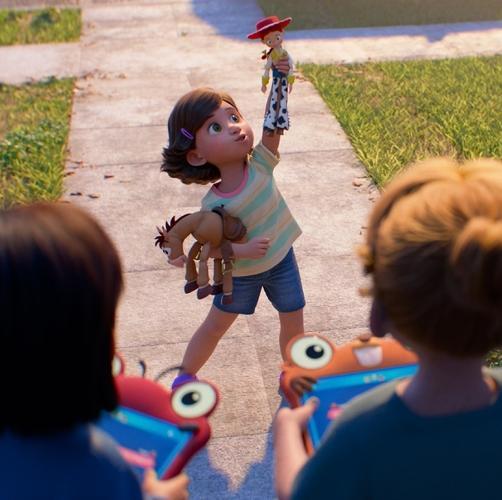
For beloved characters like Woody and Buzz, this shift represents a form of "end times." Toys are being relegated to storage or discarded as children immerse themselves in tablet-based interactions. This change in media consumption is jarring for the toys, who face the profound betrayal and hurt of being abandoned by the children they once delighted. Even young Bonnie, who once played imaginatively with toys, finds herself adapting to the tablet-centric reality, where peers view traditional play as peculiar.
The era of toys is over.' 'Toy Story 5' uses this phrase to create anticipation.
Bonnie's immersion in her tablet, "Lily Pad," leads to friendships but also exposes her to hurtful exchanges. The narrative of "Toy Story 5" will likely follow the toys as they unite to confront the crisis of being discarded due to Bonnie's adaptation to new technology. Their rallying cry, "Our time is not over yet," becomes a declaration that their intrinsic value persists, even as the world moves on.
Toys are put in boxes and taken to the basement or thrown away. This is a change of era created by the emergence of new media, but from the perspective of classic toys, it is a shock close to the end.
Beyond the adventure of the toys, the film serves as a poignant reflection on obsolescence and value in a fast-paced world. It prompts viewers to consider the enduring worth of individuals and cherished objects, suggesting that true value transcends the passage of time and the emergence of new trends. The toys' struggle highlights the universal theme of finding one's place and purpose when the world seems to have moved past you.
Our time is not over yet.
DistantNews Editorial
Originally published by Dong-A Ilbo in Korean. Translated, summarized, and contextualized by our editorial team with added local perspective. Read our editorial standards.
More Stories


From Our Blog

What Gets Lost (and Found) When News Is Translated

The Critical Role of Diaspora Media in Global News

What Travellers Should Know About Countries with Restricted Press

A Digital Nomad's Guide to Following Local News

How the Same Story Looks Different in Different Countries
