


Why Missed Attempts and Wrong Turns Are Necessary
Translated from Korean, summarized and contextualized by DistantNews.
At a glance
Analysis
Sources not specified
Context piece
- Trying and failing, or "trial and error," is essential for learning and adaptation, according to research.
- The brain learns from mistakes by re-calibrating motor skills and neural pathways.
- In a rapidly changing world, especially when forging new paths, embracing "trial and error" is not just beneficial but necessary for growth and innovation.
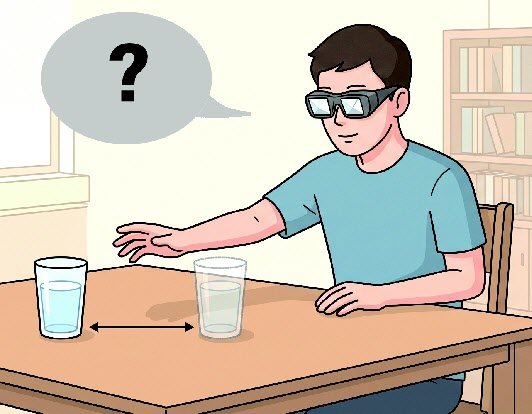
The notion that avoiding mistakes is always best is challenged by research suggesting that "trial and error" is crucial for learning and adaptation. A study from Johns Hopkins University School of Medicine demonstrated this when participants wearing special glasses that distorted their vision struggled to grasp a water glass. Initially, they made many "missed attempts," but with each try, their brains recalibrated their motor skills to adjust for the visual distortion.
Isn't it better to avoid trial and error as much as possible?
This research highlights that our brains don't just remember successes; they also learn from the process of failure. Even after removing the distorting glasses, participants initially made more "missed attempts" as their brains had adapted to the previous distortion. However, this experience made it easier for them to adapt to new distortions, such as glasses that shifted vision in the opposite direction. The study implies that engaging in "missed attempts" facilitates neural recalibration, making subsequent learning processes smoother.
Our brains remember not only how to succeed but also the process of how we failed, and re-set our actions.
This principle extends beyond simple motor skills. The research suggests that when we attempt new tasks or explore uncharted territory, "missed attempts" are not futile but are integral to the process. Success is important, but failure often provides more opportunities for learning, leading to greater brain flexibility. This is particularly relevant in contexts where individuals or nations are not simply following a known path but are forging their own.
Trial and error is not something that should be avoided; it is necessary.
In a global context, this idea reframes how we approach challenges. While a clear direction might make rapid progress efficient, charting a new course requires exploration. Just as the experiment involved trying different directions to find the correct one, navigating the unknown necessitates "missed attempts" to discover the right path and make necessary adjustments. This process is not merely a stepping stone but a fundamental requirement for true innovation and growth, akin to how new species emerge through evolutionary trial and error.
When we have to set our own direction, not just follow someone, we need 'missed attempts' like in the experiment.
DistantNews Editorial
Originally published by Dong-A Ilbo in Korean. Translated, summarized, and contextualized by our editorial team with added local perspective. Read our editorial standards.
More Stories



From Our Blog

What Gets Lost (and Found) When News Is Translated

The Critical Role of Diaspora Media in Global News

What Travellers Should Know About Countries with Restricted Press

A Digital Nomad's Guide to Following Local News

How the Same Story Looks Different in Different Countries
