


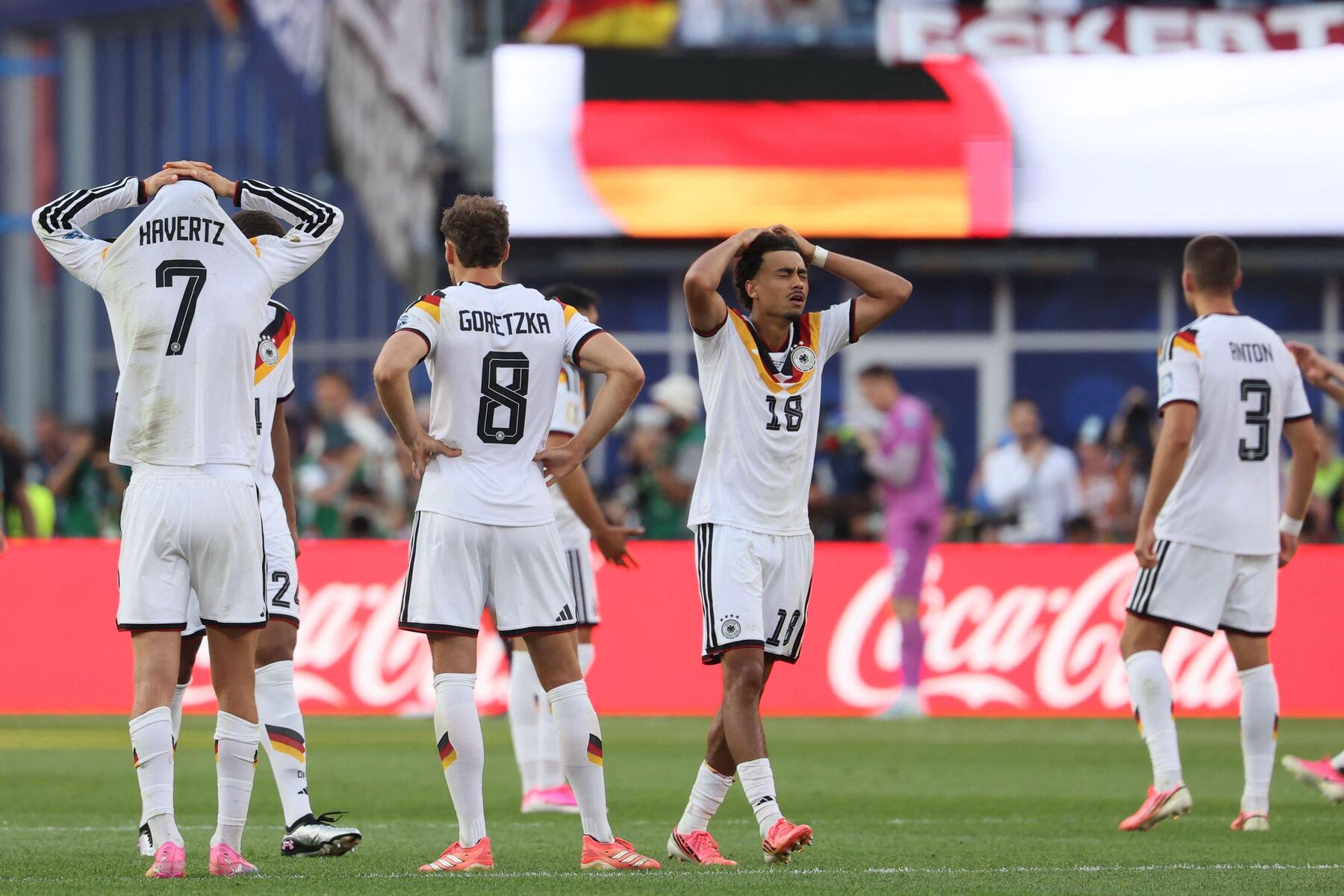
When Germany Fails in Penalty Shootouts Like England at the World Cup
Translated from German, summarized and contextualized by DistantNews.
At a glance
Analysis
Documents & data
Context piece
- The article discusses Germany's historical struggles and future prospects in World Cup penalty shootouts.
- It analyzes statistical factors influencing penalty success, such as shot placement and run-up length.
- The piece also touches on psychological aspects and tactical approaches used by goalkeepers.
Germany's history with penalty shootouts in the World Cup is a complex narrative, marked by both early success and recent stumbles. While Germany won the first-ever World Cup penalty shootout against France in 1982 and remained undefeated in their subsequent three attempts, this impressive record was recently marred by a "blamage" against Paraguay in the current tournament.
Statistically, the data suggests a straightforward approach: aiming high in the goal is consistently a successful strategy, with 39 such shots in World Cup history all resulting in goals. However, not all players can execute this, leading some to favor the lower corners. The left corner, from the shooter's perspective, is statistically recommended, with approximately 85 percent of penalties converted there.
Beyond placement, precision is highlighted as more critical than shot power. An analysis of 100,000 penalties worldwide since 2009 found that accuracy is key. Furthermore, a longer run-up, exceeding five steps, increases the probability of success. This contrasts with players like Sócrates, who famously took penalties from a standstill.
Psychological factors and tactical preparations also play a significant role. Goalkeepers are increasingly using detailed briefings, sometimes even written on their water bottles, to gain an edge. The time taken by the shooter is also crucial; a calm, focused approach, free from undue pressure from the goalkeeper or referee, is advised. Interestingly, a penalty that can secure a team's advancement to the next round boasts a remarkable 92 percent success rate. Statistically, the decision of who shoots first appears to be inconsequential.
DistantNews Editorial
Originally published by Die Presse in German. Translated, summarized, and contextualized by our editorial team with added local perspective. Read our editorial standards.
More Stories



From Our Blog

What Gets Lost (and Found) When News Is Translated

The Critical Role of Diaspora Media in Global News

What Travellers Should Know About Countries with Restricted Press

A Digital Nomad's Guide to Following Local News

How the Same Story Looks Different in Different Countries
