


WHO calls for more support to fight record Ebola epidemic in Congo
Translated from Spanish, summarized and contextualized by DistantNews.
At a glance
News
Named sources
Ongoing story
- The World Health Organization (WHO) is requesting increased support to combat the Ebola epidemic in the Democratic Republic of Congo (DRC).
- The current outbreak is the largest ever recorded in the country, spreading faster than the health response.
- As of the report, there are 3,748 confirmed cases, with 1,657 deaths and 708 recoveries.
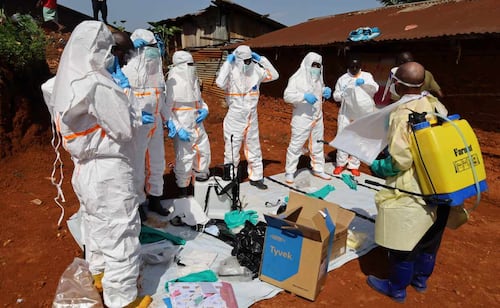
The World Health Organization (WHO) urgently calls for enhanced support across all sectors to effectively combat the Ebola epidemic ravaging the Democratic Republic of Congo (DRC). The current outbreak, declared less than three months ago, has rapidly become the most severe in the nation's history and is outpacing containment efforts.
"Unfortunately, the outbreak continues to expand beyond the capacity of our response," stated WHO spokesperson Tarik Jasarevic to journalists in Geneva. He emphasized the critical need for "more support in terms of funding, but also other resources to scale up all areas of response: treatment capacity, field investigation teams, safe burial teams, and community workers."
Unfortunately, the outbreak continues to expand beyond the capacity of our response.
To date, the DRC has recorded 3,748 confirmed Ebola cases. Of these, 1,657 individuals have succumbed to the virus, while 708 have recovered. An additional 227 suspected cases are under investigation, and contact tracing is underway for 17,000 individuals, with over 80% receiving daily check-ups. The majority of cases are concentrated in the northeastern provinces of Ituri and North Kivu.
Jasarevic stressed that response efforts must strategically focus on current hotspots and potential future transmission zones. Ebola, a viral hemorrhagic fever, spreads through direct contact with infected bodily fluids. While no licensed vaccine or treatment exists for the specific Bundibugyo strain responsible for this epidemic, several trials for potential treatments, vaccines, and post-exposure antivirals are in progress. The DRC declared this outbreak, its seventeenth, on May 15.
We need more support in terms of funding, but also other resources to scale up all areas of response: treatment capacity, field investigation teams, safe burial teams, and community workers.
DistantNews Editorial
Originally published by El Universal in Spanish. Translated, summarized, and contextualized by our editorial team with added local perspective. Read our editorial standards.
More Stories

From Our Blog

What Press Freedom Means for the News You Read

What Gets Lost (and Found) When News Is Translated

The Critical Role of Diaspora Media in Global News

What Travellers Should Know About Countries with Restricted Press

A Digital Nomad's Guide to Following Local News
