


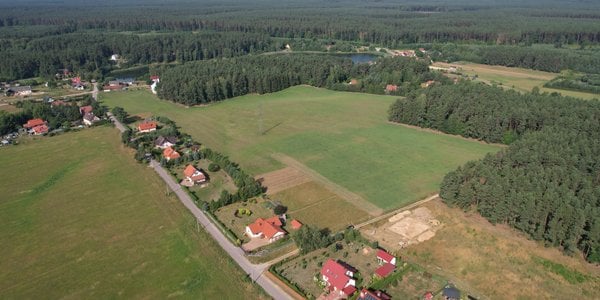
Who Can Acquire Land Through Adverse Possession? Conditions, Costs, and Step-by-Step Procedure
Translated from Polish, summarized and contextualized by DistantNews.
At a glance
Explainer
Sources not specified
Context piece
- Acquiring land through adverse possession in Poland allows individuals to gain ownership of a property they have occupied for a specific period.
- The process requires 'independent possession,' meaning the occupant acts as the owner, and the time frame varies based on good or bad faith (20 or 30 years, respectively).
- To claim ownership, occupants must provide strong evidence, such as tax payments and witness testimonies, and the process involves court fees and property tax.
In Poland, the concept of adverse possession, known as 'zasiedzenie,' offers a legal pathway for individuals to acquire ownership of land they do not officially own but have occupied and managed as if they were the proprietor for a set duration. This legal mechanism is significant for both those using someone else's land without formal title and for landowners seeking to protect their property rights.
The core requirement for adverse possession is 'independent possession,' which goes beyond mere use. It involves acting like an owner, which can include fencing the property, cultivating the land, paying property taxes, or constructing buildings. Tenants or lessees, who are considered 'dependent possessors,' cannot claim ownership through this process. The required period for acquisition depends on the occupant's 'good faith' or 'bad faith.' A 20-year period applies if the occupant genuinely believed they were the legal owner at the time of taking possession, perhaps due to an error in a deed. A 30-year period is required if the occupant knew or should have known the land was not theirs but used it anyway, for instance, by developing an unused plot.
To successfully claim ownership through adverse possession, an individual must present compelling evidence to the regional court. This evidence can include proof of property tax payments, testimony from neighbors, historical and contemporary photographs, maps, documentation of fencing or utility connections, and records of land improvements. The legal procedure involves filing an application with the appropriate regional court, specifying the current owner or their heirs. The process incurs a court fee of 2,000 PLN, and if the claim is successful, the new owner must also pay a property tax of 7% of the property's value. Landowners can protect their property by regularly inspecting it and by interrupting the possession period, for example, by filing a lawsuit for recovery of the property or by entering into a lease agreement with the occupant, which changes their possession status from independent to dependent.
DistantNews Editorial
Originally published by Rzeczpospolita in Polish. Translated, summarized, and contextualized by our editorial team with added local perspective. Read our editorial standards.
More Stories


From Our Blog

What Gets Lost (and Found) When News Is Translated

The Critical Role of Diaspora Media in Global News

What Travellers Should Know About Countries with Restricted Press

A Digital Nomad's Guide to Following Local News

How the Same Story Looks Different in Different Countries
