


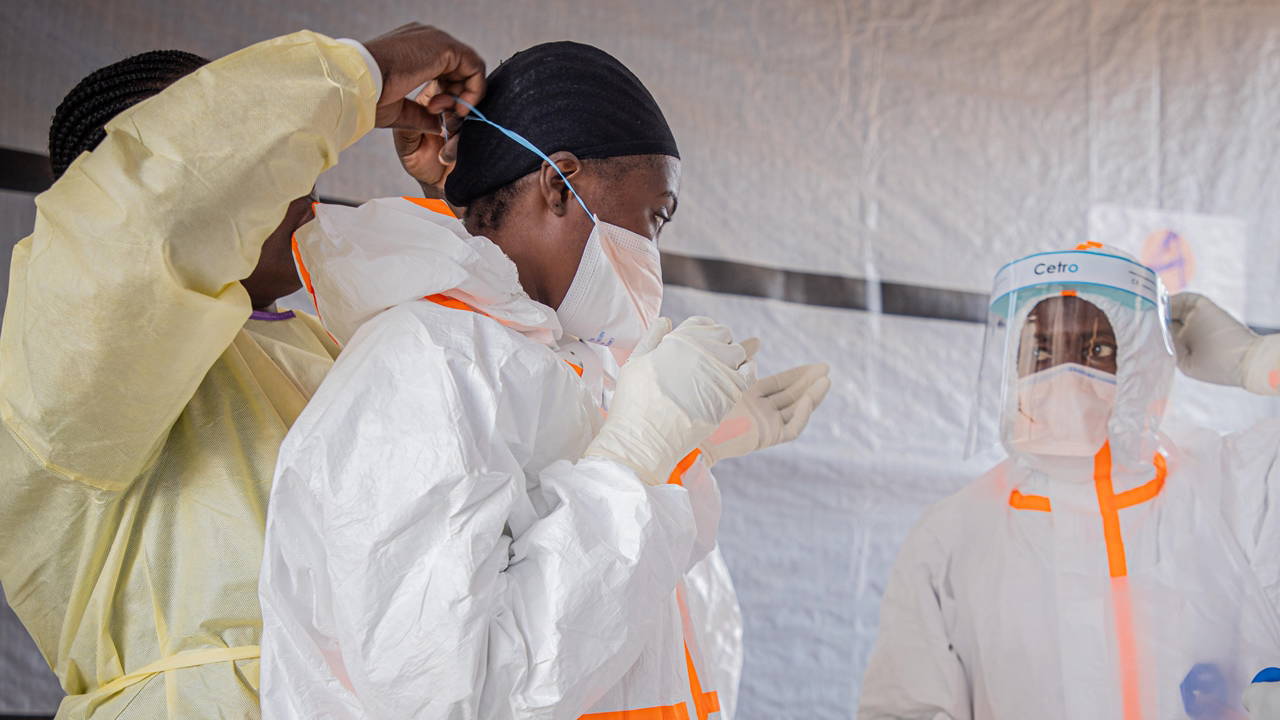
WHO highlights security challenges hindering Ebola response in DRC
Translated from Turkish, summarized and contextualized by DistantNews.
At a glance
News
Sources not specified
Ongoing story
- The World Health Organization (WHO) Director-General, Tedros Adhanom Ghebreyesus, provided an update on the Ebola outbreak in the Democratic Republic of Congo (DRC).
- Over 2,500 cases have been reported since the outbreak began in May, with more than 1,000 deaths and over 500 recoveries.
- Security issues and active conflicts are hindering access to affected areas, potentially doubling the actual number of cases and preventing effective response efforts.
The World Health Organization (WHO) is facing significant challenges in combating the Ebola outbreak in the Democratic Republic of Congo (DRC), with security concerns severely hampering response efforts. WHO Director-General Tedros Adhanom Ghebreyesus highlighted that insecurity and ongoing conflicts restrict access to affected regions, leading to an estimated doubling of the actual number of cases beyond the reported figures.
Since the outbreak was declared in May, over 2,500 cases have been reported, resulting in more than 1,000 deaths and over 500 recoveries. Ghebreyesus pointed out that a majority of fatalities occurred in civilian settlements rather than treatment centers, underscoring the difficulties in reaching and treating patients promptly.
The people of the DRC cannot face this epidemic alone. They need the continued support of the international community and, above all, peace.
Despite achieving approximately 80% contact tracing among identified individuals, response teams are unable to access all areas. This limitation prevents the diagnosis of all cases and hinders the deployment of intervention teams. Ghebreyesus noted that while progress has been made, the spread of the epidemic is outpacing the speed of the response.
"The people of the DRC cannot face this epidemic alone. They need the continued support of the international community and, above all, peace," Ghebreyesus stated, emphasizing the critical need for political solutions and a ceasefire to facilitate humanitarian corridors. He stressed that technical challenges are compounded by the need for political action, as the population requires both international assistance and a stable environment to overcome the crisis.
Insecurity and active conflicts continue to restrict access to affected areas, so it is estimated that the actual number of people infected could be more than double the reported figure.
DistantNews Editorial
Originally published by Cumhuriyet in Turkish. Translated, summarized, and contextualized by our editorial team with added local perspective. Read our editorial standards.
More Stories



From Our Blog

What Gets Lost (and Found) When News Is Translated

The Critical Role of Diaspora Media in Global News

What Travellers Should Know About Countries with Restricted Press

A Digital Nomad's Guide to Following Local News

How the Same Story Looks Different in Different Countries
