

Why do Bucharest's trees fall in every storm? An expert explains
Translated from Romanian, summarized and contextualized by DistantNews.
At a glance
News
Sources not specified
Outcome reported
- A severe storm in Bucharest caused approximately 1,000 trees to fall, damaging cars and flooding homes.
- An expert attributes the high number of fallen trees not just to extreme weather but to inadequate management of the city's green spaces.
- Issues include improper care of trees, insufficient root space for urban trees, and artificial shaping that creates weak points.
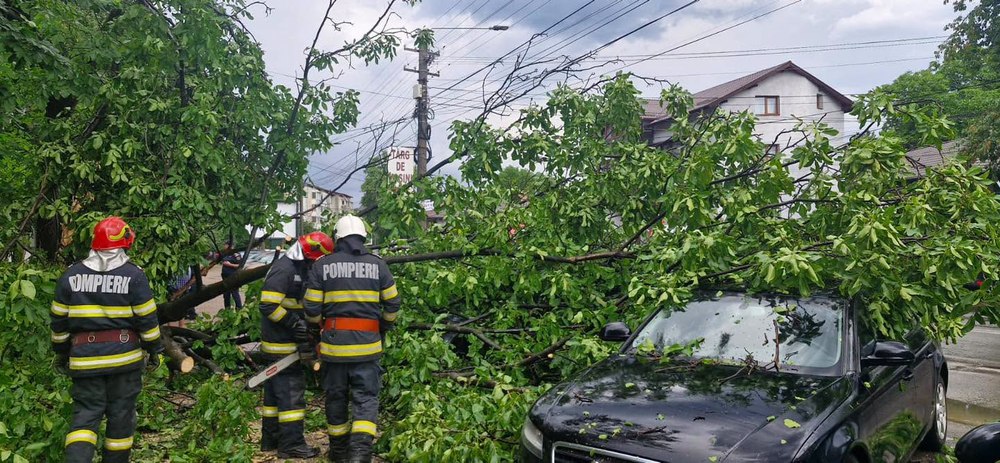
Bucharest experienced significant damage after a storm felled around 1,000 trees across the capital. The Inspectorate for Emergency Situations Bucharest-Ilfov (ISUBIF) reported extensive interventions, including the removal of fallen trees, damaged building elements, and numerous basement and home floods. The storm also affected 450 vehicles and 66 buildings.
In the case of trees, especially, we are talking about living beings. The main reason why so many fall is, however, their inadequate management.
Diana Culescu, vice-president of the Association of Landscape Architects of Romania, explained that while storms are extreme weather events, the sheer number of trees falling in Bucharest points to deeper issues with urban green space management. She noted that trees, as living organisms, can succumb during severe weather, similar to how roofs or infrastructure might fail, but the scale of the problem in Bucharest is indicative of neglect.
Culescu cited an example of a dead tree near the Palace of Parliament that had been left standing for years, illustrating a lack of proactive maintenance by public administration. She also pointed to trees along Calea Victoriei, where successive pruning and limited root space have created "breaking points," leading to numerous branches snapping or entire trees uprooting during the storm.
For example, even today I photographed someone who was most likely from the public administration and was inventorying a fallen tree. However, that tree had been dead for several good years and nobody did absolutely anything to remove it. It is right next to the Parliament Palace.
The inadequate care and management of urban trees, rather than the storm's intensity alone, is the primary reason for such widespread damage. Culescu emphasized that proper arboricultural practices, including timely removal of dead or hazardous trees and ensuring adequate space for root development, are crucial for maintaining the safety and resilience of Bucharest's urban forest.
If you look, for example, on Calea Victoriei, many branches broke off from the trees planted there, because these trees are "formed trees", meaning their shape is artificially obtained through cuts that create breaking points.
DistantNews Editorial
Originally published by Adevărul in Romanian. Translated, summarized, and contextualized by our editorial team with added local perspective. Read our editorial standards.
More Stories



From Our Blog

What Gets Lost (and Found) When News Is Translated

The Critical Role of Diaspora Media in Global News

What Travellers Should Know About Countries with Restricted Press

A Digital Nomad's Guide to Following Local News

How the Same Story Looks Different in Different Countries
