


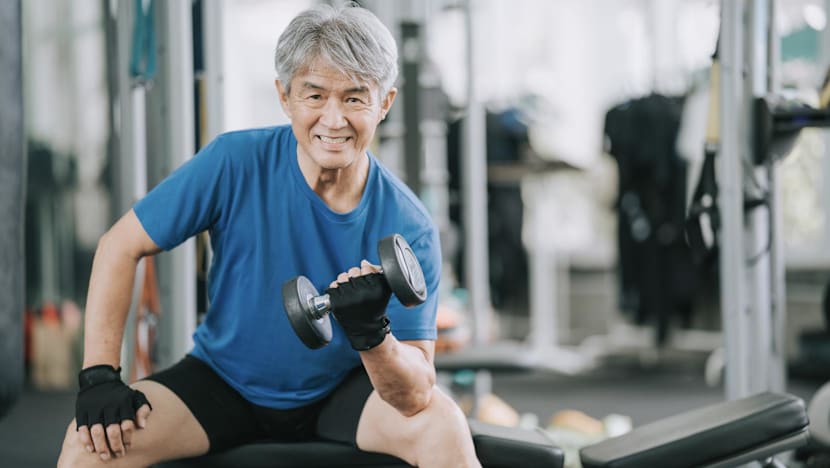
Why every senior should strength train – and it's not just to prevent falls
Summarized and contextualized by DistantNews.
At a glance
In-depth
Named sources
Context piece
- Age-related muscle loss, or sarcopenia, affects seniors, increasing fall risks and reducing independence.
- A new study links sarcopenia to cancer, as aging muscles secrete fewer anti-tumor signals.
- Strength training and exercise can help combat sarcopenia and potentially reactivate the muscles' cancer-inhibiting functions.
As Singapore's population ages, the effects of sarcopenia, or age-related muscle loss, are becoming increasingly apparent. Seniors often experience a decline in mobility, shuffling instead of striding, and struggling with daily activities like rising from a chair. This gradual weakening not only makes them move more slowly but also significantly increases their risk of falls, hindering their ability to stay active and independent.
Some people may also notice that they are moving more slowly or avoiding activities they used to comfortably do. Over time, these changes can increase the risk of falls and make it harder to stay active and independent.
Dr. Chen Shuyu from Tan Tock Seng Hospital's Geriatric Medicine department notes that many patients at the Falls And Balance Clinic are at risk of sarcopenia. Alarmingly, falls leading to hospitalization are occurring in Singapore at younger ages, with individuals as young as 65 being admitted. Yang Wenshan, a principal physiotherapist at National University Hospital, confirms that muscle mass naturally decreases by 1% to 2% annually after age 50.
Adding to these concerns, a recent Duke-NUS study published in April 2026 reveals a direct link between sarcopenia and cancer. Skeletal muscles normally secrete anti-tumor messengers called extracellular vesicles (EVs), which contain micro-RNA molecules that help restrain tumor growth. However, sarcopenic muscles produce fewer EVs, and those produced contain lower levels of these crucial tumor-suppressing signals.
I have seen patients as young as 65 years old admitted following a fall, which is at the younger end of the older adult age spectrum.
The research offers a glimmer of hope: exercise can reactivate the muscles' ability to release these protective EVs. This finding underscores the critical importance of strength training and regular physical activity for seniors, not just to prevent falls but also to potentially bolster their bodies' natural defenses against cancer.
With advanced age, it is even more imp
DistantNews Editorial
Originally published by CNA. Summarized and contextualized by our editorial team with added local perspective. Read our editorial standards.
More Stories


From Our Blog

What Gets Lost (and Found) When News Is Translated

The Critical Role of Diaspora Media in Global News

What Travellers Should Know About Countries with Restricted Press

A Digital Nomad's Guide to Following Local News

How the Same Story Looks Different in Different Countries
