


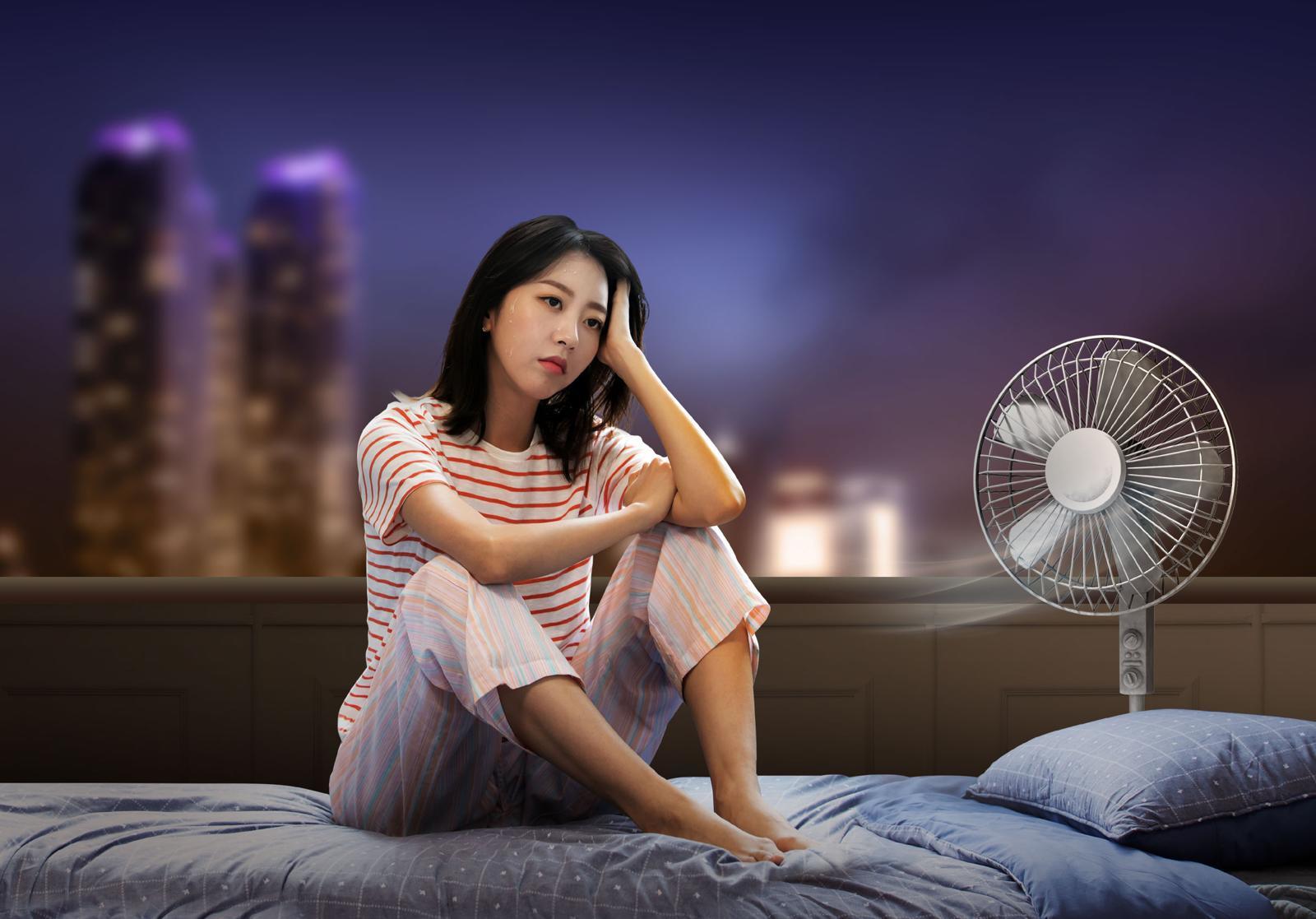
Why hot summer nights strain your brain and heart
Translated from Korean, summarized and contextualized by DistantNews.
At a glance
Explainer
Sources not specified
Context piece
- Prolonged heat and humidity during tropical nights disrupt the body's ability to regulate temperature and can lead to dehydration and blood pressure fluctuations.
- This poses significant risks to the elderly and individuals with pre-existing cardiovascular or cerebrovascular conditions.
- Maintaining a cool indoor environment with moderate humidity is crucial for preventing heat-related health issues and ensuring adequate sleep.
The persistent heat and high humidity of tropical nights, known as 'yeoreumdaeya' in Korean, can take a significant toll on the body, extending beyond mere sleep discomfort. When the body struggles to lower its core temperature during the night, it can lead to dehydration and strain the cardiovascular and cerebrovascular systems, posing particular risks to vulnerable populations.
During tropical nights, the body expends energy trying to cool itself, which can disrupt deep sleep and lead to dehydration and blood pressure changes.
According to Dr. Choi Jin-gyo, a neurologist at Seoul Medical Center, the body expends energy trying to cool itself during hot nights, disrupting deep sleep. This prolonged state of elevated body temperature can lead to dehydration as fluids are lost through sweat and respiration. The resulting increase in blood concentration can affect the brain's blood vessels and circulatory system.
While heatstroke is often associated with summer, the risks to the brain's blood vessels are not limited to cold weather. In summer, dehydration can thicken the blood, increasing the risk of clot formation. Additionally, the body's attempt to cool down by widening blood vessels can lower blood pressure, potentially reducing blood flow to the brain and heart.
In summer, dehydration can thicken the blood, affecting clot formation. Also, as blood vessels widen to cool the body, blood pressure can drop, reducing blood flow to the brain and heart.
Elderly individuals are especially susceptible due to diminished thermoregulation and a reduced sense of thirst, making them prone to dehydration without realizing it. Those with underlying conditions such as high blood pressure, diabetes, or existing cerebrovascular issues, and even those taking diuretic medications, must be particularly cautious. Dr. Choi advises against arbitrarily altering medication dosages without consulting a physician.
Elderly individuals have diminished thermoregulation and a reduced sense of thirst, making them prone to dehydration without realizing it.
Recognizing the signs of a stroke, such as facial drooping, arm weakness, or speech difficulties (FAST), is critical. If these symptoms appear suddenly after a night of heat, immediate medical attention via emergency services is necessary. While feeling tired the day after a hot night is common, sudden neurological symptoms warrant urgent evaluation. The article emphasizes that enduring the heat without air conditioning can be more detrimental than using it appropriately. Maintaining an indoor temperature of 24-26 degrees Celsius with 50-60% humidity is recommended, ensuring air conditioner vents do not blow directly on the body.
Enduring the heat without air conditioning can be more detrimental than using it appropriately. Maintaining an indoor temperature of 24-26 degrees Celsius with 50-60% humidity is recommended.
DistantNews Editorial
Originally published by Dong-A Ilbo in Korean. Translated, summarized, and contextualized by our editorial team with added local perspective. Read our editorial standards.
More Stories
From Our Blog

What Gets Lost (and Found) When News Is Translated

The Critical Role of Diaspora Media in Global News

What Travellers Should Know About Countries with Restricted Press

A Digital Nomad's Guide to Following Local News

How the Same Story Looks Different in Different Countries
