


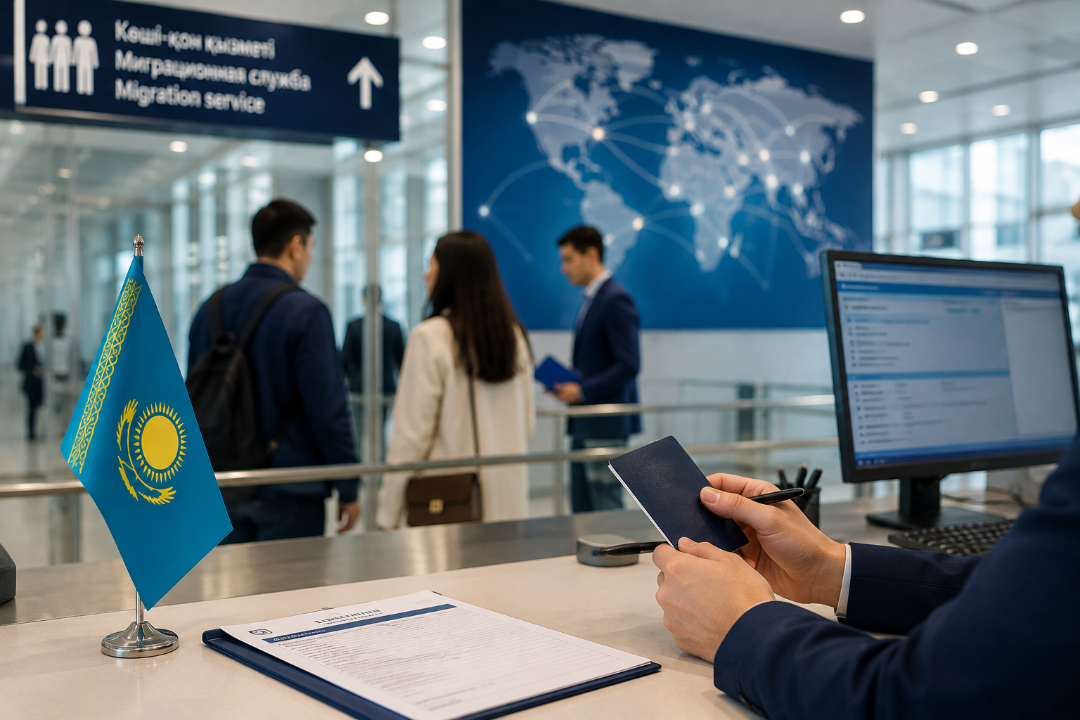
Will Kazakhstan Turn Migration Into Economic Advantage?
Summarized and contextualized by DistantNews.
At a glance
News
Official statement
New plan
- Kazakhstan is overhauling its migration policy to attract needed labor and strengthen digital oversight, aiming to use migration as an economic advantage by 2030.
- The new policy focuses on a selective model, prioritizing skilled workers in high-demand fields while improving integration and language support for migrants.
- A unified digital migration platform and an electronic entry permit system are being developed to modernize control, enhance transparency, and simplify procedures.
Kazakhstan is strategically reshaping its migration policy, shifting from mere regulation to actively leveraging migration for economic benefit. The nation's Migration Policy Concept through 2030 aims to attract essential labor, bolster regional development, and enhance the country's human capital, all while strengthening digital oversight of migration flows.
The updated concept embraces a balanced approach, seeking to supply the economy with qualified workers, protect the domestic labor market, and create favorable conditions for specialists in areas facing shortages. This involves a move toward a more selective immigration model. Procedures for permanent residency are being improved for professionals in high-demand occupations, coupled with increased employer responsibility for hiring foreign workers. Additionally, mentorship programs are being introduced to facilitate knowledge transfer from international specialists to Kazakh employees.
Integration efforts are also being enhanced, with language support playing a key role. Elmira Tillabaikyzy, acting Chairwoman of the Migration Committee, clarified that assessing migrants' proficiency in the Kazakh language is intended to identify necessary support for adaptation, rather than acting as a barrier. "The assessment of proficiency in the Kazakh language is intended to determine the support needed for successful adaptation. If necessary, appropriate assistance measures will be provided," she stated in a ministry release.
Technological advancements are central to the new strategy, with authorities developing a unified digital migration platform. This system will integrate various government agencies' information, enabling more efficient monitoring of migration flows and improved access to public services. The proposed electronic entry permit is a significant step in this modernization, designed to enhance transparency and streamline administrative processes. Officials anticipate the system's gradual implementation between August and December 2026, allowing for necessary adaptations to border infrastructure.
The assessment of proficiency in the Kazakh language is intended to determine the support needed for successful adaptation. If necessary, appropriate assistance measures will be provided.
DistantNews Editorial
Originally published by The Astana Times. Summarized and contextualized by our editorial team with added local perspective. Read our editorial standards.
More Stories


From Our Blog

What Gets Lost (and Found) When News Is Translated

The Critical Role of Diaspora Media in Global News

What Travellers Should Know About Countries with Restricted Press

A Digital Nomad's Guide to Following Local News

How the Same Story Looks Different in Different Countries
