


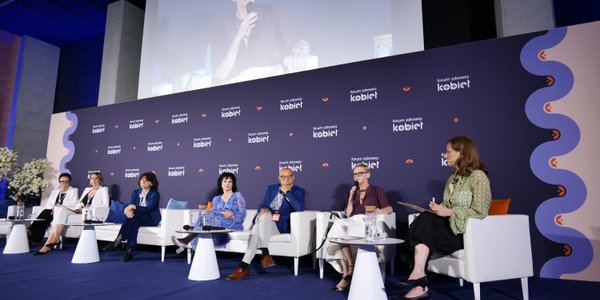
Women's Health is Society's Health
Translated from Polish, summarized and contextualized by DistantNews.
At a glance
News
Named sources
New plan
- Poland's Health Minister Jolanta Sobierańska-Grenda emphasized that women's health is a shared responsibility during the 2nd Women's Health Forum.
- She called for integrated, accessible solutions that address women's real needs throughout their lives.
- The forum focused on shifting from symptom minimization to a systemic, coordinated, and interdisciplinary approach to women's healthcare.
The health of women is a collective responsibility, requiring collaboration between public administration, the medical community, experts, and policymakers, declared Poland's Minister of Health, Jolanta Sobierańska-Grenda. Speaking at the 2nd Women's Health Forum, themed 'Connected Perspectives,' she urged participants to work together to create effective and accessible solutions tailored to women's actual needs.
Women's health is a shared responsibility of public administration, the medical community, experts, and decision-makers. Only by working together can we create solutions that are effective, accessible, and responsive to real needs.
Sobierańska-Grenda stressed that women's health should not be treated as a peripheral issue within health policy but rather as its fundamental pillar. She highlighted the forum's significance in bringing together diverse perspectives, patients, doctors, nurses, midwives, psychologists, public administrators, and experts, all contributing to the healthcare system. The minister advocated for a holistic view of women's health, emphasizing continuity, coordination, and consideration of a woman's entire life cycle, from reproductive age through pregnancy, postpartum, menopause, aging, and long-term care.
The inaugural discussion at the forum centered on a critical shift needed in addressing women's health: moving away from downplaying symptoms towards a systemic, coordinated, and interdisciplinary response. Participants explored how to build a care model where patients receive timely diagnosis, access to preventive care and early disease detection, and where their needs are considered across their lifespan.
I would like the outcome of this forum to be not only an exchange of experiences but also concrete directions for action. Ones that will translate into the daily lives of patients, into their sense of security, agency, and trust in the system, because women's health is the health of society.
Experts highlighted specific areas needing greater attention. Professor Ewa Barcz, a specialist in gynecology and obstetrics, pointed to pelvic floor disorders, an often-underdiscussed issue affecting a significant portion of women, particularly those over 50. Professor Mariusz Bidziński, the national consultant in gynecological oncology, underscored the importance of oncological prevention and coordinated care, aiming for earlier disease detection and increased participation in preventive screenings. Professor Violetta Skrzypulec-Plinta, head of the Department of Women's Health at the Medical University of Silesia, identified two key areas: gynecological care for girls and women with disabilities, and pediatric and adolescent gynecology.
The discussion... was devoted to one of the most important changes required in the conversation about women's health today: moving away from the trivialization of symptoms towards a systemic, coordinated, and interdisciplinary response.
DistantNews Editorial
Originally published by Rzeczpospolita in Polish. Translated, summarized, and contextualized by our editorial team with added local perspective. Read our editorial standards.
More Stories

From Our Blog

What Gets Lost (and Found) When News Is Translated

The Critical Role of Diaspora Media in Global News

What Travellers Should Know About Countries with Restricted Press

A Digital Nomad's Guide to Following Local News

How the Same Story Looks Different in Different Countries
