


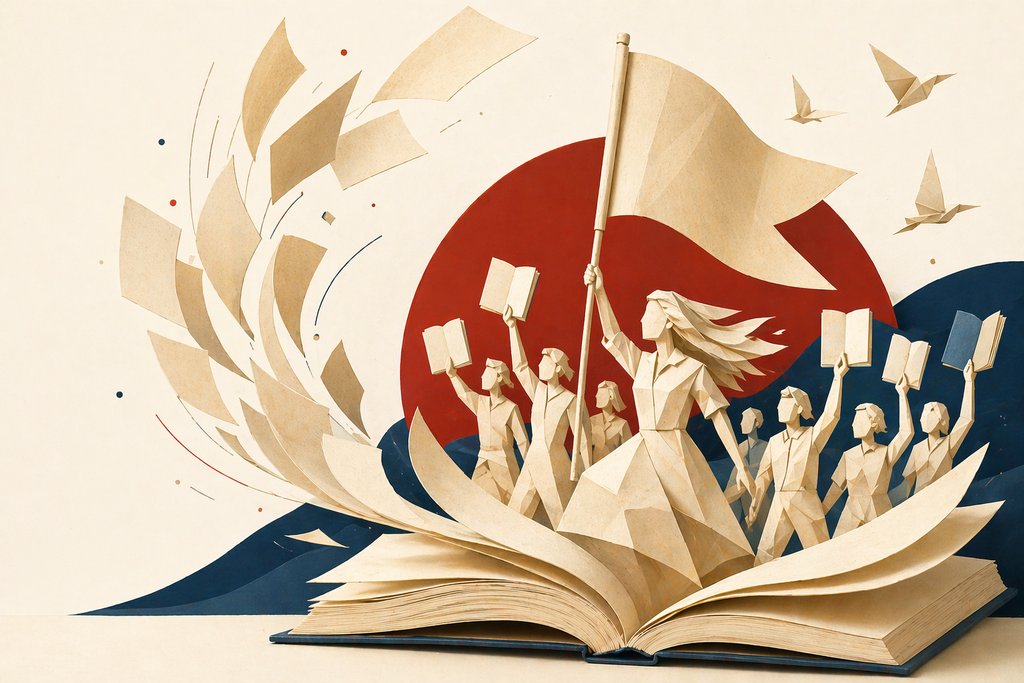
World Book Day: Paper Begins Its Own Revolution - Industry Insiders Speak to Tanea.gr
Translated from Greek, summarized and contextualized by DistantNews.
TLDR
- World Book Day highlights the enduring ritual of paper books amidst digital distractions.
- Despite challenges like declining attention spans, the book market in Greece shows resilience and potential for growth.
- Emerging trends like BookTok are revitalizing reading habits among younger generations, boosting sales for both physical and digital books.
In an era dominated by 'doom scrolling' and fleeting digital content, World Book Day serves as a poignant reminder of the unique, immersive experience that paper books offer. For many, especially older generations, it evokes a cherished ritual: carving out a space for quiet contemplation, settling into a comfortable chair, and diving into a world crafted by words. This deliberate act of creating a personal sanctuary for reading, a stark contrast to the constant connectivity of modern life, fosters a deep engagement that digital media struggles to replicate.
The future is the youth. Young people find it difficult to concentrate. We receive messages that it is difficult at the level of the educational process in schools or universities to get them to read multi-page, very long texts. On the other hand, we see that when a book can, it wins them over. So I'm not sure that this inability to concentrate we see is so inescapable and that is optimistic.
Anna Pataki, a board member of Patakis Editions, shares a nuanced perspective on the younger generation's relationship with reading. While acknowledging the observed difficulty in maintaining concentration for extended periods, she remains optimistic. Pataki notes that when a book truly captures their interest, young readers become deeply engrossed, suggesting that the issue may not be an inherent inability to focus, but rather a matter of finding the right content. This insight is crucial for publishers and educators seeking to bridge the gap between traditional reading and the digital natives of today.
The Greek book market, though small, demonstrates a remarkable capacity for growth, even amidst challenging economic conditions. Pataki highlights that its size prevents saturation, leaving ample room for development. Furthermore, the rise of platforms like BookTok has injected new life into the industry. This vibrant online community, dedicated to books and literature, has significantly influenced reading trends, particularly among Gen Z and Millennials. Data from Revolut and Dynata corroborate this, showing substantial increases in book spending, with digital books experiencing particularly rapid growth, nearly doubling in the past year.
There are no dramatic changes. We are talking about a small market. The good thing about this is that it has not reached saturation levels, so it has room to grow even in difficult conditions.
While the rise of artificial intelligence presents a potential threat, Pataki views it with more concern as a tool for destruction than as a direct danger to the book industry. The irreplaceable experiential value of reading, she argues, remains a unique human endeavor. The data, showing a 35% increase in book spending in 2025, with Gen Z and Millennials leading the charge, offers a hopeful outlook. This resurgence, fueled by digital communities but centered on the enduring power of the written word, suggests that books are not merely surviving but evolving in the digital age.
I am more afraid of how it can be used as a means of destruction, how much harm it can do, and much less for the book. The experience that the book offers cannot be replaced.
DistantNews Editorial
Originally published by Ta Nea in Greek. Translated, summarized, and contextualized by our editorial team with added local perspective. Read our editorial standards.
More Stories



From Our Blog

What Gets Lost (and Found) When News Is Translated

The Critical Role of Diaspora Media in Global News

What Travellers Should Know About Countries with Restricted Press

A Digital Nomad's Guide to Following Local News

How the Same Story Looks Different in Different Countries
