


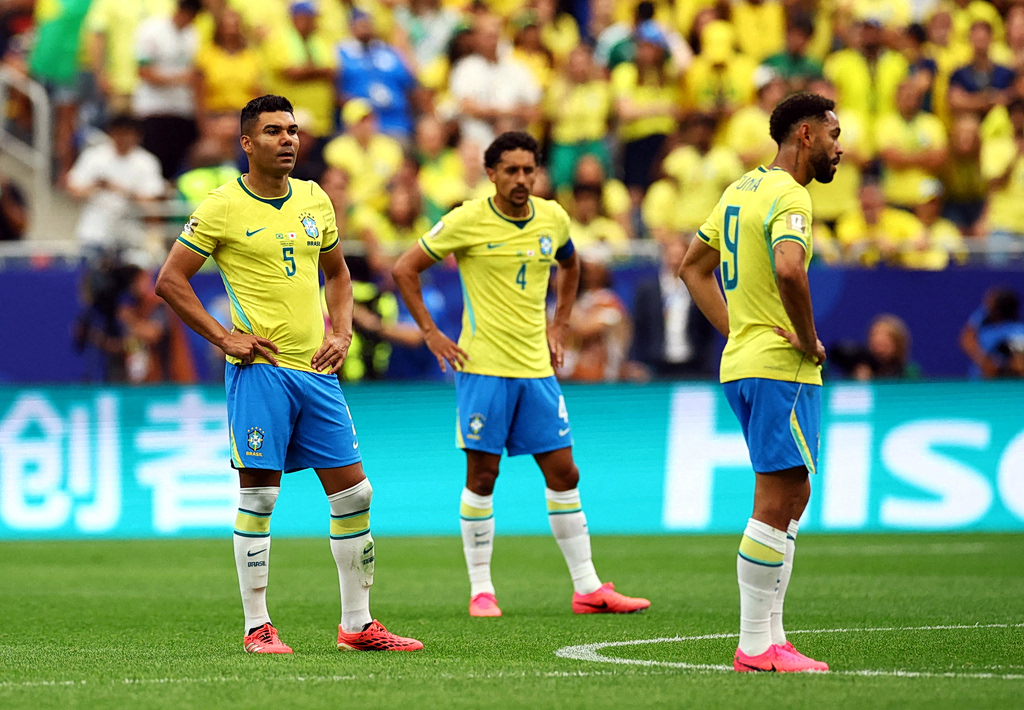
World Cup 2026: Brazil's Knockout Stage 'Curse' Against European Teams Continues
Translated from Greek, summarized and contextualized by DistantNews.
At a glance
News
Sources not specified
Context piece
- Brazil's struggles in knockout stages of the World Cup since 2002 are highlighted, showing a stark contrast to their performance against non-European teams.
- Despite being dominant against teams from other continents, Brazil has consistently failed to defeat European opposition in crucial knockout matches.
- This statistical trend has become a source of concern for fans of the Brazilian national team.
Brazil's quest for a record sixth World Cup title is shadowed by a persistent statistical anomaly: a striking inability to overcome European teams in knockout stage matches since their last triumph in 2002. While the Seleção remains a formidable force against nations from other confederations, their record against European giants paints a starkly different picture.
Since lifting the trophy in 2002, Brazil has consistently faltered when facing European opposition in the decisive phases of the tournament. This pattern has become a recurring theme, leading to early exits and widespread disappointment among their passionate fanbase. The contrast is remarkable: Brazil's dominance elsewhere is undeniable, yet a specific European 'curse' seems to plague their knockout aspirations.
This recurring trend has fueled anxieties and statistical 'fear' among supporters, who witness their team's brilliance against diverse opponents only to see it extinguished by European powerhouses. The narrative surrounding Brazil's World Cup campaigns now includes this significant hurdle, raising questions about tactical adjustments, mental fortitude, and the enduring challenge of conquering Europe on the world's biggest stage.
DistantNews Editorial
Originally published by Ta Nea in Greek. Translated, summarized, and contextualized by our editorial team with added local perspective. Read our editorial standards.
More Stories

From Our Blog

What Gets Lost (and Found) When News Is Translated

The Critical Role of Diaspora Media in Global News

What Travellers Should Know About Countries with Restricted Press

A Digital Nomad's Guide to Following Local News

How the Same Story Looks Different in Different Countries
