


World Cup 2026: Teams Fractured by Internal Strife
Translated from Spanish, summarized and contextualized by DistantNews.
At a glance
News
Named sources
Outcome reported
- Several national football teams experienced internal conflicts and breakdowns during the 2026 World Cup, impacting their performance.
- France faced player discontent over coaching decisions, while Uruguay's squad clashed with manager Marcelo Bielsa regarding training methods.
- Germany also saw internal friction among players and issues with family arrangements following their elimination from the tournament.
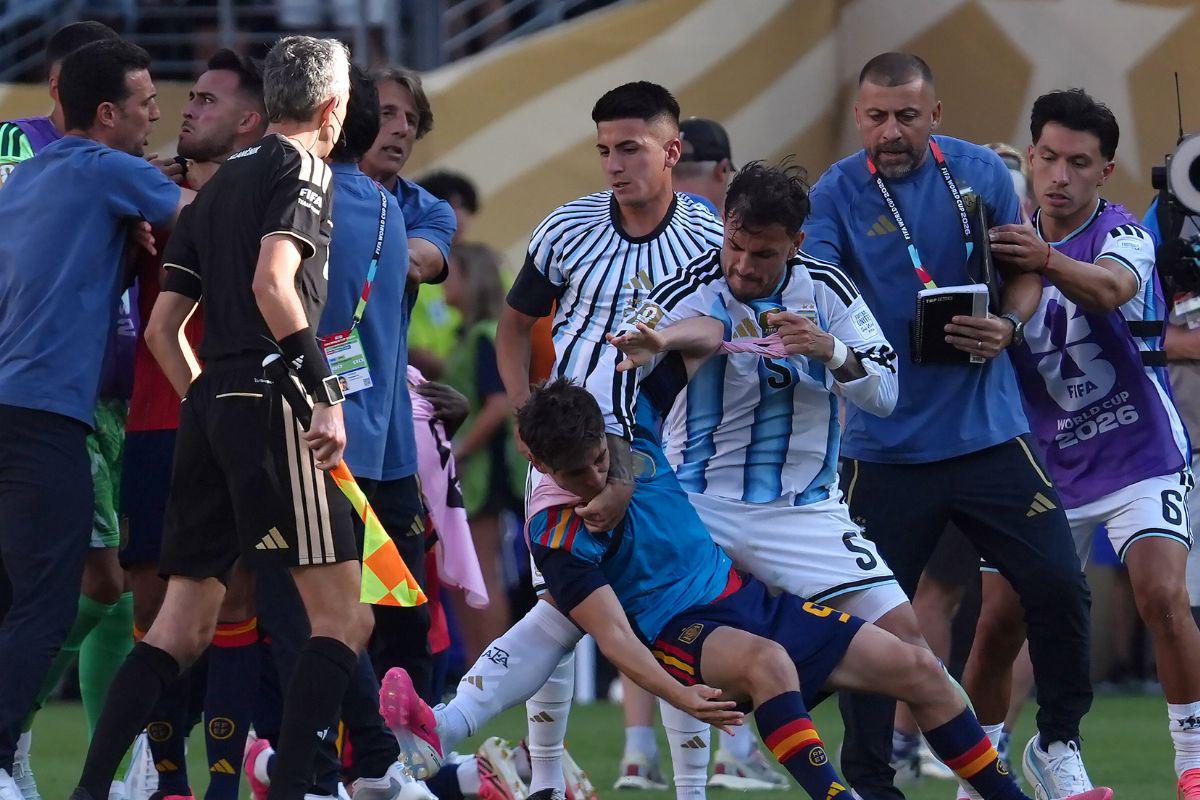
The 2026 World Cup, which concluded with Spain as champions on July 19, also revealed deep fissures within several participating national teams. Beyond the on-field competition, internal disputes among teammates, with coaching staff, and at a broader team level marked the tournament for some.
the squad questioned the presence of players like Aurélien Tchouaméni and the exit of Adrien Rabiot.
France reached the semifinals but was eliminated by Spain. Following their defeat, the team's internal dynamics came under scrutiny. L'Equipe reported that the squad questioned Didier Deschamps' decisions, specifically regarding the inclusion of players like Aurélien Tchouaméni and the exclusion of Adrien Rabiot. Kylian Mbappé reportedly initiated discussions about the midfield structure and player matchups during halftime, while Ousmané Dembélé also voiced concerns about defensive pressing.
Uruguay's campaign ended in the group stage with two draws and a loss, a performance marred by revealed tensions between the players and manager Marcelo Bielsa. After matches against Saudi Arabia and Cabo Verde, players including Sergio Rochet, Manuel Ugarte, Rodrigo Bentancur, and Federico Valverde met with Bielsa. They reportedly complained about training intensity and methodology, proposing an alternative tactical scheme for their crucial match against Spain.
he felt moments in which they tried to remove him
Bielsa convened the entire squad for a discussion, during which he felt attempts were made to remove him. He highlighted his role in player development through national team call-ups and asserted his authority over tactical decisions. Some players reportedly left the meeting. Following their elimination by Spain, Bielsa resigned, stating in his final press conference that he was unable to impart anything because "nobody was interested in what I knew and could leave in the team."
he was unable to leave anything because nobody was interested in what he knew and could leave in the team.
Germany's exit in the Round of 16 against Paraguay was accompanied by player recriminations. Former World Cup winner Lothar Matthäus pointed to conflicts related to tournament organization and the arrangements for players' families. Matthäus noted dissatisfaction over perceived preferential treatment, with some players allowed private flights for relatives while others had restrictions or used commercial travel. After the elimination, coach Julian Nagelsmann resigned, stating that the team could not be considered "top-level" if such issues persisted.
there were reproaches among players.
DistantNews Editorial
Originally published by El Comercio in Spanish. Translated, summarized, and contextualized by our editorial team with added local perspective. Read our editorial standards.
More Stories


From Our Blog

What Gets Lost (and Found) When News Is Translated

The Critical Role of Diaspora Media in Global News

What Travellers Should Know About Countries with Restricted Press

A Digital Nomad's Guide to Following Local News

How the Same Story Looks Different in Different Countries
