


YouTube Blocks Content in South Korean Defamation Case Under New Law
Translated from Korean, summarized and contextualized by DistantNews.
At a glance
News
Sources not specified
Outcome reported
- YouTube has blocked some content from the channel 'Kim Eo-jun's DasTv' following a defamation complaint.
- The blocked videos, including one from October 2020, are related to allegations made by broadcaster Kim Eo-jun about a former Channel A reporter.
- The broadcaster was fined 20 million won for defamation, and the blocking of content is seen as an application of South Korea's revised 'fake news' law.
YouTube has taken action to block select videos from the popular South Korean YouTube channel 'Kim Eo-jun's DasTv,' hosted by broadcaster Kim Eo-jun. This move follows a defamation complaint filed by Lee Dong-jae, a former Channel A reporter.
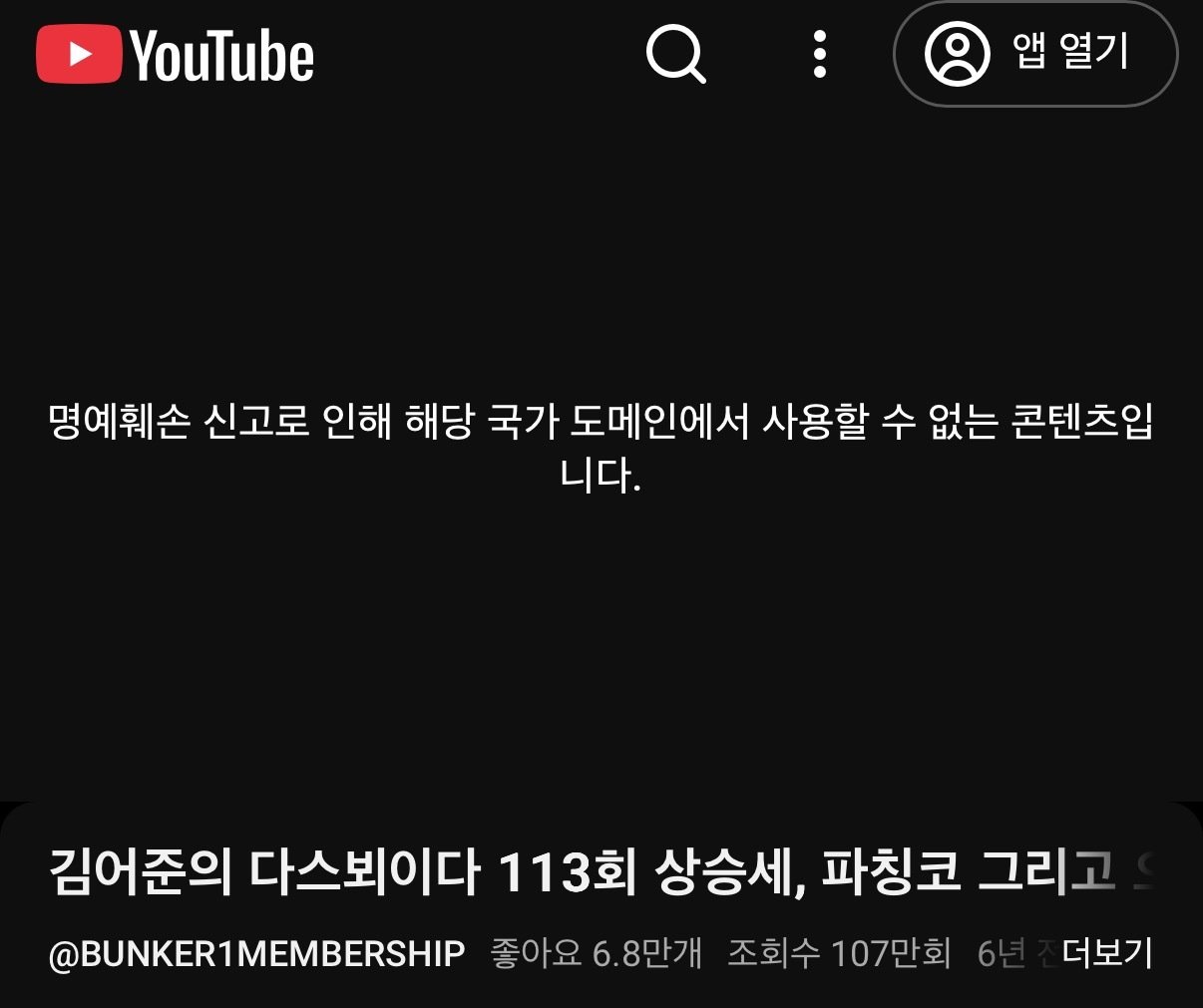
Specifically, content from 'Kim Eo-jun's DasTv,' including an episode published on October 9, 2020, now displays a message stating it is "unavailable in this country domain due to a defamation report." The blocked videos reportedly contain Kim Eo-jun's remarks alleging that Lee Dong-jae had approached Lee Cheol, former CEO of Value Investment Korea, while Lee Cheol was imprisoned. According to Kim's broadcast, Lee Dong-jae allegedly pressured and coerced Lee Cheol into falsely reporting that Yoo Si-min, former head of the Roh Moo-hyun Foundation, had accepted money.
Earlier this month, the Seoul Northern District Court fined Kim Eo-jun 20 million won for violating the Act on Promotion of Information and Communications Network Utilization and Information Protection, specifically for defamation by false information. The court found Kim's statements to be false and determined he made them with the intent to defame, even if only with indirect knowledge.
Lee Dong-jae revealed on social media that he reported these videos to YouTube on July 7, the first day the revised Information and Communications Network Act, dubbed the 'fake news punishment law', took effect. He stated that the blocking measure was implemented in precise accordance with the law's legislative intent. Given that the content was published in 2020, before the law's enactment, and Kim's side has appealed the initial ruling, YouTube's decision to block the content based on a party's report is interpreted as its own assessment of the defamation issue.
This case has sparked debate about the criteria for judging false information in current affairs and political YouTube content, raising concerns about potential chilling effects on freedom of expression.
The blocking measure was implemented in precise accordance with the law's legislative intent.
DistantNews Editorial
Originally published by Dong-A Ilbo in Korean. Translated, summarized, and contextualized by our editorial team with added local perspective. Read our editorial standards.
More Stories



From Our Blog

What Gets Lost (and Found) When News Is Translated

The Critical Role of Diaspora Media in Global News

What Travellers Should Know About Countries with Restricted Press

A Digital Nomad's Guide to Following Local News

How the Same Story Looks Different in Different Countries
