

Zacatecas Governor Announces Strategy Against Farm Extortion
Translated from Spanish, summarized and contextualized by DistantNews.
At a glance
News
Sources not specified
New plan
- Zacatecas Governor David Monreal announced a strategy to combat extortion targeting agricultural producers.
- The plan aims to strengthen the agricultural sector by ensuring producer safety, addressing water scarcity, and increasing productivity through infrastructure and technology.
- The initiative will receive support from Mexican state institutions to protect rural families and foster agricultural development in a more secure environment.
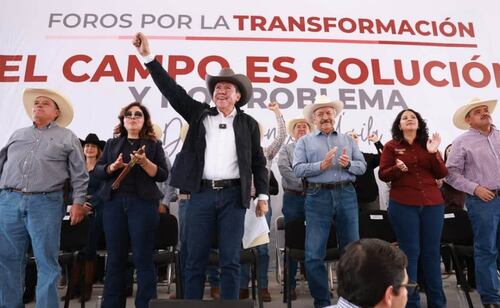
Zacatecas Governor David Monreal has launched a new campaign to protect the state's agricultural producers from extortion. Addressing over 4,000 farmers and ranchers, Monreal declared this a new phase for strengthening the sector.
This will be a new stage of strengthening the state's agriculture, focused on guaranteeing the safety of producers, facing the water crisis, and increasing productivity through greater infrastructure and technology.
The strategy focuses on guaranteeing the safety of producers, tackling the ongoing water crisis, and boosting productivity. This will be achieved through investments in infrastructure and advanced technology, aiming to improve irrigation, water collection, and responsible resource management.
Access to water represents the main challenge for the coming decades.
Monreal highlighted that access to water is the primary challenge for the coming decades. His administration plans to implement measures for irrigation technification, water capture and storage, and the rehabilitation of existing hydraulic infrastructure.
The field has consolidated as one of the main economic and social strengths of Zacatecas.
The governor also noted that 486 proposals gathered from consultations with producers, academics, and organizations will inform public policy in agriculture, rural development, and technological innovation. The anti-extortion strategy, backed by state institutions, seeks to safeguard rural families' assets and create a more tranquil environment for agricultural activities.
The 486 proposals collected from consultations with producers, academics, researchers, and sector organizations will serve to strengthen public policies in agriculture, livestock, rural development, commercialization, and technological innovation, as well as to expand opportunities for women and young people in the countryside.
DistantNews Editorial
Originally published by El Universal in Spanish. Translated, summarized, and contextualized by our editorial team with added local perspective. Read our editorial standards.
More Stories


From Our Blog

What Press Freedom Means for the News You Read

What Gets Lost (and Found) When News Is Translated

The Critical Role of Diaspora Media in Global News

What Travellers Should Know About Countries with Restricted Press

A Digital Nomad's Guide to Following Local News
