


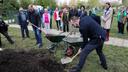
Zagreb Offers 85 Free Garden Plots to Residents Lacking Yard Space
Translated from Croatian, summarized and contextualized by DistantNews.
At a glance
News
Sources not specified
Context piece
- The City of Zagreb is offering 85 garden plots free of charge for two years to residents without arable land.
- These 50-square-meter plots are located across five city districts, with the largest allocation in Stenjevec.
- Applicants are prioritized based on factors like residency duration, income, social status, and household size, with specific points awarded for living in the plot's district and for being a retiree or unemployed.
Residents of Zagreb eager to cultivate their own produce but lacking garden space now have an opportunity to do so, as the city is providing 85 garden plots free of charge for a period of two years. This initiative aims to make fresh food accessible and encourage urban gardening.
The plots, each measuring 50 square meters, are distributed across five city districts. Stenjevec will host the largest number of plots, with 51 available, while Peščenica-Žitnjak offers 20. Six plots are designated for Novi Zagreb-zapad, four for Novi Zagreb-istok, and another four in Sesvete. Selected residents can use these plots to grow vegetables, fruits, herbs, and flowers for personal consumption. The agreement can be extended after two years if the user demonstrates responsible stewardship of the land.
Eligibility for these city gardens is restricted to Zagreb residents who do not own or lease other arable land. Only one application per household is permitted. In cases where interest exceeds the number of available plots, a points system will determine selection. Criteria include the length of residency in Zagreb, proximity to the plot's location, income level, social status, employment status, veteran or pensioner status, and the number of household members. For instance, residing in the same district as the plot grants five points, while being a retiree earns four points, and unemployment yields three points. Each household member adds a point, with two points awarded for each minor child.
Beyond cultivation, the project emphasizes community building. The city gardens feature common areas with pathways, tool storage, seating, gazebos, and shelters, designed for social interaction, relaxation, and educational activities. Zagreb has been running this project since 2013, currently managing 16 city gardens encompassing over 2,252 plots across 24.5 hectares. The initiative is promoted not only as a means to access healthy food and supplement household budgets but also as a contribution to environmental conservation, biodiversity, and fostering a connection with nature.
DistantNews Editorial
Originally published by Večernji List in Croatian. Translated, summarized, and contextualized by our editorial team with added local perspective. Read our editorial standards.
More Stories



From Our Blog

What Gets Lost (and Found) When News Is Translated

The Critical Role of Diaspora Media in Global News

What Travellers Should Know About Countries with Restricted Press

A Digital Nomad's Guide to Following Local News

How the Same Story Looks Different in Different Countries
