

Zhenis Kassymbek: new Constitution becomes basis for Kazakhstan’s further development
Summarized and contextualized by DistantNews.
At a glance
News
Sources not specified
New plan
- Kazakhstan's new Constitution has officially entered into force, establishing a foundation for further development and strengthening democratic institutions.
- The updated Basic Law, initiated by President Kassym-Jomart Tokayev, prioritizes the individual and their rights and freedoms, marking a new stage in the country's progress.
- The Constitution also emphasizes the capital city Astana's special role and outlines transformations in public administration, citizens' rights, the economy, and state structure.
Astana Mayor Zhenis Kassymbek announced that Kazakhstan's newly revised Constitution has officially taken effect, heralding a new era for the nation. He described the updated Basic Law as the bedrock for the country's future development, the reinforcement of democratic principles, and the enhancement of citizens' quality of life.
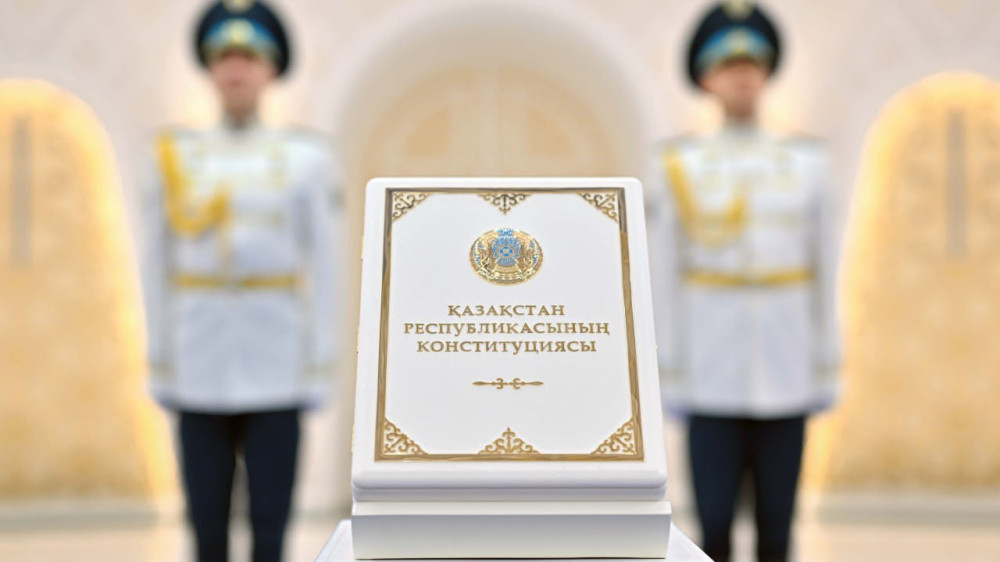
The new Constitution is the basis for Kazakhstan’s further development. Today, its new version has officially entered into force.
Kassymbek highlighted that the constitutional changes, driven by President Kassym-Jomart Tokayev, represent a significant shift. "This is not merely an update of the Basic Law, but a new stage in the country’s development," he stated, emphasizing the strengthened guarantees for citizens' rights and freedoms and the creation of a solid foundation for a just state.
At the initiative of President of the Republic of Kazakhstan Kassym-Jomart Tokayev, large-scale political reforms are being consistently implemented in the country. The updated Constitution has become the foundation of these transformations, defining the strategic course for the country’s further development, where the highest value is the individual, their life, rights and freedoms.
The mayor underscored the particular significance of this day for the capital, Astana. The Constitution reaffirms the city's status as Kazakhstan's political, administrative, and public center, a role that carries substantial responsibility. Astana, he noted, serves as a crucial platform for implementing state initiatives and reforms, with ongoing development in infrastructure, public spaces, and social services aimed at improving residents' lives.
This emphasizes the special role of the capital as Kazakhstan’s political, administrative and public center. The status of the capital is, above all, a great responsibility.
Furthermore, Kassymbek pointed to the Constitution's provisions for a sweeping transformation of the public administration system, impacting the political landscape, state bodies, and the economy. He connected these constitutional values to everyday life, citing initiatives like "Taza Kazakhstan" for environmental culture and the "Law and Order" concept for strengthening legal culture and public safety. "A just society, a strong state, a clean environment and respect for the law are not merely principles of the Basic Law. They are guidelines that define our common future," he concluded.
The transformations affect the political system, the activities of state bodies, citizens’ rights and freedoms, the economy, as well as the fundamental principles of the state structure.
DistantNews Editorial
Originally published by Tengrinews. Summarized and contextualized by our editorial team with added local perspective. Read our editorial standards.
More Stories
From Our Blog

What Gets Lost (and Found) When News Is Translated

The Critical Role of Diaspora Media in Global News

What Travellers Should Know About Countries with Restricted Press

A Digital Nomad's Guide to Following Local News

How the Same Story Looks Different in Different Countries
