

48-Hour Strike in Loreto Over Fuel Prices, Electricity Crisis, and Illegal Mining
Translated from Spanish, summarized and contextualized by DistantNews.
At a glance
News
Named sources
Ongoing story
- The General Confederation of Workers of Peru (CGTP) in Loreto began a 48-hour strike in Iquitos on August 25, 2026.
- Protesters demand government solutions for rising fuel prices, electricity crises, and illegal mining.
- Key demands include a general fuel subsidy and connection to the national electricity grid to lower costs and improve reliability.
Workers in Iquitos, Peru, initiated a 48-hour regional strike on August 25, 2026, organized by the General Confederation of Workers of Peru (CGTP) Loreto. The mobilization aims to pressure the government into addressing critical issues including escalating fuel prices, persistent electricity problems, and the unchecked expansion of illegal mining activities.
What we want is that, before this subsidy goes to that 10%, it be given to the owners of the gas stations so that they lower the price of fuel and, without discrimination, all Loreto residents can benefit from the subsidy.
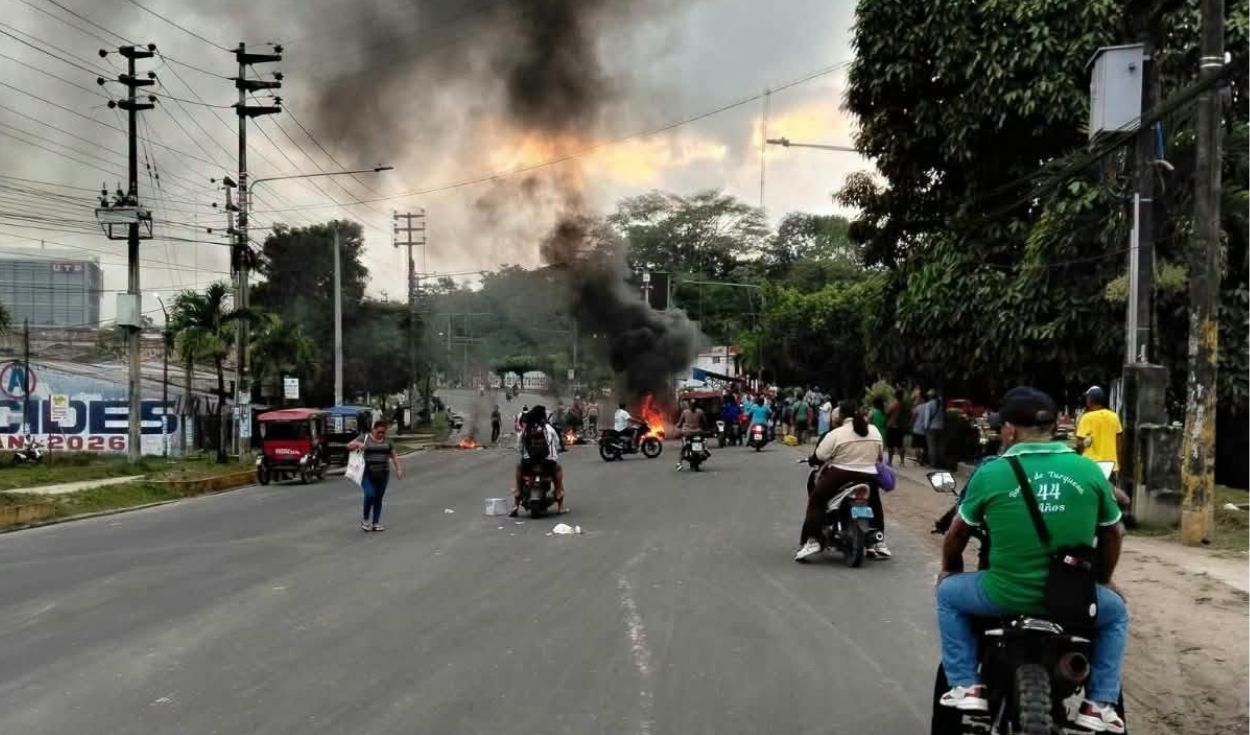
The strike has led to significant disruptions, including the blockage of the Iquitos-Nauta highway and picket lines established in various parts of the city since midnight. The protest has garnered support from approximately 60 CGTP unions, alongside transport operators, collective taxi drivers, and other organizations backing the workers' platform.
Reynaldo Tuanama, the general secretary of CGTP Loreto, highlighted the central demand for a fuel subsidy. He criticized the government's proposed targeted subsidy, arguing it would only benefit a small fraction of users, leaving the majority, particularly informal mototaxi drivers, without support. Tuanama proposed that subsidies be channeled through fuel stations to ensure all consumers in the Loreto region benefit from reduced prices.
What we ask is that we be interconnected from the national system to the city of Iquitos, because that is the only solution that will give us good, cheap energy and also includes internet. Fiber optics.
Beyond fuel costs, the strike addresses the region's unreliable and expensive electricity supply. Tuanama advocated for Iquitos's integration into the National Interconnected Electric System (SEIN), believing it would enhance service quality and decrease energy costs. He also expressed grave concern over illegal mining's environmental impact, particularly its threat to the Nanay River, a vital source of drinking water for Iquitos, urging the government to intensify efforts to eradicate this activity.
What we want is an immediate solution to the price of fuel and also an immediate response regarding the electrical supply. We suffer from the electrical supply.
DistantNews Editorial
Originally published by La República in Spanish. Translated, summarized, and contextualized by our editorial team with added local perspective. Read our editorial standards.
More Stories
From Our Blog

What Gets Lost (and Found) When News Is Translated

The Critical Role of Diaspora Media in Global News

What Travellers Should Know About Countries with Restricted Press

A Digital Nomad's Guide to Following Local News

How the Same Story Looks Different in Different Countries
