


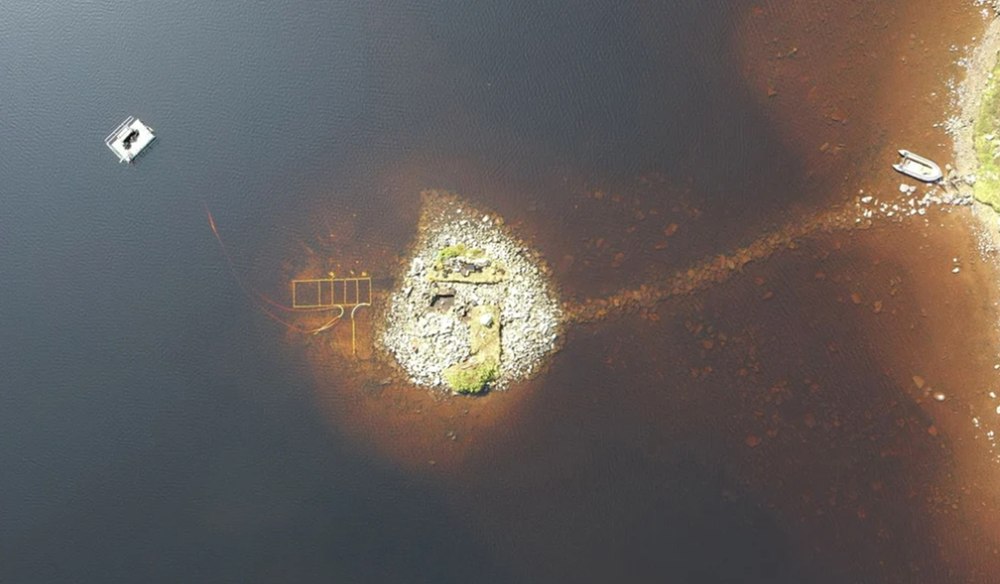
5,000-Year-Old Man-Made Island Discovered in Scottish Lake, Predates Stonehenge
Translated from Romanian, summarized and contextualized by DistantNews.
TLDR
- Archaeologists in Scotland have discovered a man-made island in a lake on the Isle of Lewis, dating back approximately 5,000 years.
- This prehistoric structure, known as a crannog, predates the famous Stonehenge monument.
- Excavations revealed a substantial wooden platform beneath the stone layers, indicating complex construction and prolonged use by Neolithic communities.
A remarkable archaeological find on Scotland's Isle of Lewis is reshaping our understanding of prehistoric European capabilities. Researchers have identified an artificial island, constructed by humans around 5,000 years ago, submerged in a local lake. This structure, known as a crannog, is not only older than the iconic Stonehenge but also reveals a sophisticated level of organization among Neolithic communities.
The crannog, a type of artificial island common in Scotland, Ireland, and Wales, was partially submerged and investigated by a joint team from the University of Southampton and the University of Reading. Beneath the visible stone layers, archaeologists uncovered a massive platform built from wood and wattle. This indicates that the site was not a simple construction but was developed and utilized in multiple phases over thousands of years, showcasing advanced engineering and planning skills for the period.
This discovery on the Isle of Lewis challenges previous assumptions about the technological and social complexity of early inhabitants in the region. The sheer scale and multi-stage construction of the crannog suggest a well-organized society capable of undertaking significant communal projects. It highlights the ingenuity of these ancient peoples and provides valuable insights into their settlement patterns, resource management, and potentially their social structures. The finding underscores Scotland's rich prehistoric heritage and the ongoing potential for groundbreaking discoveries in its remote landscapes.
DistantNews Editorial
Originally published by Adevărul in Romanian. Translated, summarized, and contextualized by our editorial team with added local perspective. Read our editorial standards.
More Stories



From Our Blog

What Gets Lost (and Found) When News Is Translated

The Critical Role of Diaspora Media in Global News

What Travellers Should Know About Countries with Restricted Press

A Digital Nomad's Guide to Following Local News

How the Same Story Looks Different in Different Countries
