


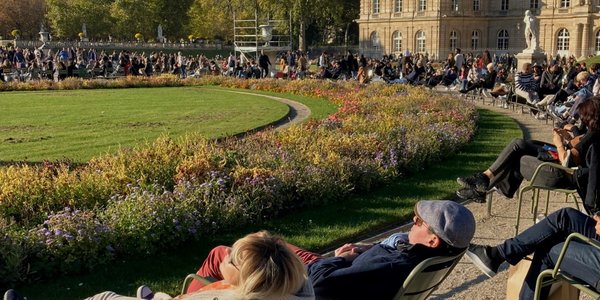
Access to Greenery Divides European Societies. A New System of Inequality
Translated from Polish, summarized and contextualized by DistantNews.
TLDR
- Access to green spaces in European cities is creating a new form of inequality, with lower-income populations having significantly less access to parks and trees.
- A study by the European Commission and the University of Copenhagen found that less than 15% of European city dwellers have adequate access to green areas.
- Wealthier regions in Northwestern Europe have better green space access than Southern and Eastern Europe, exacerbating existing social and environmental disparities.
A recent study, co-authored by experts from the European Commission and the University of Copenhagen and published in Nature Communications, reveals a growing 'green divide' across Europe. This research highlights how access to nature within urban environments is increasingly mirroring economic disparities, with those on lower incomes faring significantly worse.
People with higher incomes are more likely to live in neighborhoods with clearly better access to nature than low-income households.
The findings indicate that less than 15% of residents in European metropolises have sufficient access to trees, shade, and green areas. This is a stark figure, especially considering the escalating climate and environmental challenges cities face. The study underscores that higher-income individuals are disproportionately more likely to reside in neighborhoods with superior access to nature, creating a clear disparity compared to lower-income households.
Furthermore, the research points to significant regional differences. Cities in the more affluent northwestern part of the continent are twice as likely to meet green space standards compared to those in Southern and Eastern Europe. Even within cities, the disparity is evident, with residents of Helsinki, Munich, and Krakow enjoying better access to green areas than those in Athens, Perpignan, or Cordoba.
Cities located in the wealthier part – northwestern – of the continent meet green space standards significantly more often – even twice as often – than those located in Southern and Eastern Europe.
From a Polish perspective, this study is particularly relevant. While cities like Krakow are mentioned as having better access, the overall trend of a 'green divide' is a concern. The research's emphasis on the 3-30-300 rule—where everyone should see at least three large trees from their window, trees should cover 30% of a neighborhood, and the nearest green space should be within 300 meters—serves as a benchmark. Poland, like many European nations, must strive to meet these standards to mitigate the urban heat island effect and improve the quality of life for all citizens, regardless of their economic status. The unequal distribution of green spaces is not just an environmental issue but a social justice one.
Residents of cities such as Helsinki, Munich, or Krakow have a significantly greater chance of accessing green areas than people living in southern cities such as Athens, Perpignan, or Cordoba.
DistantNews Editorial
Originally published by Rzeczpospolita in Polish. Translated, summarized, and contextualized by our editorial team with added local perspective. Read our editorial standards.
More Stories
From Our Blog

What Gets Lost (and Found) When News Is Translated

The Critical Role of Diaspora Media in Global News

What Travellers Should Know About Countries with Restricted Press

A Digital Nomad's Guide to Following Local News

How the Same Story Looks Different in Different Countries
