

Adorni and Caputo Hold Press Conference Amidst Judicial Scrutiny
Translated from Spanish, summarized and contextualized by DistantNews.
TLDR
- Argentine officials, including Cabinet Chief Manuel Adorni and Economy Minister Luis Caputo, held a press conference amid an investigation into Adorni's wealth.
- Adorni avoided discussing the judicial inquiry, while Caputo became agitated when questioned about its potential impact on investment.
- The government highlighted a drug seizure operation and the advancement of the 'Super RIGI' project.
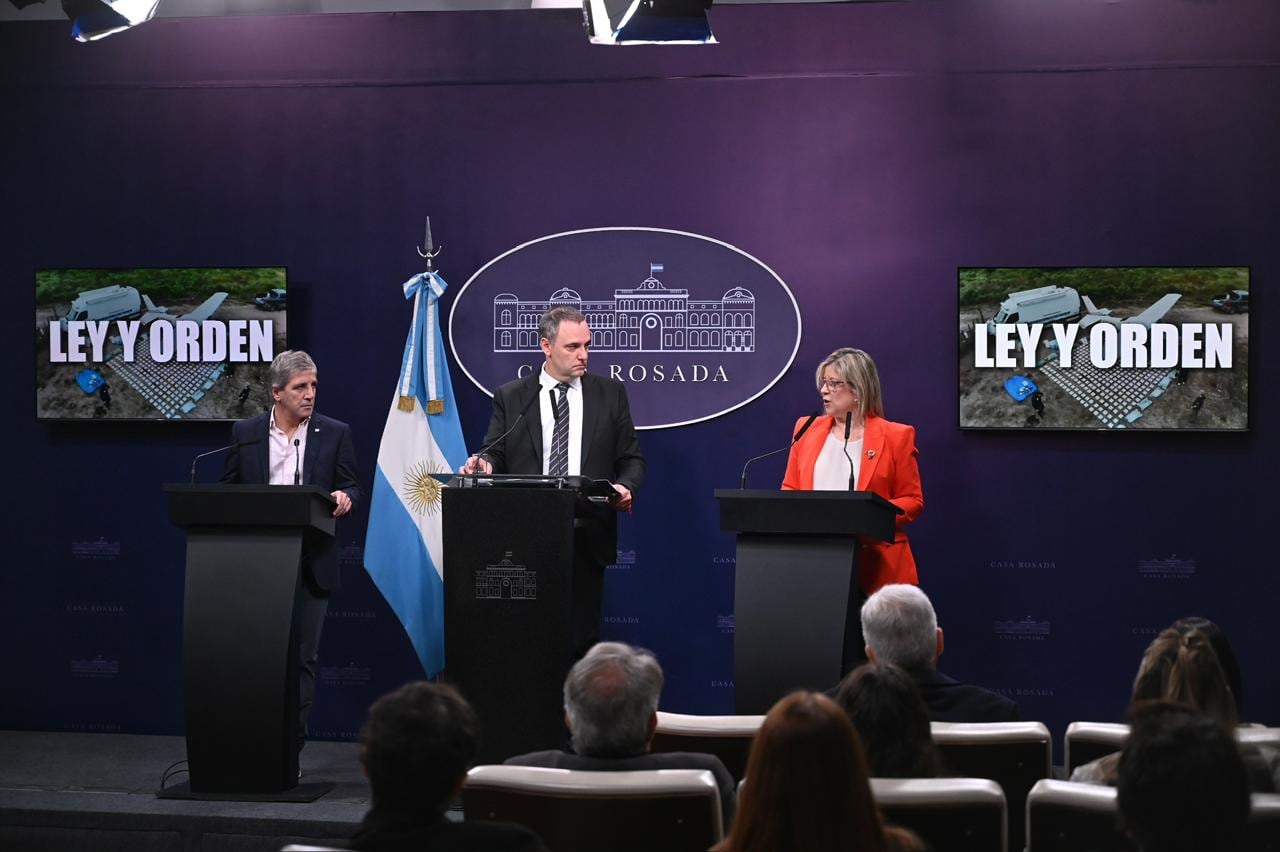
In a tightly controlled press conference at the Casa Rosada, Argentine Cabinet Chief Manuel Adorni presented a united front with Economy Minister Luis Caputo and Security Minister Patricia Bullrich, sidestepping questions about a judicial investigation into his personal finances. The press conference, intended to showcase government achievements, was dominated by the controversy surrounding Adorni's declared assets.
What kind of question is that, my God.
Minister Caputo, visibly irked by inquiries linking Adorni's situation to Argentina's investment climate, dismissed the notion that such personal matters would deter foreign investors. He argued that Argentina's improving macroeconomic stability, rather than political or judicial nuances, is the primary driver for investment. Caputo drew a comparison with countries like Peru, where frequent political upheaval has minimal impact on the economy, suggesting Argentina is moving towards a similar level of economic resilience.
The country risk doesn't go down because of 'Kuka risk,' because the market perceives that even if there's a low probability, the scenario of that happening is literally hell. Even if you assign it a low probability, when the downside is so large, that causes some resistance to going down.
Despite the underlying tension, the officials highlighted two key government successes. Adorni announced a favorable ruling in the case concerning the financing of public universities, ensuring a preliminary injunction remains suspended pending a Supreme Court decision. Additionally, the conference touched upon a significant federal police operation that seized over 400 kilograms of cocaine in Santa Fe, underscoring the administration's focus on security and law enforcement.
Manuel's situation has no effect on that. We came back from the trip with the President where one investor, speaking in confidence with the foreign minister, the ambassador, and myself, said, 'What's wrong with you in Argentina that you think I'm going to decide an investment based on whether the Chief of Staff has a difference in a cushion or whatever.' It was almost a laugh, as if to say that clearly makes no sense.
From an Argentine perspective, this press conference reflects the Milei administration's strategy of projecting an image of stability and progress, even in the face of internal scrutiny. The government's emphasis on economic reforms and its attempts to downplay the significance of Adorni's judicial situation suggest a concerted effort to maintain investor confidence. The contrast between the government's narrative of economic seriousness and the persistent questions about officials' personal finances underscores the delicate balancing act the administration is performing as it seeks to attract investment and solidify its position.
Argentina has improved a lot as a country. We are starting to graduate from being a more serious country. If there's a political issue in Argentina, it typically impacted the economy. But that was because the macro was very disordered. Now, when you see other countries that have a lot of serious political problems, not like Manuel's situation, take Peru for example, where they change presidents every so often, it has no impact on the economy. Political or judicial problems remain in the Justice system, in politics, and are not transferred to the economy.
DistantNews Editorial
Originally published by La Nación in Spanish. Translated, summarized, and contextualized by our editorial team with added local perspective. Read our editorial standards.
More Stories


From Our Blog

What Gets Lost (and Found) When News Is Translated

The Critical Role of Diaspora Media in Global News

What Travellers Should Know About Countries with Restricted Press

A Digital Nomad's Guide to Following Local News

How the Same Story Looks Different in Different Countries
