


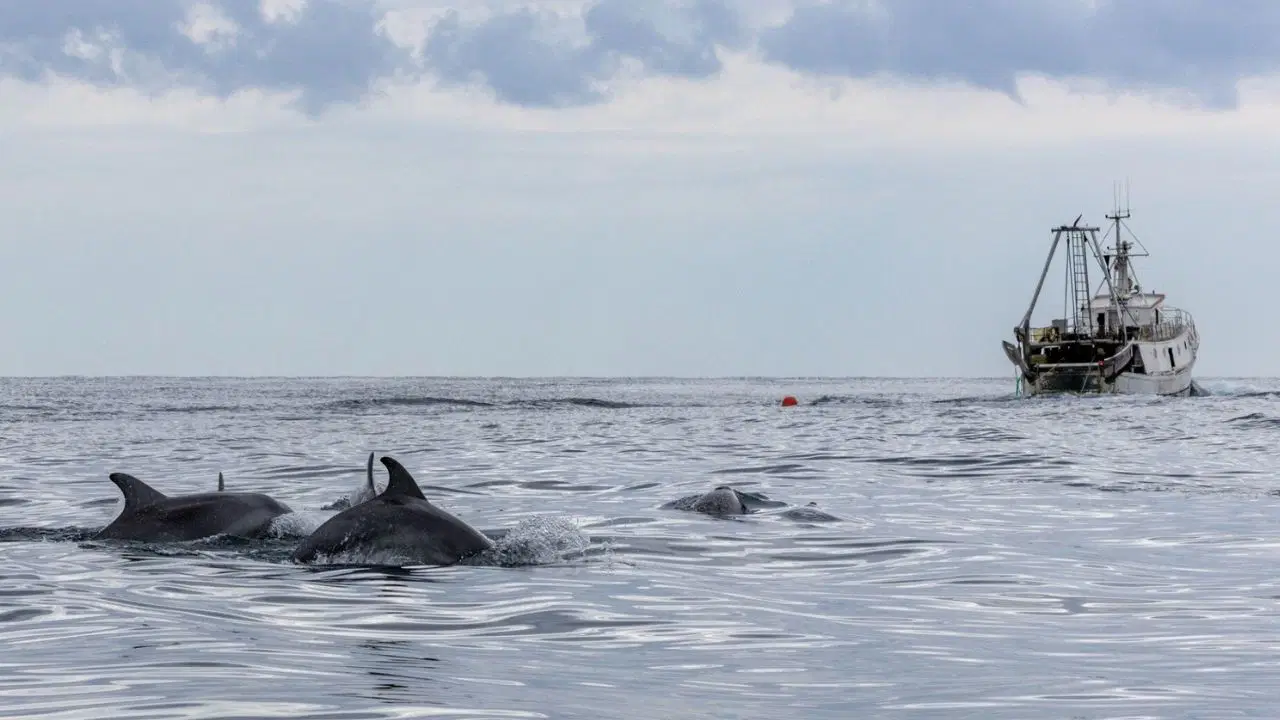
Adriatic Sea Ecosystem in Crisis: Dolphins Scavenge Trawler Waste Due to Starvation
Translated from Turkish, summarized and contextualized by DistantNews.
At a glance
News
Named sources
Context piece
- Bottlenose dolphins in the Adriatic Sea are increasingly following industrial fishing trawlers out of desperation for food.
- A study found dolphins regularly trailing nearly a quarter of trawlers, a behavior driven by severe depletion of fish stocks due to overfishing.
- This reliance on trawlers is seen not as adaptation, but as a stark indicator of ecological collapse in the Adriatic.
The Adriatic Sea, situated between the Italian Peninsula and the Balkans, is facing a severe environmental crisis, pushing its remaining wildlife to desperate measures. Once a region boasting rich biodiversity, including numerous shark and ray species, the sea is now dominated by bottlenose dolphins as its apex predators. However, recent research indicates that even these resilient mammals are struggling to survive, driven to the brink by hunger and a lack of natural prey.
A recent study published in Frontiers in Mammal Science reveals a disturbing trend: Adriatic dolphins have abandoned natural hunting methods and are now persistently following industrial fishing trawlers. Observations conducted over 148 days off the Italian regions of Veneto and Marche showed dolphins regularly trailing approximately 24.7% of the trawlers operating in the area. Dr. Giovanni Bearzi, President of the Italy-based Dolphin Biology and Conservation Association, highlighted that this sustained and deliberate interaction with trawlers signifies a critical dependence on industrial fishing.
Dolphins try to hunt independently on days when nets are not cast, but on days when trawlers are operating, they spend almost all their time collecting scraps around these deadly nets.
"Dolphins try to hunt independently on days when nets are not cast, but on days when trawlers are operating, they spend almost all their time collecting scraps around these deadly nets," Dr. Bearzi explained. While opportunistic feeding behaviors have been documented historically, scientists are alarmed by the dramatic increase in this practice. Studies from the late 1990s indicated that less than 10% of North Adriatic trawlers were followed by dolphins, a figure that has now surged to as high as 40% for certain types of vessels.
Dr. Bearzi warns that this phenomenon is not a sign of successful adaptation but a clear indicator of ecological collapse. Decades of relentless industrial fishing have depleted the Adriatic's fish stocks to such an extent that dolphins can no longer find sufficient natural prey. The pursuit of trawlers, while providing a short-term food source, exposes dolphins to significant dangers, including entanglement in nets, which poses a lethal risk to the species' long-term survival. This situation underscores the dire state of the Adriatic's marine ecosystem.
These creatures are not following trawlers out of choice or pleasure. Ruthless industrial fishing that has continued for decades has depleted the Adriatic so much that there is no longer any fish stock left for dolphins to feed on naturally. This situation is not an example of dolphins successfully adapting to new conditions, but the clearest and most bitter indicator of ecological collapse in the sea.
DistantNews Editorial
Originally published by Cumhuriyet in Turkish. Translated, summarized, and contextualized by our editorial team with added local perspective. Read our editorial standards.
More Stories


From Our Blog

What Gets Lost (and Found) When News Is Translated

The Critical Role of Diaspora Media in Global News

What Travellers Should Know About Countries with Restricted Press

A Digital Nomad's Guide to Following Local News

How the Same Story Looks Different in Different Countries
