


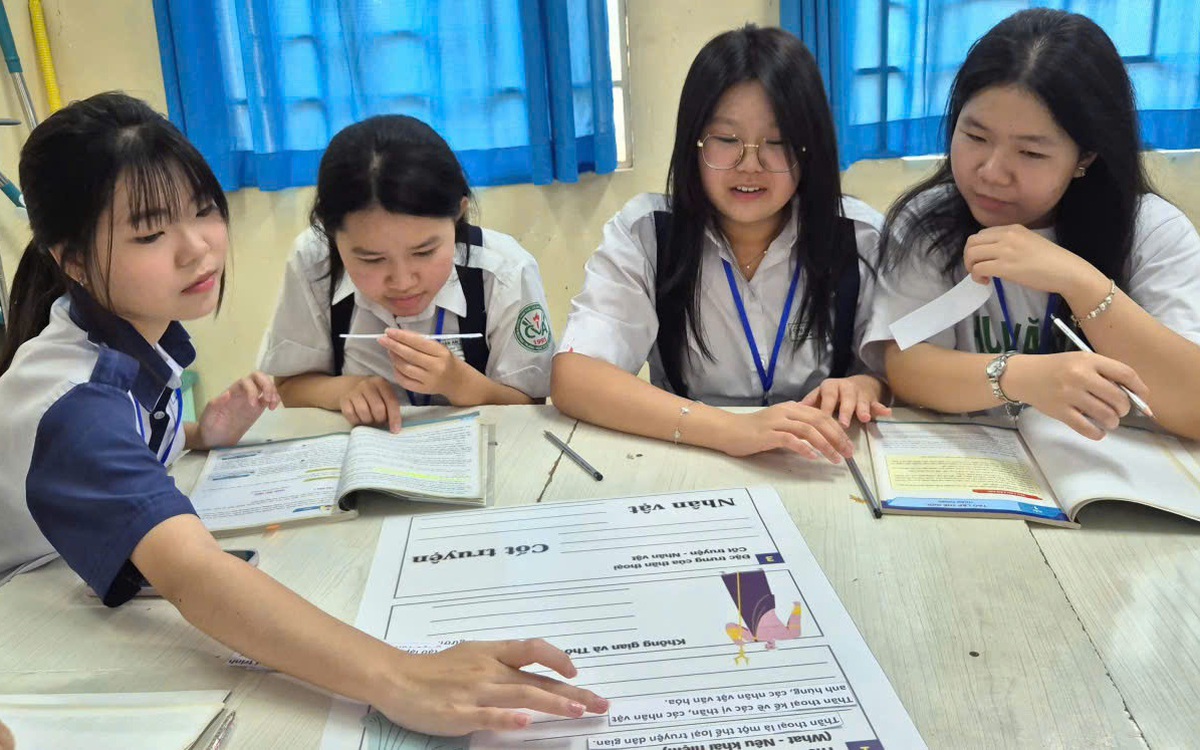
Age 15 and the 'Gamble' of Choosing 10th Grade Subjects
Translated from Vietnamese, summarized and contextualized by DistantNews.
TLDR
- Vietnamese high school students face a critical decision when choosing subject combinations for 10th grade, impacting their future academic and university admission paths.
- The choice, made at age 15, is fraught with risk as students may lack the maturity to understand their own abilities or the evolving job market.
- The current system risks promoting "exam-oriented" choices over genuine career guidance, potentially leading to narrow academic focus and a mismatch with future workforce needs.
The transition to 10th grade in Vietnam presents a significant challenge for 15-year-old students and their families: the crucial choice of subject combinations. As reported by Tuổi Trẻ, this decision, often perceived as a "gamble," can profoundly shape a student's academic trajectory and future university prospects. The pressure to select the "right" path at such a young age is immense, leading to anxiety for both students and educators.
Our publication, Tuổi Trẻ, recognizes that while subject differentiation in high school is necessary, it should not prematurely close doors. The current system, where choices made in 10th grade extend through 12th and are tied to graduation and university entrance exams, transforms a developmental choice into a high-stakes gamble. At 15, most students lack the self-awareness, career experience, and foresight to navigate the complexities of the future job market. Consequently, choices are often influenced by immediate strengths, peer pressure, parental guidance, or familiarity with existing "exam blocks."
The article highlights a critical concern: the shift from genuine "career orientation" to "exam orientation." True career guidance should empower students to understand themselves, explore professions, identify necessary skills, and gain exposure to the world of work. However, in many Vietnamese schools, this guidance remains superficial, lacking robust data and professional support. When career orientation is inadequate, the pressure of exams inevitably takes over.
This situation risks legitimizing "narrow learning." Students focusing on social sciences may neglect crucial subjects like physics and chemistry, while those in natural sciences might develop gaps in their understanding of social issues, law, economics, and culture. In an era of digital transformation and AI, this specialization runs counter to the demand for well-rounded individuals. Education should foster interdisciplinary connections, not funnel students into narrow tracks too early. The future workforce, particularly in the age of AI and the digital economy, requires individuals who can bridge science, technology, society, and the humanities. The current system, driven by exam pressures, threatens to produce a generation ill-equipped for this reality.
DistantNews Editorial
Originally published by Tuổi Trẻ in Vietnamese. Translated, summarized, and contextualized by our editorial team with added local perspective. Read our editorial standards.
More Stories


From Our Blog

What Gets Lost (and Found) When News Is Translated

The Critical Role of Diaspora Media in Global News

What Travellers Should Know About Countries with Restricted Press

A Digital Nomad's Guide to Following Local News

How the Same Story Looks Different in Different Countries
