


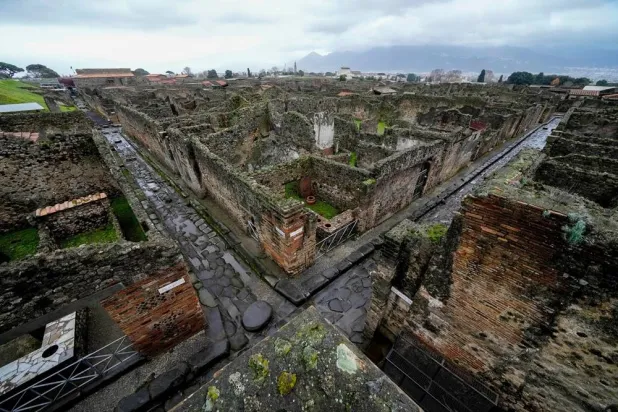
AI Reconstructs Face of Pompeii Victim for First Time
Translated from English, summarized and contextualized by DistantNews.
TLDR
- Archaeologists in Pompeii have used artificial intelligence to reconstruct the face of a victim of the AD 79 volcanic eruption.
- The digital portrait depicts an older man found attempting to flee the city towards the coast.
- This AI application offers a new method for understanding the human impact of the Mount Vesuvius disaster and enhances archaeological data accessibility.
In a groundbreaking fusion of ancient history and cutting-edge technology, archaeologists at the historic site of Pompeii have employed artificial intelligence to bring one of its long-lost inhabitants back to life. For the first time, AI has been used to digitally reconstruct the face of a victim of the catastrophic AD 79 eruption of Mount Vesuvius. This innovative approach offers a profoundly human dimension to our understanding of one of history's most studied natural disasters.
The digital portrait reveals an older man, discovered among two victims who were trying to escape the doomed city towards the coast. Researchers theorize he perished early in the eruption, succumbing to a heavy fall of volcanic debris. The reconstruction, a collaborative effort between the Pompeii Archaeological Park and the University of Padua, is built upon detailed archaeological survey data. It provides a tangible connection to the past, allowing us to see the face of someone who lived and died in Pompeii, holding an improvised shield of a terracotta mortar, a small iron ring, and coins in his final moments.
This project, spearheaded by Pompeii park director Gabriel Zuchtriegel, underscores the transformative potential of AI in classical studies. "The vastness of archaeological data is now such that only with the help of artificial intelligence will we be able to adequately protect and enhance them," Zuchtriegel stated. The initiative aims not only to preserve and analyze the immense archaeological wealth of Pompeii but also to make these discoveries more accessible and emotionally resonant for the public. It represents a significant step in making ancient history more vivid and relatable, moving beyond dry academic study to an experience that connects us directly with the lives of those who perished.
The vastness of archaeological data is now such that only with the help of artificial intelligence will we be able to adequately protect and enhance them. If used well, AI can contribute to a renewal of classical studies.
DistantNews Editorial
Originally published by Asharq Al-Awsat in English. Translated, summarized, and contextualized by our editorial team with added local perspective. Read our editorial standards.
More Stories


From Our Blog

What Gets Lost (and Found) When News Is Translated

The Critical Role of Diaspora Media in Global News

What Travellers Should Know About Countries with Restricted Press

A Digital Nomad's Guide to Following Local News

How the Same Story Looks Different in Different Countries
