


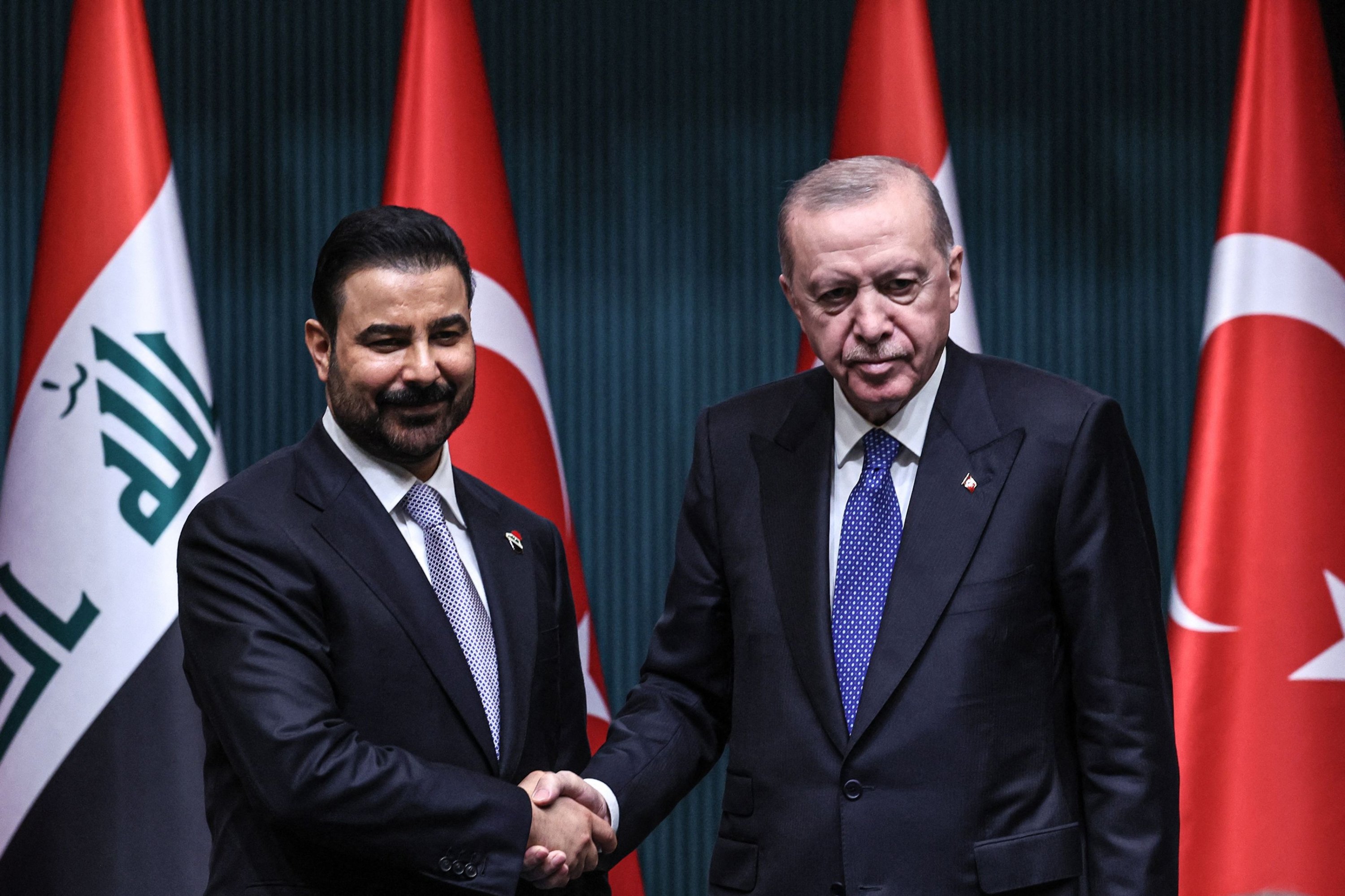
Al-Zaidi's Ankara visit highlights Iraq's multi-partner foreign policy shift
Translated from English, summarized and contextualized by DistantNews.
At a glance
Analysis
Sources not specified
Context piece
- Iraqi Prime Minister Ali al-Zaidi's visits to Washington, Tehran, and Ankara signal a shift towards a multi-partner foreign policy.
- Iraq is diversifying dependencies by engaging multiple partners across security, energy, trade, and infrastructure sectors, rather than assigning them to separate external actors.
- Recent agreements with Türkiye, including in transportation and water management, illustrate this approach, though the durability depends on coordinated implementation by Iraqi institutions.
Iraq's foreign policy is evolving beyond a traditional balancing act between regional and international powers, as evidenced by Prime Minister Ali al-Zaidi's recent diplomatic engagements in Washington, Tehran, and Ankara.
Baghdad is increasingly adopting a multi-partner approach, distributing risks associated with its dependence on various external actors, export routes, financing mechanisms, and regional conditions. This strategy involves engaging multiple partners simultaneously in the same policy areas, rather than compartmentalizing security, energy, trade, and infrastructure.
Türkiye holds a significant position in this emerging framework. Its importance stems not only from bilateral trade and political ties but also from its capacity to connect Iraq's domestic economy to northern export routes, European markets, transportation networks, security cooperation, and water management projects. Agreements signed during al-Zaidi's visit to Ankara solidified these multi-faceted relations.
Memoranda of understanding were signed in areas such as police training and academic cooperation, youth and sports, industrial property, rail and road transportation via the Ovaköy-Fishkhabour border crossing, and a framework for developing water management infrastructure in exchange for oil. These agreements highlight Iraq's aim to diversify dependencies in security, transportation, investment, and institutional capacity.
The approach of using natural resource revenues to finance water management infrastructure is particularly noteworthy, linking energy income to critical investments in irrigation, water conservation, and dam projects. While the comprehensive energy agreement with Türkiye remains under negotiation, Turkish Petroleum's stake in Kirkuk fields indicates an expanding role for Türkiye beyond transit to include production and investment. The success of this multi-partner strategy hinges on the ability of Iraqi institutions to translate political agreements into coordinated implementation.
DistantNews Editorial
Originally published by Daily Sabah in English. Translated, summarized, and contextualized by our editorial team with added local perspective. Read our editorial standards.
More Stories


From Our Blog

What Gets Lost (and Found) When News Is Translated

The Critical Role of Diaspora Media in Global News

What Travellers Should Know About Countries with Restricted Press

A Digital Nomad's Guide to Following Local News

How the Same Story Looks Different in Different Countries
