


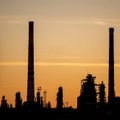
Alarm bells ring: Oil reserves continue to deplete at record pace
Translated from Lithuanian, summarized and contextualized by DistantNews.
At a glance
News
From a news agency
Context piece
- Oil reserves in OECD countries are declining at a record pace, reaching their lowest point since 1990.
- The International Energy Agency (IEA) attributes this decline to the war in Iran and efforts to compensate for disrupted oil supplies.
- Global oil reserves have decreased by 252 million barrels, with OECD countries drawing down 163 million barrels.
Oil reserves in developed countries are depleting at an unprecedented rate, signaling a potential energy crisis, according to the International Energy Agency (IEA).
The IEA's monthly report indicates that despite a significant drop in oil demand, reserves in countries belonging to the Organisation for Economic Co-operation and Development (OECD) have fallen to their lowest level since 1990. This sharp decline is largely attributed to the ongoing conflict in Iran and the subsequent efforts to offset disruptions in oil supplies from the Persian Gulf region.
Globally, oil reserves have shrunk by 252 million barrels as of June 12. Within OECD countries alone, 163 million barrels have been drawn down. Governments have tapped into their strategic reserves to mitigate the impact of supply interruptions.
IEA Executive Director Fatih Birol has described the consequences of the Iran war as "the biggest energy crisis in history." The Paris-based agency has coordinated the release of 400 million barrels of oil from the reserves of its 32 member countries. Following a preliminary agreement between the U.S. and Iran, Birol urged for the "unconditional" opening of the Strait of Hormuz, the blockade of which by Iran had previously caused a surge in global oil prices.
DistantNews Editorial
Originally published by Delfi in Lithuanian. Translated, summarized, and contextualized by our editorial team with added local perspective. Read our editorial standards.
More Stories


From Our Blog

What Gets Lost (and Found) When News Is Translated

The Critical Role of Diaspora Media in Global News

What Travellers Should Know About Countries with Restricted Press

A Digital Nomad's Guide to Following Local News

How the Same Story Looks Different in Different Countries
